
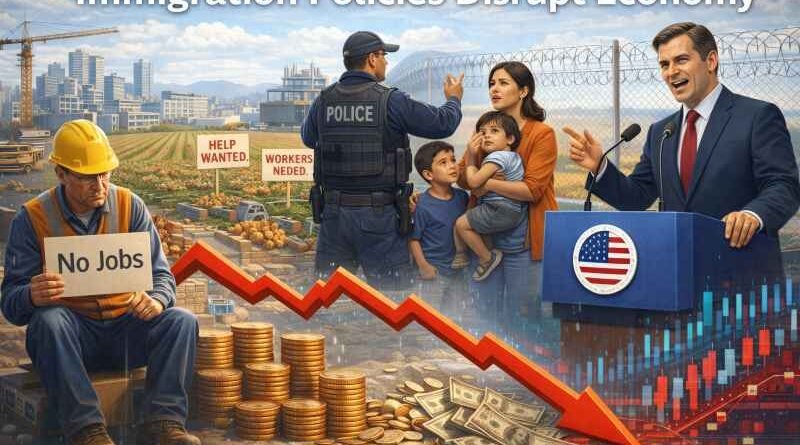
Stricter Immigration Policies Disrupt South Texas Economy
MB DAILY NEWS | Raleigh, NC
Immigration policies disrupt economy: Recent changes in immigration enforcement in South Texas have sparked significant concerns among local businesses. Trade organizations are voicing their worries about the impact of these stricter policies. Many companies in the region are experiencing delays in construction projects due to heightened enforcement actions. This situation raises questions about the long-term economic implications for South Texas. Stakeholders are particularly anxious about how these policies will affect the workforce. The ripple effects could extend beyond immediate disruptions, influencing overall economic stability.
Impact on Local Businesses
Local businesses are feeling the strain as immigration enforcement intensifies. Many firms rely on a diverse workforce, which is now threatened by these policies. Delays in construction projects can lead to increased costs and lost revenue for companies. Trade groups emphasize that this situation could deter future investments in the region. A decline in business activity may also affect job creation and economic growth. The community is left to grapple with the potential fallout from these enforcement measures.
Concerns from Trade Organizations
Trade organizations are actively raising alarms about the economic consequences of aggressive immigration enforcement. They argue that such policies create an unstable environment for businesses. The uncertainty surrounding workforce availability can hinder planning and expansion efforts. Many companies fear that prolonged enforcement could lead to a talent shortage. This situation may ultimately stifle innovation and competitiveness in the region. Stakeholders are urging policymakers to consider the broader economic implications of their actions.
Construction Delays and Economic Fallout
Construction delays caused by stricter immigration policies pose a serious threat to economic progress. Projects that rely on timely labor are now facing significant setbacks. These delays can lead to increased costs, which may be passed on to consumers. The construction industry, a vital part of the local economy, could suffer long-term damage. As projects stall, the potential for job losses increases, affecting families and communities. The economic fallout could extend well beyond the immediate construction sector.
Workforce Challenges Ahead
Heightened immigration enforcement raises critical questions about workforce availability in South Texas. Many industries depend on immigrant labor to meet demand and maintain productivity. Stricter policies could lead to a labor shortage, complicating hiring processes for local businesses. Companies may struggle to find qualified workers, impacting their ability to operate effectively. This challenge could hinder economic recovery efforts in the region. The long-term effects on workforce dynamics remain a significant concern for stakeholders.
Future Economic Stability
The future economic stability of South Texas hangs in the balance as immigration policies evolve. Businesses are closely monitoring how these changes will shape the local economy. Trade groups are advocating for a more balanced approach that considers both enforcement and economic needs. Policymakers must weigh the potential consequences of their decisions on the broader community. The ongoing dialogue between businesses and government will be crucial in navigating these challenges. Stakeholders are hopeful for solutions that support both security and economic growth.
Community Reactions and Adaptations
Community reactions to stricter immigration enforcement vary, with many expressing concern over its implications. Local leaders are calling for dialogue to address the challenges posed by these policies. Some businesses are exploring alternative strategies to adapt to the changing landscape. This includes investing in workforce development and training programs. Community resilience will play a vital role in overcoming the disruptions caused by enforcement actions. The ability to adapt will determine how well the local economy can weather these challenges.