
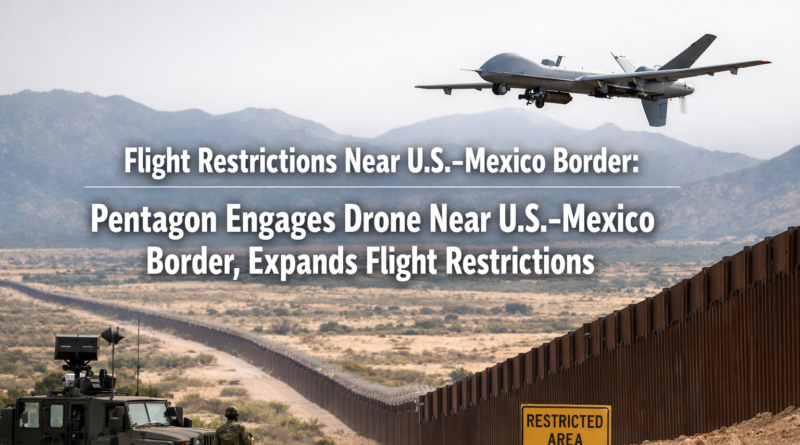
Flight Restrictions Near U.S.-Mexico Border: Pentagon Engages Drone Near U.S.-Mexico Border, Expands Flight Restrictions
MB DAILY NEWS | Raleigh, NC
Flight restrictions near U.S.-Mexico border: The Pentagon recently took action by downing a drone deemed “seemingly threatening” close to the U.S.-Mexico border. This incident has led to heightened security measures, prompting aviation authorities to broaden flight restrictions in the vicinity of Fort Hancock, Texas. The decision reflects ongoing concerns about airspace safety in border regions. As tensions rise, officials are keen to ensure that unauthorized aerial activities do not compromise national security. The implications of this action may resonate beyond immediate safety, affecting local aviation operations. Observers will be watching closely to see how these developments unfold.
Background on Recent Drone Activity
Drone activity near the U.S.-Mexico border has become increasingly scrutinized in recent months. Federal authorities have expressed concerns about potential threats posed by unauthorized drones in sensitive areas. The recent downing of the drone underscores the seriousness of these threats. Aviation officials are now tasked with balancing security needs against the operational requirements of local air traffic. This incident may prompt further discussions about drone regulations and enforcement in border regions. Stakeholders in aviation and security will likely seek clarity on future airspace management.
Impact on Local Aviation
The expansion of flight restrictions around Fort Hancock will significantly impact local aviation operations. Pilots and aviation companies must navigate these new regulations, which may complicate flight planning. Increased restrictions can lead to delays and operational challenges for commercial and private flights. Local businesses relying on air travel may experience disruptions, affecting their bottom lines. As the situation develops, stakeholders will need to adapt to the changing landscape of airspace management. The long-term effects on regional aviation remain to be seen.
Federal Aviation Administration’s Role
The Federal Aviation Administration (FAA) plays a crucial role in managing airspace safety and regulations. Following the recent drone incident, the FAA has taken steps to ensure that airspace remains secure. Their involvement is vital in coordinating with other federal agencies to address potential threats. The FAA’s actions will likely influence how airspace is monitored and controlled in the future. As they implement new measures, the agency must balance safety with the needs of aviation stakeholders. Ongoing communication will be essential to maintain trust and operational efficiency.
Concerns Over High-Energy Laser Weapons
Earlier this month, federal aviation officials restricted airspace over El Paso due to the use of high-energy laser weapons by Customs and Border Protection (CBP). This development raised alarms about the implications for aviation safety in the region. The use of such technology highlights the evolving nature of border security measures. As authorities explore advanced tools, the potential for unintended consequences grows. Stakeholders must remain vigilant about how these technologies interact with existing airspace regulations. Future discussions may focus on the ethical and operational aspects of using high-energy weapons in border enforcement.
Future Monitoring and Regulations
As the situation evolves, ongoing monitoring of drone activity and airspace regulations will be critical. Authorities will need to assess the effectiveness of current measures and make adjustments as necessary. The balance between security and operational freedom will be a key consideration for policymakers. Stakeholders in aviation and border security will likely advocate for clear guidelines to navigate these challenges. Future regulations may emerge as a response to the changing dynamics of aerial threats. Observers will be keen to see how these developments shape the future of airspace management.
Public Perception and Response
Public perception of drone activity and airspace restrictions will play a significant role in shaping future policies. Citizens may express concerns about privacy and safety as regulations tighten. Engaging the public in discussions about these issues could foster greater understanding and support for necessary measures. Transparency from authorities will be essential to maintain public trust. As incidents like the recent drone engagement occur, community responses may influence future regulatory approaches. Policymakers must consider public sentiment as they navigate the complexities of border security and aviation safety.