
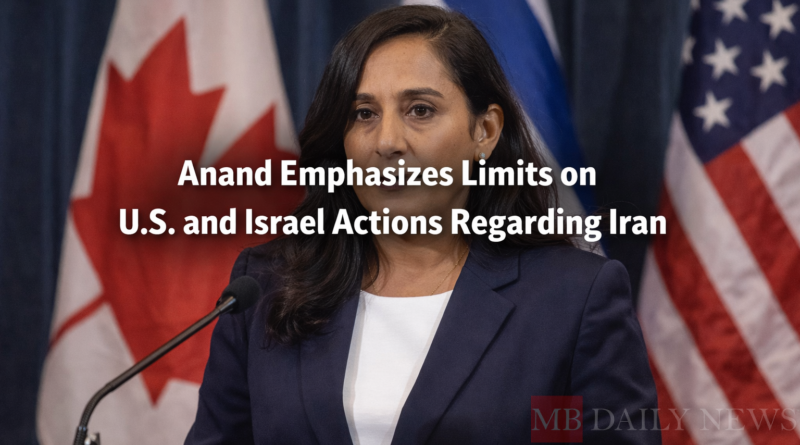
Anand Emphasizes Limits on U.S. and Israel Actions Regarding Iran
MB DAILY NEWS | Raleigh, NC
Canada’s Minister of National Defence, Anita Anand, recently addressed the complexities surrounding U.S. and Israel actions regarding Iran. During a virtual news conference, she highlighted the importance of adhering to international law in any military operations. Anand’s comments come as tensions in the region escalate, prompting concerns about the implications for Canadian citizens. She emphasized that no nation operates with a “blank cheque” when it comes to military engagements. This statement reflects Canada’s commitment to upholding legal frameworks in international relations. Observers will be keen to see how this stance influences Canada’s diplomatic efforts moving forward.
International Law as a Guiding Principle
Anand’s assertion underscores the critical role of international law in shaping military actions. By stating that all parties are bound by these laws, she reinforces the idea that accountability is essential. This perspective may resonate with many Canadians who prioritize ethical governance. The emphasis on legal constraints could also impact how other nations approach their strategies in the region. As global dynamics shift, the adherence to international law will likely remain a focal point in discussions about military interventions. Stakeholders will watch closely for any changes in policy or rhetoric from Canada and its allies.
Implications for Canadian Citizens
The ongoing situation in Iran raises significant concerns for Canadians in the region. Anand’s remarks reflect a commitment to ensuring the safety of these individuals amid rising tensions. The government’s focus on international law may also influence evacuation strategies for Canadians. As the situation evolves, the need for clear communication from officials becomes paramount. Families of those in Iran will be particularly attentive to updates regarding safety measures. The government’s actions in the coming weeks will be crucial in addressing these concerns.
Regional Tensions and Global Reactions
The heightened tensions in the Middle East have drawn international scrutiny and reactions. Anand’s comments may serve as a reminder to allies about the importance of lawful conduct. The international community will likely monitor the responses from both the U.S. and Israel closely. Any deviation from legal norms could provoke further diplomatic challenges. Observers will analyze how these dynamics affect broader geopolitical stability. The potential for conflict escalation remains a pressing concern for many nations.
Canada’s Diplomatic Role
Canada’s position in international affairs often emphasizes diplomacy and dialogue. Anand’s statements may signal a desire to play a mediating role in the region. By advocating for adherence to international law, Canada positions itself as a responsible actor. This approach could enhance Canada’s reputation on the global stage. As tensions continue, the effectiveness of Canada’s diplomatic efforts will be tested. Stakeholders will be interested in how Canada navigates its relationships with both allies and adversaries.
Future Developments to Monitor
As the situation in Iran unfolds, several developments warrant close attention. The responses from the U.S. and Israel will be critical in shaping the next steps. Anand’s emphasis on legal boundaries may influence how these nations proceed. Additionally, the safety of Canadians in the region will remain a priority for the government. Future announcements regarding evacuation plans or diplomatic initiatives will be closely scrutinized. The evolving landscape will require ongoing assessment from both policymakers and the public.
Conclusion: A Call for Responsible Action
Anand’s remarks serve as a call for responsible action in international relations. By stressing the importance of international law, she highlights the need for accountability among nations. This perspective aligns with Canada’s broader foreign policy goals. As tensions in the region persist, the implications of these statements will unfold over time. Observers will continue to evaluate how Canada balances its commitments to safety and legality. The coming weeks will be pivotal in determining the trajectory of these discussions.