
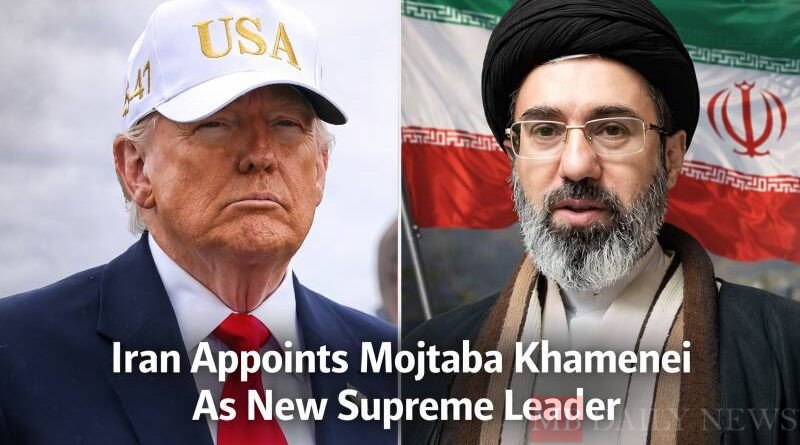
Iran Appoints Mojtaba Khamenei As New Supreme Leader
MB DAILY NEWS | Raleigh, NC
Mojtaba Khamenei appointed: Mojtaba Khamenei has been designated as the new Supreme Leader of Iran, according to reports from state media. His appointment marks a significant moment in the Islamic Republic’s leadership structure. As the son of the late Ayatollah Ali Khamenei, he steps into a role that encompasses vast political and religious authority. This transition raises questions about the future direction of Iran’s governance and its impact on regional stability. Observers are keenly watching how his leadership will shape domestic and foreign policies. The implications of this appointment extend beyond Iran, affecting geopolitical dynamics in the Middle East.
Significance of the Appointment
The selection of Mojtaba Khamenei as Supreme Leader carries profound implications for Iran’s political landscape. He assumes control over the country’s armed forces, judiciary, and religious institutions. This consolidation of power suggests a continuation of the existing regime’s policies. Analysts speculate that his leadership style may reflect his father’s approach, emphasizing a hardline stance. The appointment signals a potential shift in how Iran engages with international partners. Observers will closely monitor his decisions in the coming months.
Political Authority and Governance
Mojtaba Khamenei’s role as the top political authority places him at the helm of Iran’s governance. His leadership will influence legislative processes and executive actions. The political environment may experience shifts as he establishes his priorities and agenda. His background and connections within the Islamic Revolutionary Guard Corps could impact military strategies. The relationship between the Supreme Leader and elected officials will be crucial in shaping policy. Stakeholders are eager to see how he navigates these dynamics.
Military Leadership
As head of the armed forces, Mojtaba Khamenei inherits significant military responsibilities. His decisions will directly affect Iran’s defense strategies and military engagements. The potential for increased military assertiveness in the region raises concerns among neighboring countries. Analysts will assess how his leadership influences Iran’s role in conflicts such as those in Syria and Yemen. The military’s alignment with his vision will be critical for maintaining internal stability. Observers will watch for any shifts in military alliances and strategies.
Judicial Authority
Mojtaba Khamenei’s position also grants him authority over Iran’s judiciary. This power allows him to influence legal interpretations and judicial appointments. His approach to justice and human rights will be scrutinized both domestically and internationally. The judiciary’s role in upholding the regime’s values may remain a priority under his leadership. Legal reforms or crackdowns on dissent could emerge as key issues. Stakeholders will be attentive to changes in judicial practices and their societal impacts.
Religious Leadership
As the highest authority in Shia Islam, Mojtaba Khamenei’s religious leadership carries significant weight. His interpretations of Islamic law will guide the moral and ethical framework of Iranian society. The relationship between religious and political authority will be pivotal in his governance. His stance on religious issues may influence public sentiment and societal norms. The potential for increased religious conservatism could shape cultural policies. Observers will monitor how he balances religious duties with political responsibilities.
Future Implications
The appointment of Mojtaba Khamenei as Supreme Leader sets the stage for Iran’s future trajectory. His leadership will likely impact both domestic policies and international relations. The global community will be attentive to his decisions regarding nuclear negotiations and regional conflicts. The potential for increased tensions or diplomatic engagement remains uncertain. Analysts will evaluate how his leadership style affects Iran’s interactions with the West and neighboring countries. The coming months will be crucial in determining the implications of this significant political shift.