
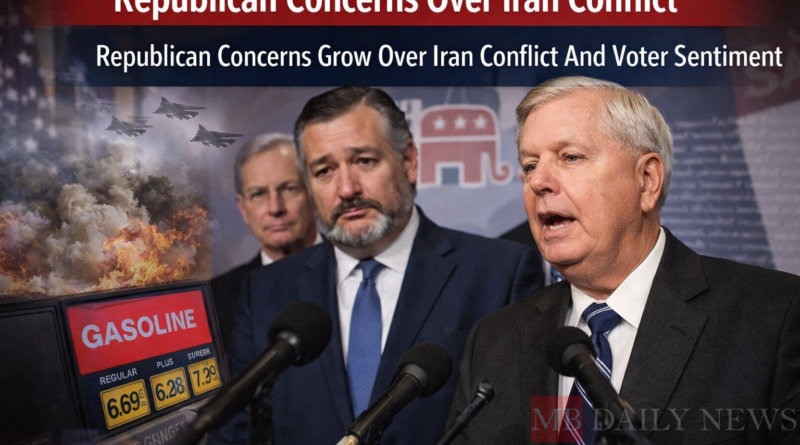
Republican Concerns Over Iran Conflict: Republican Concerns Grow Over Iran Conflict And Voter Sentiment
MB DAILY NEWS | Raleigh, NC
Republican concerns over Iran conflict: Republican lawmakers are increasingly anxious about the ongoing conflict in Iran and its potential effects on voter sentiment. As the November elections approach, these concerns may shape party strategies and candidate positions. The economic implications of the war could significantly influence how voters perceive their representatives. Lawmakers are particularly focused on how military actions might resonate with constituents. The prospect of ground troops has emerged as a contentious issue among party members. This situation could lead to shifts in policy discussions as the election date nears.
Growing Anxiety Among GOP Lawmakers
Many Republican officials express unease regarding the current trajectory of the Iran conflict. They worry that escalating military involvement could alienate voters who prioritize domestic issues. The potential for ground troop deployment raises alarm bells, as it may evoke memories of past military engagements. Lawmakers are weighing the risks of supporting aggressive military strategies against the backdrop of public opinion. As the situation evolves, party leaders may need to recalibrate their messaging. This internal debate could impact campaign strategies as candidates seek to align with voter sentiments.
Economic Implications of Military Action
The economic fallout from the Iran conflict is a significant concern for Republican lawmakers. Rising oil prices and inflation could directly affect voters’ wallets, leading to discontent. Lawmakers recognize that economic stability is crucial for maintaining voter support. As military actions unfold, the party must address how these developments influence the economy. Candidates may need to articulate clear plans to mitigate any adverse effects on constituents. This focus on economic issues could become a central theme in upcoming campaigns.
Voter Sentiment and Military Engagement
Voter sentiment plays a critical role in shaping political strategies as elections approach. Republican lawmakers are acutely aware that public opinion can shift rapidly in response to military actions. Many constituents prioritize peace and stability over military intervention. As such, lawmakers must navigate these sentiments carefully to avoid backlash. Engaging with voters about their concerns may become a priority for candidates. This engagement could help the party gauge public sentiment and adjust their positions accordingly.
Internal Party Dynamics
The debate over military involvement in Iran highlights internal divisions within the Republican Party. Some members advocate for a strong military response, while others caution against escalation. This divergence could lead to fractures in party unity as the election approaches. Lawmakers must balance their positions to maintain support from various factions within the party. The outcome of this debate may influence candidate endorsements and campaign strategies. Observers will watch closely to see how these dynamics unfold in the coming months.
Impacts on Election Strategies
As concerns about the Iran conflict grow, Republican candidates may need to adjust their election strategies. Emphasizing national security while addressing economic issues could be a delicate balancing act. Candidates who align closely with voter concerns may gain an advantage in the primaries. The party’s approach to the conflict could become a defining issue in the elections. Lawmakers will likely focus on crafting messages that resonate with their constituents. This strategic recalibration will be crucial for maintaining electoral competitiveness.
Looking Ahead: What to Watch
As the situation in Iran evolves, the Republican Party’s response will be critical to watch. Lawmakers’ reactions to military developments will likely shape their electoral prospects. Voter sentiment regarding foreign policy and economic stability will remain pivotal. Candidates who effectively address these issues may find themselves better positioned for success. The interplay between military actions and domestic concerns will be a key narrative leading up to the elections. Observers will closely monitor how these factors influence campaign dynamics and voter behavior.