
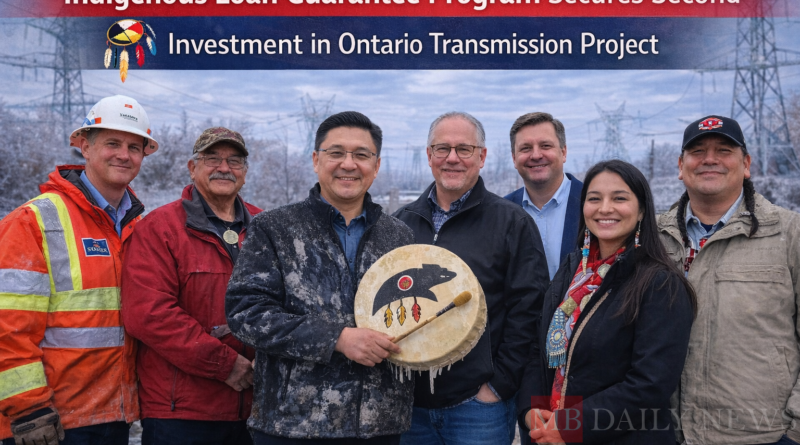
Indigenous Loan Guarantee Program Secures Second Investment in Ontario Transmission Project
MB DAILY NEWS | Raleigh, NC
The Indigenous Loan Guarantee Program recently announced its second investment, supporting an equity stake in a significant transmission line project in Ontario. This initiative marks a crucial step in enhancing Indigenous participation in major infrastructure developments. Stakeholders view this investment as a pivotal opportunity for Indigenous communities to gain financial benefits and influence in regional energy projects. The program aims to strengthen economic ties between Indigenous groups and the broader energy sector. Observers anticipate that this move will encourage further investments in similar projects across Canada. The program’s leadership indicates that additional deals are currently in negotiation.
Significance of the Investment
This investment underscores the growing recognition of Indigenous rights and economic opportunities in Canada. By backing this transmission line, the program not only supports infrastructure but also fosters community engagement. Indigenous communities stand to gain both financially and socially from such projects. This investment could serve as a model for future collaborations between Indigenous groups and private enterprises. The implications extend beyond immediate financial gains, potentially reshaping the landscape of energy governance in Canada. As these projects develop, they may inspire similar initiatives nationwide.
Future Prospects for Indigenous Communities
Looking ahead, the Indigenous Loan Guarantee Program plans to facilitate more investments that empower Indigenous communities. These initiatives aim to create sustainable economic opportunities while promoting environmental stewardship. The program’s leadership emphasizes the importance of aligning projects with community values and needs. As more deals materialize, Indigenous communities may find themselves at the forefront of energy innovation. This shift could lead to enhanced self-determination and economic resilience. Stakeholders will closely monitor how these developments unfold in the coming months.
Broader Implications for Energy Infrastructure
The investment in the Ontario transmission line reflects a broader trend toward inclusive energy infrastructure development. By integrating Indigenous perspectives, projects can achieve greater social acceptance and sustainability. This approach may also attract additional funding from investors seeking socially responsible opportunities. As the energy sector evolves, the role of Indigenous communities will likely become increasingly prominent. This shift could redefine partnerships within the industry, leading to more equitable outcomes. Observers will watch how these dynamics influence future energy policies in Canada.
Challenges Ahead
Despite the positive developments, challenges remain for the Indigenous Loan Guarantee Program and its stakeholders. Navigating regulatory frameworks and securing community support can be complex. Additionally, ensuring that investments translate into tangible benefits for Indigenous communities is crucial. The program must address potential concerns about environmental impacts and land rights. Building trust among all parties involved will be essential for long-term success. Stakeholders will need to engage in ongoing dialogue to overcome these hurdles.
Community Engagement and Support
Effective community engagement will play a vital role in the success of future projects. The program must prioritize transparent communication with Indigenous communities to foster trust. Involving community members in decision-making processes can enhance project outcomes. Support from local leaders and organizations will be critical in navigating potential challenges. As the program expands, it should focus on building lasting relationships with Indigenous stakeholders. This approach will help ensure that projects align with community aspirations and values.
Monitoring Progress and Outcomes
As the Indigenous Loan Guarantee Program moves forward, monitoring its progress will be essential. Evaluating the impact of investments on Indigenous communities will provide valuable insights. Stakeholders should assess both economic and social outcomes to gauge success. Regular reporting and feedback mechanisms can help refine strategies and improve future initiatives. The program’s ability to adapt to changing circumstances will determine its long-term viability. Observers will be keen to see how these investments shape the future of Indigenous participation in Canada’s energy sector.