
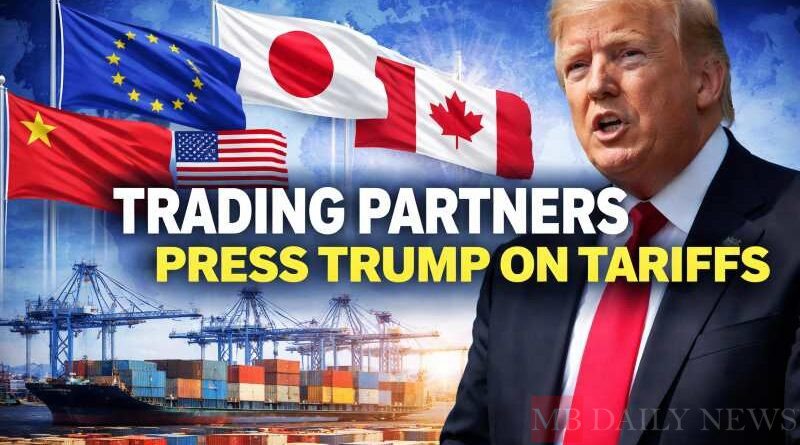
U.S. Trading Partners Urge Trump to Maintain Previously Agreed Tariff Levels
Washington, D.C. — Several U.S. trading partners are urging President Donald Trump to maintain tariff levels that were previously agreed upon in trade negotiations. Governments and trade representatives fear that sudden changes to tariffs could disrupt global trade stability and create new economic tensions.
Concerns Among Key Allies
Countries with strong trade relationships with the United States have expressed concern over the possibility that the Trump administration might alter tariffs established in earlier agreements. Trade officials argue that maintaining agreed conditions is essential to preserving trust among partners.
Potential Impact on Global Trade
Economic experts warn that changes in tariffs could trigger retaliatory measures and disrupt international supply chains. Uncertainty in trade policy could also influence investment decisions by multinational companies.
Ongoing Diplomatic Pressure
Trade delegations from several countries have intensified discussions with Washington in an effort to ensure existing commitments are respected. These efforts include bilateral meetings and formal communications between economic authorities.
The Trump Administration’s Position
The White House has defended the possibility of reviewing tariffs as part of a broader strategy to protect American industries and rebalance foreign trade. Officials argue that tariffs can serve as a negotiation tool to secure better trade terms.
Business Sector Reactions
Companies and industry associations across different countries have voiced concerns about rising costs if tariffs are modified. Some businesses warn that sudden policy shifts could hurt competitiveness and raise prices for consumers.
Outlook for Upcoming Negotiations
Analysts say the coming weeks will be critical in determining whether the United States will maintain the agreed tariff levels or attempt to renegotiate them. In the meantime, trading partners continue to emphasize the importance of honoring existing agreements to avoid larger trade disputes.