
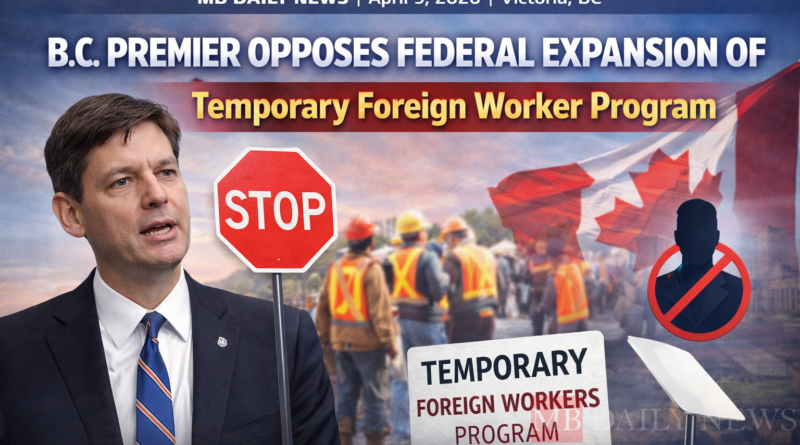
B.C. Premier Opposes Federal Expansion of Temporary Foreign Worker Program
MB DAILY NEWS | Raleigh, NC
B.C. Premier David Eby has expressed his disapproval of the federal government’s proposal to expand the temporary foreign worker program. He believes that simply increasing allowances for rural employers does not address the underlying issues. Eby argues that a more sustainable solution involves creating pathways to permanent residency for foreign workers. This perspective reflects a growing concern about the long-term integration of immigrants into Canadian society. Stakeholders in the province are keenly watching how this stance will influence future immigration policies. The debate highlights the balance between immediate labour needs and long-term community development.
Concerns Over Temporary Solutions
The Premier’s position raises questions about the effectiveness of temporary measures in addressing labour shortages. Many rural employers rely heavily on foreign workers to fill gaps in the workforce. However, Eby suggests that relying on temporary solutions may not be viable in the long run. He advocates for a system that allows workers to settle permanently, contributing to local economies. This approach could foster a more stable workforce and enhance community cohesion. Observers are interested in how this debate will evolve as the federal government considers its next steps.
Implications for Rural Employers
Rural employers may face challenges if the federal government does not proceed with the proposed expansion. Many businesses depend on temporary foreign workers to maintain operations and meet demand. Eby’s stance could lead to increased pressure on these employers to seek alternative solutions. They may need to invest in training local workers or adapt their business models. The potential impact on rural economies could be significant, prompting discussions about sustainable workforce strategies. Stakeholders will be closely monitoring how these dynamics unfold in the coming months.
Pathways to Permanent Residency
Advocating for pathways to permanent residency aligns with broader immigration reform discussions across Canada. Eby’s approach highlights the importance of integrating foreign workers into communities. Permanent residency could provide stability for workers and their families, fostering a sense of belonging. This shift could also enhance the province’s demographic diversity and economic resilience. As the conversation continues, various advocacy groups may push for policies that support this vision. The outcome could reshape the landscape of immigration in British Columbia.
Political Reactions
Political reactions to Eby’s announcement have varied, with some supporting his call for permanent residency pathways. Others argue that expanding the temporary foreign worker program is essential for immediate labour needs. This division reflects broader tensions within Canadian immigration policy debates. As the provincial government navigates these discussions, it will need to consider the diverse perspectives of its constituents. The implications of these decisions could resonate beyond British Columbia, influencing national policy. Observers anticipate further developments as stakeholders engage in this critical dialogue.
Future of Immigration Policy
The future of immigration policy in Canada may hinge on the outcomes of this debate. Eby’s opposition to the temporary foreign worker program expansion signals a potential shift in priorities. Policymakers will need to balance the urgent demands of the labour market with the long-term benefits of permanent residency. This balancing act will require careful consideration of economic, social, and cultural factors. As discussions progress, various interest groups will likely advocate for their positions. The evolving landscape of immigration policy will remain a focal point for many in British Columbia.
What to Watch Next
As the situation develops, stakeholders should pay attention to the federal government’s response to Eby’s position. The potential for policy changes could significantly impact both employers and foreign workers. Observers will also monitor how this debate influences public opinion and political dynamics in the province. Future discussions may lead to new proposals aimed at addressing labour shortages while promoting permanent residency. The outcomes of these conversations will shape the future of immigration in British Columbia. Engaging with these issues will be crucial for all involved parties.