
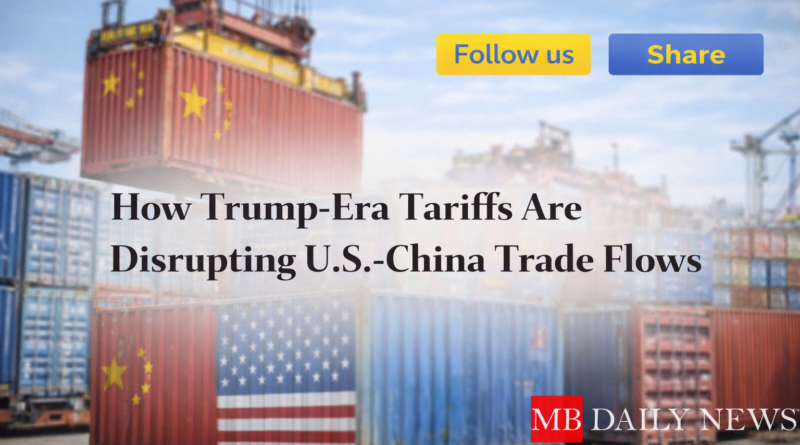
How Trump-Era Tariffs Are Disrupting U.S.-China Trade Flows
March 27, 2026 | MB Daily News | Los Angeles CA
Trade tensions between the United States and China continue to reshape global markets, with tariffs introduced during the Trump administration still impacting the flow of goods between the two economic superpowers. Economists say these policies are contributing to slower trade growth, rising costs, and shifting supply chains.
While initially designed to protect domestic industries and reduce reliance on Chinese imports, the tariffs have had complex ripple effects across multiple sectors, including manufacturing, agriculture, and technology.
Tariffs Continue to Reshape Trade Dynamics
The tariffs, which apply to hundreds of billions of dollars in goods, have significantly altered trade patterns between the U.S. and China. Many companies have been forced to either absorb higher costs or pass them on to consumers, leading to price increases across various industries.
In response, some businesses have shifted production to other countries to avoid tariffs, contributing to a broader realignment of global supply chains. However, experts note that these transitions are often costly and time-consuming.
Sponsored Content
Explore premium real estate opportunities with One West Realty
Impact on U.S. Businesses and Consumers
American companies that rely on imported components from China have been particularly affected. Increased costs have reduced profit margins for some firms, while others have had to restructure their supply chains entirely.
Consumers have also felt the impact, as higher import costs can translate into increased prices for everyday goods. From electronics to household products, the effects of tariffs are often passed down the supply chain.
China’s Response and Global Implications
China has responded with its own tariffs on U.S. exports, affecting industries such as agriculture and manufacturing. This has created additional challenges for American exporters, particularly farmers who rely heavily on international markets.
The broader global economy has also been impacted, as prolonged trade tensions between the U.S. and China influence international markets, currency valuations, and investment decisions.
Long-Term Economic Outlook
Analysts remain divided on the long-term effects of the tariffs. Some argue that they have encouraged domestic production and reduced dependency on foreign goods, while others believe they have slowed economic growth and increased inefficiencies.
As policymakers continue to evaluate trade strategies, the future of U.S.-China economic relations remains uncertain. Ongoing negotiations and potential policy changes could either ease tensions or further reshape global trade.
What Comes Next
The trajectory of U.S.-China trade will depend on future policy decisions, geopolitical developments, and global economic conditions. Businesses and investors are closely watching for any signs of tariff adjustments or new trade agreements.
For now, the lingering effects of tariffs continue to influence how companies operate and how goods move across international markets, reinforcing the long-term significance of trade policy decisions.
MB Daily News 2026 Copyright – All Rights Reserved.
Follows us on Facebook at https://facebook.com/mbdailynews, and don’t miss the breaking news at: https://mbdailynews.com
Related Articles
- High-Tax Wealth Flight Continues as IRS Data Shows Ongoing Migration
- Trump Signs Executive Order to Pay TSA Workers
- What 17,000 U.S. Troops Could Mean for the Iran War