
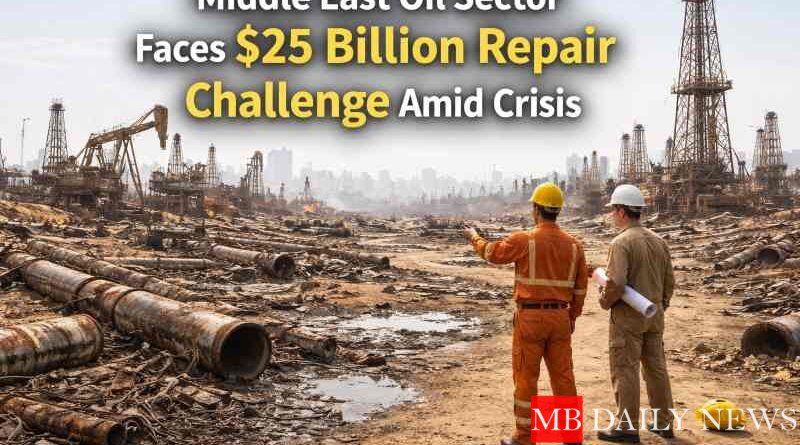
Middle East Oil Sector Faces $25 Billion Repair Challenge Amid Crisis
MB DAILY NEWS | Raleigh, NC.
The Middle East oil sector grapples with unprecedented challenges following recent conflicts. Damage to critical energy infrastructure has sparked concerns about supply disruptions. Analysts estimate repair costs could exceed $25 billion, highlighting the scale of the crisis. However, financial resources may not be the primary obstacle. Structural limitations in the supply chain could significantly delay recovery efforts.
Impact on Global Energy Supply
The ongoing conflict has severely affected global energy supply chains. The Strait of Hormuz, a vital shipping route, faces closures that threaten oil exports. Additionally, facilities like Qatar’s Ras Laffan Industrial City, which produces a significant portion of the world’s liquefied natural gas, have sustained extensive damage. Missile strikes have rendered key liquefaction units inoperable, leading to a 17 percent reduction in capacity. This situation has triggered a force majeure, complicating the recovery process further.
Long-Term Recovery Timeline
Experts predict a lengthy recovery period for the affected facilities. Rystad Energy suggests that it may take up to five years to restore operations at Ras Laffan. The delay stems from a shortage of gas turbines, with only three global suppliers facing production backlogs. This scarcity of essential equipment underscores the vulnerability of the energy sector to geopolitical tensions. Stakeholders must prepare for prolonged disruptions as they navigate these challenges.
Financial Constraints vs. Structural Issues
While financial capital is necessary for repairs, structural constraints pose a more significant challenge. Audun Martinsen from Rystad Energy emphasizes that recovery will depend on overcoming these limitations. Some facilities may resume operations within months, while others could remain offline for years. The situation illustrates the complexity of restoring energy infrastructure in a conflict-ridden region. Stakeholders must consider both immediate and long-term strategies to address these challenges.
Effects on Regional Investments
Recent attacks have jeopardized substantial investments in the region’s energy sector. The Bapco Sitra Refinery in Bahrain was in the midst of a $7 billion modernization when it faced destruction of newly commissioned units. This setback delays anticipated revenue, complicating the financial landscape for ongoing projects. Investors may reassess their commitments in light of the heightened risks associated with energy infrastructure in the Middle East.
Future of Oil Production Capacity
As infrastructure remains damaged, the region’s oil production capacity faces significant setbacks. Each day of disruption pushes pre-war production levels further out of reach. The uncertainty surrounding the Strait of Hormuz adds to the challenges faced by oil producers. Stakeholders must monitor developments closely to gauge the potential impact on global oil prices. The situation calls for strategic planning to mitigate risks associated with ongoing instability.
Global Market Reactions
The global market is responding to the turmoil in the Middle East with heightened volatility. Traders are closely watching developments that could affect oil supply and prices. As the situation evolves, market participants must remain vigilant to adjust their strategies accordingly. The implications of these disruptions extend beyond the region, affecting energy consumers worldwide. Future trends will depend on the pace of recovery and geopolitical developments in the area.