

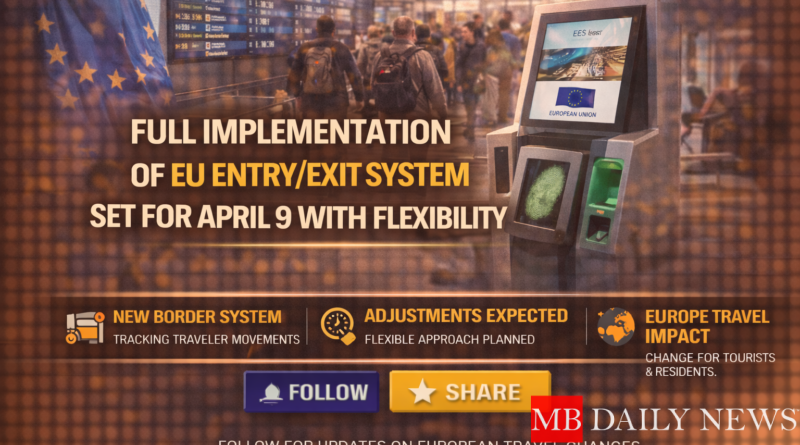
Full Implementation of EU Entry/Exit System Set for April 9 with Flexibility
MB DAILY NEWS | Raleigh, NC.:
The EU Entry/Exit System will fully implement on April 9, introducing significant changes to border control processes. This system aims to enhance security and streamline entry for travelers. Stakeholders, including governments and travelers, are keenly observing the rollout. The flexibility in implementation may ease initial challenges. Authorities expect smoother transitions for both travelers and border agents. This development marks a crucial step in modernizing Europe’s border management. Explore listings that match the story context.
Understanding the EU Entry/Exit System
The EU Entry/Exit System will track the entry and exit of non-EU nationals. This initiative aims to improve border security and facilitate data collection. Enhanced tracking will help identify overstays and improve immigration enforcement. Travelers will experience a more efficient process at border crossings. The system will also support the Schengen Area’s integrity. Understanding its implications is vital for both travelers and EU member states. Discover getaways and related local highlights.
Implications for Travelers
Travelers will need to prepare for new procedures when entering the EU. The system will require biometric data collection, including fingerprints and facial recognition. This change aims to expedite processing times and enhance security. Travelers should stay informed about the requirements to avoid delays. Awareness of the new system will help ensure a smoother travel experience. The flexibility in implementation may provide some leeway during the transition period.
Border Control Enhancements
Border control agencies will benefit from improved data management and analysis capabilities. The system will allow for real-time monitoring of entries and exits. Enhanced technology will support agents in making informed decisions at checkpoints. This modernization aims to reduce wait times and improve overall efficiency. Agencies are preparing for the transition with training and updated protocols. The effectiveness of these enhancements will be closely monitored post-implementation.
Potential Challenges Ahead
Despite the benefits, challenges may arise during the initial rollout of the system. Technical issues could disrupt operations at border crossings. Additionally, public acceptance of biometric data collection remains a concern. Authorities must address privacy and security issues to gain traveler trust. Monitoring the system’s performance will be crucial in identifying and resolving problems. Stakeholders will need to adapt quickly to ensure a successful implementation.
Future Developments to Watch
As the implementation date approaches, stakeholders will focus on ongoing updates and adjustments. Authorities may release additional guidance for travelers and border agents. Observers will watch how flexibility in the rollout impacts overall effectiveness. Future enhancements to the system could emerge based on initial feedback. The EU’s commitment to security and efficiency will shape future border policies. Keeping abreast of developments will be essential for all involved.
Conclusion: A New Era for EU Borders
The full implementation of the EU Entry/Exit System represents a significant shift in border management. This initiative aims to balance security needs with traveler convenience. As April 9 approaches, stakeholders prepare for the changes ahead. The flexibility offered during the rollout may mitigate initial disruptions. Observing the system’s impact on travel and security will be crucial. This development marks a new era for how the EU manages its borders.
Copyright © 2026 MB Daily News. All Rights Reserved.