
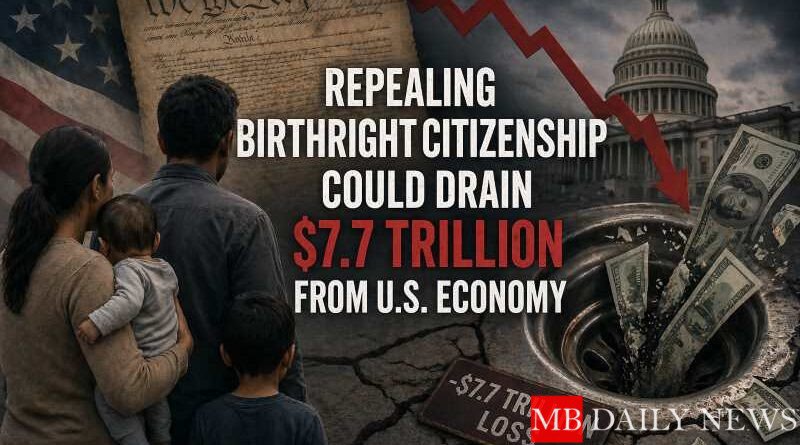
Repealing Birthright Citizenship Could Drain $7.7 Trillion from U.S. Economy
MB DAILY NEWS | Raleigh, NC.
Birthright citizenship impact: The potential repeal of birthright citizenship in the United States has sparked a heated debate, with significant economic implications emerging at the forefront. A recent analysis suggests that such a move could cost the U.S. economy an astonishing .7 trillion over the next decade. This figure raises urgent questions about the long-term effects of altering a policy that has been a cornerstone of American immigration law since its inception.
In a recent investigative report by MB Daily News, I took a closer look at what this proposed change could mean for the nation. As policymakers and advocates continue to discuss the merits and drawbacks of birthright citizenship, understanding the economic consequences is crucial for informed public discourse.
Economic Contributions of Immigrants
The economic landscape of the United States is intricately tied to its immigrant population. Birthright citizenship allows children born in the U.S. to automatically become citizens, which not only benefits families but also contributes significantly to the economy. These citizens grow up to be part of the workforce, paying taxes and driving innovation. The loss of this demographic could hinder economic growth and reduce overall productivity.
Long-Term Economic Impact
Ending birthright citizenship could lead to a decrease in consumer spending, as fewer citizens would mean fewer individuals contributing to the economy. This contraction could affect various sectors, from housing to retail, ultimately resulting in a financial ripple effect that could be felt nationwide. As businesses adapt to a shrinking consumer base, the risk of economic stagnation increases.
“In my reporting, this development appears more consequential once it is placed alongside similar national tensions.”
“The economic implications of repealing birthright citizenship extend far beyond immediate fiscal concerns,” a policy analyst noted. “They touch the very fabric of our society and its future.” In that sense, the story also echoes similar developments that have surfaced around the same issue in recent coverage, adding a wider frame to the immediate headline.
Broader Political Context
This discussion occurs against a backdrop of heightened political tension surrounding immigration policy. Recent proposals to alter or eliminate birthright citizenship have ignited debates about national identity and the values that underpin American society. These discussions are not merely academic; they reflect deep-seated beliefs about who is entitled to participate in the American dream.
“What recent public affairs coverage has shown is that comparable developments rarely fade at the level where they begin.”
Social and Cultural Ramifications
The potential repeal of this long-standing policy could also have profound social implications. Families that rely on birthright citizenship for stability may face uncertainty, impacting their ability to thrive. As communities grapple with these changes, issues of trust and cohesion could emerge, further complicating the immigration narrative in the U.S.
Future Implications
As the debate continues, it is essential to consider what the future holds. The economic cost of $7.7 trillion serves as a stark reminder of the interconnectedness of immigration policy and the economy. Lawmakers must weigh these financial implications against their political agendas, as the decisions made today could shape the nation’s economic landscape for generations to come.