
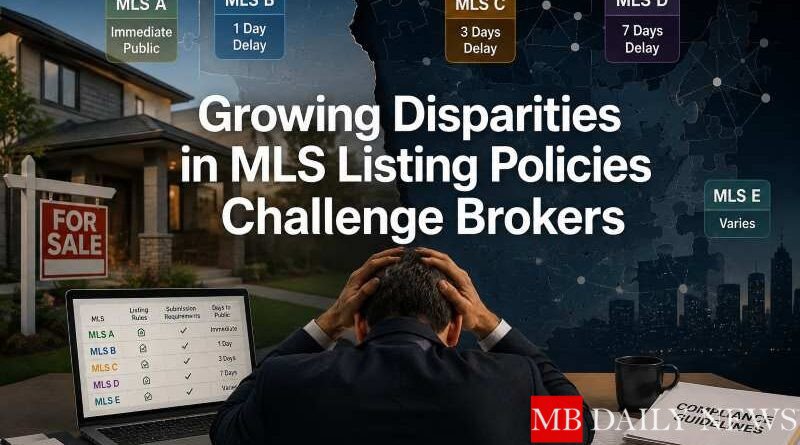
Growing Disparities in MLS Listing Policies Challenge Brokers
MB DAILY NEWS | Raleigh, NC.
MLS listing policies: Across the United States, the real estate landscape is increasingly shaped by the diverse policies of multiple listing services (MLSs). With over 500 MLSs operating nationwide, brokers face a complex environment where rules can vary significantly. This growing disparity poses challenges for real estate professionals who must navigate a patchwork of regulations, particularly regarding coming-soon listings.
In a recent investigative report by MB Daily News, I took a closer look at how these divergent MLS listing policies impact brokers and the larger real estate market. As the National Association of Realtors (NAR) delegates more authority to local MLSs, the inconsistencies in rules are becoming more pronounced, complicating the operations of brokers who work across different regions.
MLS listing policies: Understanding the Patchwork of MLS Rules
While some MLSs maintain nearly identical policies, others implement unique regulations that can hinder brokers. For instance, the Northwest MLS in the Pacific Northwest does not offer a coming-soon status or an office-exclusive listing option. In stark contrast, Canopy MLS in North Carolina has no specified limit on how long a listing can remain in coming-soon status. Such variations can create significant operational headaches for brokers managing listings across multiple MLSs.
As a result, The frustration stemming from these discrepancies is palpable among real estate professionals. Many brokers find themselves needing to adapt their strategies and operations based on the specific rules of each MLS they engage with, leading to inefficiencies and potential missed opportunities.
“The only reason my firm signed deals to syndicate coming soon listings to various platforms was due to the lack of uniformity in MLS data feeds,” said one industry leader. In that sense, the story also echoes similar developments that have surfaced around the same issue in recent coverage, adding a wider frame to the immediate headline.
The Challenge of Coming-Soon Listings
One of the most pressing issues brokers face today is the inconsistency in coming-soon listing policies. This status can be a valuable marketing tool, allowing properties to generate interest before officially hitting the market. However, with some MLSs omitting this option altogether, brokers are left grappling with limited visibility for their listings. This inconsistency not only complicates broker operations but also affects the overall market dynamics by skewing the availability of properties in different regions.
“In my reporting, this development appears more consequential once it is placed alongside similar national tensions.”
Why This Matters for Brokers and Consumers
The implications of these varying MLS rules extend beyond mere inconvenience for brokers. They can also impact consumers looking to buy or sell homes. Inconsistent policies may lead to confusion among buyers and sellers about the status of listings, potentially affecting their decisions and, ultimately, the market. As brokers adapt to these challenges, the effectiveness of their marketing strategies can be compromised, leading to slower transactions and missed opportunities.
“If all MLSs would include the coming soon status listings in their IDX feeds, this would be a non-issue,” commented a leading real estate executive.
Connecting to Broader Trends in Real Estate
At the same time, This issue of diverging MLS policies mirrors broader trends in the real estate industry, where technology and consumer expectations are evolving rapidly. As platforms like Realtor.com and Homes.com gain prominence, the need for standardized practices becomes even more critical. The lack of uniformity in MLS policies highlights the ongoing struggle between local governance and the need for a more cohesive national framework in real estate practices.
The Financial and Social Impact
These MLS discrepancies can have far-reaching financial implications for brokers and their clients. For brokers operating in multiple regions, the added complexity can translate into higher operational costs and reduced competitiveness. Consumers, too, may feel the effects as the variability in listing policies can lead to less transparency and confidence in the real estate process. As the market evolves, addressing these disparities may become essential for maintaining trust and accountability among all stakeholders.
Looking Ahead: The Future of MLS Policies
As the real estate industry continues to grapple with the challenges posed by divergent MLS listing policies, the need for reform is becoming increasingly clear. Stakeholders must engage in discussions to establish more standardized practices that can benefit brokers and consumers alike. The future of the real estate market may hinge on the ability of MLSs to adapt and collaborate effectively, ensuring a more cohesive and efficient marketplace.