
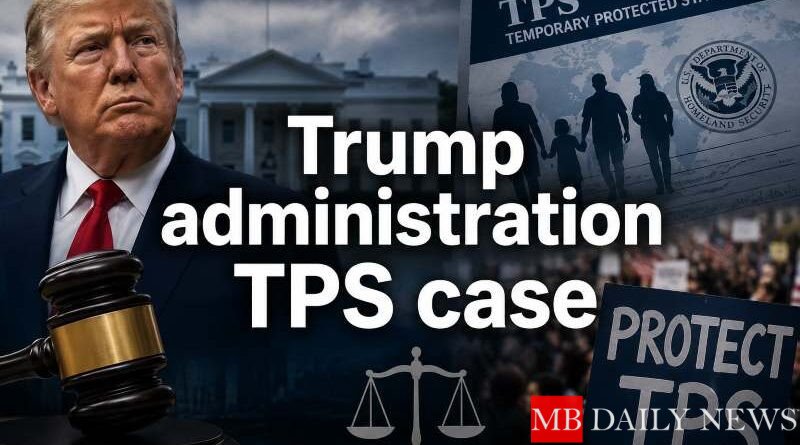
Trump Administration Seeks Unprecedented Powers in TPS Case
MB DAILY NEWS | Raleigh, NC.
The Trump administration is seeking expanded authority in a major Temporary Protected Status (TPS) case. Immigration advocates and legal experts say the move could reshape how the United States interprets and enforces immigration law.
In a recent investigative report for MB Daily News, I examined the growing controversy surrounding the case. The administration’s request goes beyond a standard legal argument. Instead, it reflects broader tensions in the national debate over immigration policy.
Understanding Temporary Protected Status
Temporary Protected Status is a humanitarian program that allows people from countries affected by war, natural disasters, or severe crises to live and work legally in the United States. TPS protects recipients from deportation while conditions in their home countries remain unsafe.
Now, the administration wants to narrow or redefine parts of the program. Consequently, these changes could affect tens of thousands of people who depend on TPS for safety and economic stability.
Legal experts warn that the powers requested in this case are highly unusual. They argue that the administration could weaken the foundation of TPS if courts approve the request.
“The potential impact of this case reaches far beyond TPS holders,” one immigration policy analyst explained. “It could also affect the future integrity of immigration law in the United States.”
In addition, recent national coverage shows similar legal and political efforts tied to immigration enforcement.
Legal Precedents and Constitutional Questions
Federal administrations have previously tried to expand executive authority in immigration matters. However, critics say the current approach appears more aggressive than past efforts.
As a result, the case raises important questions about the balance of power between the executive branch and the courts. Many legal scholars believe the ruling could influence future immigration policies for years to come.
In my reporting, I found that the broader political climate makes this case even more significant.
Public Reaction and Political Divide
Public opinion on immigration remains sharply divided across the country. Immigration advocates argue that limiting TPS protections could create severe hardship for families and communities.
On the other hand, supporters of stricter immigration enforcement believe stronger executive authority is necessary for border security and immigration control.
Recent public affairs coverage also suggests that immigration disputes often expand into larger political and constitutional debates.
“The administration’s pursuit of these powers could destabilize communities that rely on TPS protections,” one community organizer stated.
Broader Immigration Policy Trends
This case reflects a larger trend in modern immigration policy. Increasingly, presidents from both parties have used executive actions to reshape immigration rules without congressional approval.
Because of this, many experts fear the immigration system could become more unstable and politically driven. Protections that once seemed secure may now depend heavily on the priorities of each administration.
Impact on Families and Communities
Potential changes to TPS could deeply affect immigrant families across the country. Many TPS holders have lived in the United States for years, built careers, raised children, and contributed to local economies.
Therefore, uncertainty surrounding the program has increased anxiety among affected communities. Families now worry about losing legal protections and facing possible deportation.
Looking Ahead
As the case moves forward, legal experts and immigration advocates will closely watch the courts’ response. The final decision could shape not only TPS but also the broader future of immigration policy in the United States.
Furthermore, the case may determine how much authority future administrations can exercise over humanitarian immigration programs.
The outcome will likely influence immigration law, executive power, and immigrant rights for many years ahead.