
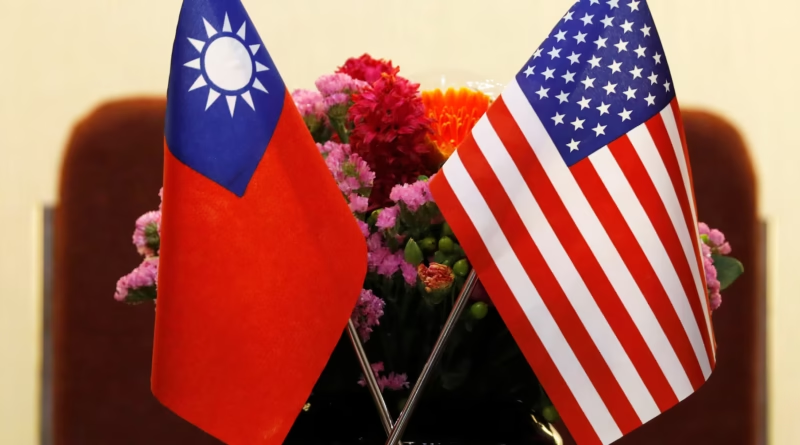
Concerns Rise Over Trump’s Taiwan Negotiation Strategy
MB DAILY NEWS | Raleigh, NC.
Trump Taiwan negotiation strategy: Recent remarks by President Donald Trump regarding U.S. arms sales to Taiwan have sparked concern among political leaders and analysts. During a Fox News interview, Trump suggested that the proposed $1 billion weapons package for Taiwan could become a bargaining tool in negotiations with China. As a result, many are questioning the future of U.S. policy toward the island and the potential impact on regional stability.
In a recent investigative report by MB Daily News, I examined the possible consequences of Trump’s comments. His statements quickly spread through diplomatic circles and prompted an immediate response from Taiwan’s leadership. Taiwan President Lai Ching-te rejected Trump’s assertion and stressed that U.S. arms sales are essential for deterring conflict. Furthermore, he stated that Taiwan “shall never be sacrificed or traded away.”
Trump Taiwan negotiation strategy: Shifting Dynamics in U.S.-China Relations
Trump’s remarks come amid an ongoing debate in Washington about the nature of support for Taiwan. The delayed weapons package, originally approved in principle in late 2025, has increased speculation that Trump may shift U.S. policy away from its traditional stance of “strategic ambiguity.” Instead, he could adopt a more transactional approach that links military support to broader negotiations with Beijing.
Consequently, this potential shift could have major implications not only for Taiwan but also for the wider geopolitical landscape. As tensions continue to rise between the U.S. and China, the delicate balance of power in the Taiwan Strait remains increasingly fragile.
“The Taiwan issue is not just a local concern; it has global implications,” one analyst explained. In addition, the story reflects similar developments seen in recent political coverage, which adds broader context to the immediate controversy.
Reactions from Washington and Beyond
Meanwhile, the response from Washington has been swift. Bipartisan lawmakers expressed alarm over Trump’s remarks and warned against treating Taiwan as a negotiation asset. In a letter to the administration, they emphasized that “American support for Taiwan is not up for negotiation.”
This bipartisan consensus highlights growing concern about the possibility of a more transactional U.S. foreign policy. According to many lawmakers, such an approach could weaken long-standing commitments to Taiwan and damage U.S. credibility in the region.
“In my view, this development matters not only for the immediate political moment, but also for the wider conversation it may intensify.”
Understanding the Stakes
At first glance, Trump’s comments may seem like a simple negotiation tactic. However, the implications are much broader. The Taiwan issue remains one of the most sensitive flashpoints in U.S.-China relations. Therefore, any perceived change in U.S. policy could trigger a strong response from Beijing.
Chinese officials have already warned that mishandling the Taiwan issue could lead to severe consequences. They continue to describe Taiwan as the “most important issue” in bilateral relations.
“What recent political coverage has shown is that similar flashpoints rarely stay contained for long.”
Likewise, many foreign policy experts believe the situation is highly precarious. “We must tread carefully; the stakes are incredibly high,” one analyst cautioned.
Broader Patterns in U.S. Foreign Policy
Trump’s remarks also reflect a broader trend in U.S. foreign policy. Increasingly, the lines between military support and diplomatic negotiations appear blurred. Because of this, the U.S. approach toward allies and adversaries may continue to evolve, especially in strategically sensitive regions.
The Human Impact of Policy Changes
Beyond diplomatic circles, a potential shift in U.S. policy toward Taiwan could directly affect the Taiwanese population. For many people on the island, U.S. arms sales represent a critical deterrent against Chinese aggression. Therefore, any uncertainty surrounding American support may increase public anxiety and concerns about regional security.
What Lies Ahead?
As the situation develops, the future of U.S.-Taiwan relations remains uncertain. The administration’s next steps will play a key role in shaping both the political narrative and Washington’s position amid growing tensions with China.
For now, observers continue to watch closely. They want to see whether Trump will clarify his stance or continue promoting a more transactional form of support for Taiwan.