
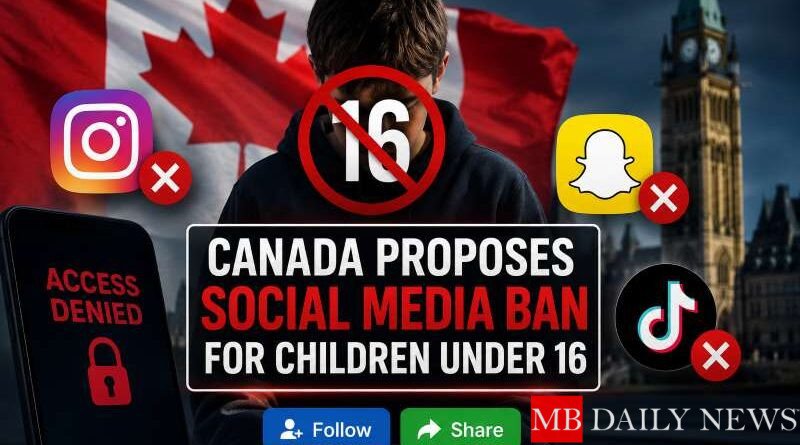
Canada Proposes Social Media Ban for Children Under 16
MB DAILY NEWS | Raleigh, NC.:
The Canadian government has introduced new legislation that would prohibit children under the age of 16 from accessing most social media platforms, marking one of the country’s most significant efforts to strengthen online safety protections for minors.
The proposed legislation, known as the Safe Social Media Act, was unveiled Wednesday and would require social media companies to comply with new safety standards if they wish to continue serving younger users. The bill still needs parliamentary approval before becoming law.
If approved, the measure would affect major platforms such as Instagram, Snapchat, TikTok, and other social networking services that attract large numbers of teenage users.
Social Media Companies Could Seek Exemptions
Under the proposed framework, most social media platforms would have an opportunity to obtain exemptions from the age restriction. To qualify, companies would need to meet safety requirements established by a newly created federal regulator.
Government officials say the goal is not to eliminate social media access entirely but to encourage stronger protections for young users.
“The objective is to ensure that digital platforms prioritize the safety and well-being of children before granting them access,” according to details released alongside the proposed legislation.
The bill would establish a regulatory body responsible for evaluating whether platforms have implemented sufficient safeguards to protect minors from harmful content, online exploitation, cyberbullying, and other digital risks.
Adult Platforms Face Stricter Rules
Unlike mainstream social media companies, adult pornography websites would not be eligible for exemptions under the proposed legislation.
The government has signaled that adult-content platforms present unique risks for minors and therefore require stricter restrictions.
“This legislation reflects growing concerns about children’s exposure to harmful online content and the long-term effects it may have on their development,” digital safety advocates have argued in recent years.
AI Chatbots and Gaming Platforms Excluded
The proposed age restrictions would not apply to artificial intelligence chatbots or gaming platforms such as Roblox.
Officials have indicated that these services operate under different categories and would be subject to separate regulatory considerations.
However, experts note that the rapid growth of AI-powered tools may eventually prompt additional discussions about youth protections in digital environments.
“As technology evolves, governments around the world continue to reassess how best to balance innovation with online safety,” several digital policy analysts have noted.
Growing Global Trend Toward Youth Online Safety
Canada’s proposal follows a broader international movement aimed at increasing protections for children and teenagers online.
Several countries have introduced measures designed to verify users’ ages, limit access to certain content, and require social media companies to take greater responsibility for user safety.
Supporters of the Canadian proposal argue that social media platforms have contributed to rising concerns surrounding mental health, cyberbullying, and excessive screen time among young people.
Critics, however, warn that enforcing age restrictions may present technical and privacy challenges. They also question whether such measures can effectively prevent underage users from accessing restricted platforms.
What Happens Next?
The Safe Social Media Act must now move through Canada’s parliamentary process before it can become law.
Lawmakers are expected to debate the proposal in the coming months. Industry groups, child safety advocates, technology companies, and privacy organizations will likely play a significant role in shaping the final version of the legislation.
If enacted, Canada would join a growing list of nations pursuing stricter regulations aimed at protecting children in the digital age.
Conclusion
Canada’s proposed social media ban for children under 16 represents a major shift in how governments approach online safety. While supporters view the legislation as a necessary step to protect young users, critics continue to raise questions about enforcement and privacy concerns.
As the debate unfolds, the outcome could influence future digital safety policies not only in Canada but also in other countries facing similar challenges in regulating social media platforms.