
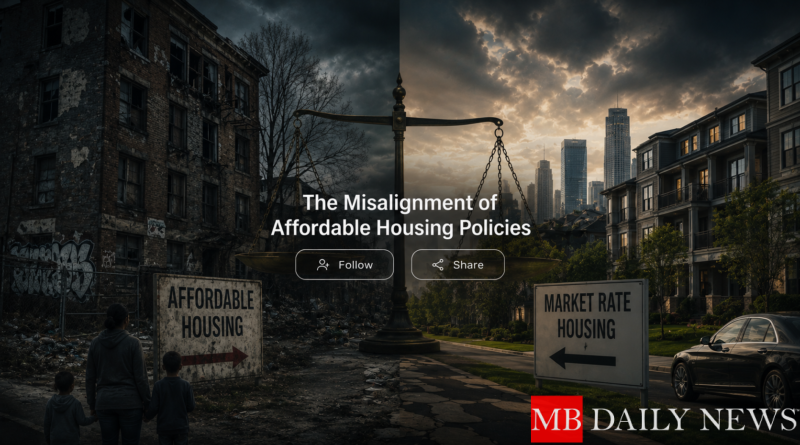
The Misalignment of Affordable Housing Policies
MB DAILY NEWS | Raleigh, NC.
affordable housing policies: As the nation grapples with a housing affordability crisis, a closer examination reveals that not all policies branded as “affordable” genuinely aim to reduce costs for families. The ongoing debate surrounding the so-called “missing middle” in housing—encompassing duplexes, triplexes, townhomes, and small multifamily units—has sparked discussions about inclusivity and diversity in neighborhoods. However, this framing often obscures a critical distinction: while economic affordability and social diversity are related, they are not synonymous.
In a recent investigative report by MB Daily News, I took a closer look at how the current housing policies are structured and the implications they have for communities. The narrative that adding more housing types will inherently lead to affordability overlooks the complexities of market dynamics and community needs.
Understanding the Affordable Housing Debate
The concept of “affordable housing” frequently suggests that simply increasing the number of housing options will lower prices. Proponents argue that a wider variety of housing types will create more inclusive neighborhoods. Yet, this perspective conflates two distinct objectives: achieving economic affordability and fostering neighborhood diversity. While both goals are important, they require different strategies and considerations.
This misalignment can lead to policies that promise lower housing costs but instead focus on reshaping social landscapes without addressing the underlying economic factors that drive prices up. The idea that merely diversifying housing types will result in lower costs is misleading and can result in disillusionment for those seeking genuine affordability.
“Affordable housing should prioritize economic realities, not just social aspirations.” In that sense, the story also echoes similar developments that have surfaced around the same issue in recent coverage, adding a wider frame to the immediate headline.
The American Dream and Housing
The American dream has historically been tied to the notion of ownership and the freedom to pursue opportunities in new territories. This ethos, rooted in the idea of westward expansion, reflects a belief in self-reliance and reinvention. It is not about fitting into existing urban frameworks but rather about creating new spaces where families can thrive. The current housing debate seems to have lost sight of this foundational principle, focusing instead on how to fit diverse populations into established, often expensive, neighborhoods.
“In my reporting, this development appears more consequential once it is placed alongside similar national tensions.”
Economic Factors at Play
To understand the disconnect between housing policies and affordability, one must consider the economic landscape. Rising land costs, construction expenses, and zoning regulations play significant roles in determining housing prices. Policies that prioritize neighborhood diversity without addressing these economic realities may inadvertently exacerbate the affordability crisis rather than alleviate it.
“Policies need to reflect the economic landscape to be truly effective in addressing housing needs.”
Broader Patterns in Housing Policy
This issue is not isolated to one region or type of housing. Across the country, cities are grappling with similar challenges as they attempt to implement policies aimed at increasing housing diversity. However, without a clear focus on economic affordability, these efforts can fall short of their intended impact. The conversation must shift from merely increasing the number of housing types to ensuring that these types are accessible and affordable for all families.
Social and Political Implications
The implications of this misalignment extend beyond individual families to the broader social fabric of communities. When housing policies fail to deliver on their promises of affordability, public trust diminishes. Communities may become polarized, with those advocating for diversity clashing with those who prioritize affordability. This tension can hinder effective governance and lead to a cycle of frustration and disillusionment among residents.
Looking Ahead: What This Means for the Future
As policymakers and advocates continue to navigate the complexities of housing in America, it is crucial to recognize the difference between economic affordability and social diversity. Genuine progress will require a balanced approach that values both objectives while understanding their distinct roles. Moving forward, a renewed focus on economic realities in housing policy may signal a shift towards more meaningful solutions that truly address the needs of families across the nation.