
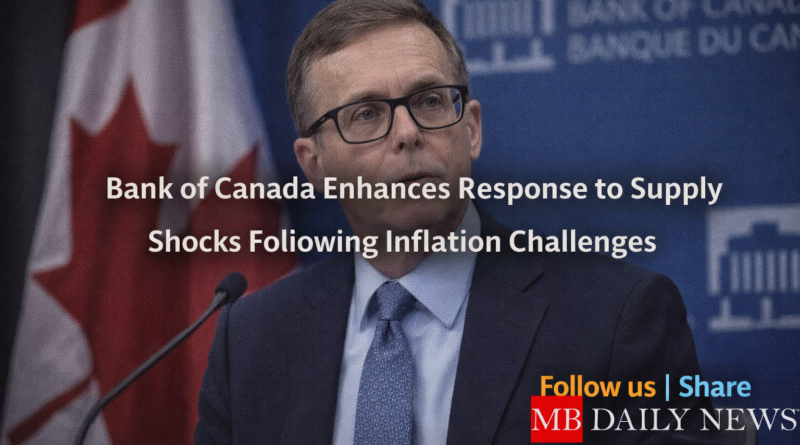
Bank of Canada response to supply shocks: Bank of Canada Enhances Response to Supply Shocks Following Inflation Challenges
MB DAILY NEWS | Raleigh, NC
Bank of Canada response to supply shocks: Economists express growing concerns about rising oil prices and their potential impact on inflation across various sectors. The Bank of Canada is actively addressing these challenges as it refines its approach to economic forecasting. Senior deputy governor Carolyn Rogers highlighted the lessons learned from recent inflationary pressures during a speech in Brandon, Manitoba. The central bank’s previous models underestimated the persistence of inflation, which surprised many policymakers. This miscalculation delayed necessary interest rate increases, prompting a reevaluation of their forecasting strategies.
Lessons from Inflationary Pressures
Rogers emphasized that the Bank of Canada faced unexpected inflation following the pandemic, which complicated their economic recovery efforts. The central bank had relied on decades of experience with stable inflation, leading to assumptions that recent shocks would be temporary. As demand surged post-pandemic, the reality proved different, with supply constraints lasting longer than anticipated. This experience has prompted the Bank to reassess its forecasting methods and improve its response mechanisms. Understanding these dynamics is crucial for maintaining economic stability moving forward.
Improving Forecasting Models
In light of recent challenges, the Bank of Canada is enhancing its ability to detect and analyze supply shocks. Rogers noted that incorporating real-time data and increasing engagement with businesses will provide better insights into economic conditions. This proactive approach aims to ensure that the central bank can respond more effectively to future disruptions. By moving beyond traditional forecasting methods, the Bank seeks to adapt to rapidly changing economic landscapes. This shift in strategy reflects a commitment to maintaining stability in the face of uncertainty.
Scenario Analysis as a Tool
The Bank of Canada is now employing scenario analysis to navigate complex economic situations. This method allows policymakers to consider multiple potential outcomes rather than relying on a single forecast. Rogers pointed out that this approach was utilized after the initial U.S. tariff announcements, demonstrating its effectiveness. By evaluating various scenarios, the Bank can better prepare for potential economic shocks. This flexibility is essential for adapting to the unpredictable nature of global markets.
Impact of Rising Oil Prices
While the Bank of Canada is refining its strategies, the immediate effects of rising oil prices remain uncertain. Economists are closely monitoring how prolonged increases in oil costs might influence overall economic growth in Canada. Higher oil prices can lead to increased production costs, which may subsequently affect consumer prices. Understanding these dynamics will be vital for the Bank as it formulates its monetary policy moving forward. Stakeholders should remain vigilant as the situation evolves.
Communication with Canadians
Rogers highlighted the importance of clear communication regarding the Bank’s long-term inflation targets. By reassuring Canadians that the goal remains around two percent, the Bank aims to foster confidence in its monetary policy. Effective communication is crucial for managing public expectations and maintaining trust in the central bank’s decisions. As inflation concerns persist, the Bank’s transparency will play a significant role in shaping economic perceptions. Stakeholders will benefit from staying informed about the Bank’s ongoing strategies.
Looking Ahead
The Bank of Canada’s recent experiences underscore the need for adaptability in economic policymaking. As global economic conditions continue to fluctuate, the central bank’s enhanced response mechanisms will be put to the test. Policymakers must remain vigilant in monitoring inflationary trends and supply chain disruptions. The lessons learned from the pandemic will inform future strategies, ensuring that the Bank can navigate potential challenges effectively. Observers should watch for further developments as the Bank implements its refined approaches.