
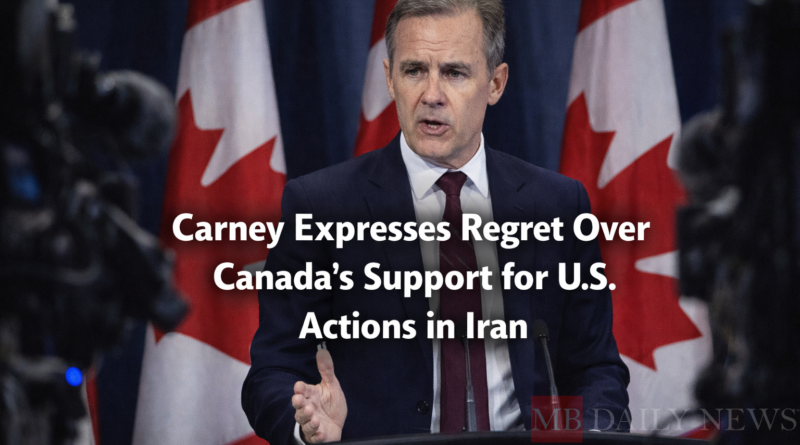
Carney Expresses Regret Over Canada’s Support for U.S. Actions in Iran
MB DAILY NEWS | Raleigh, NC
Canada’s support for U.S. actions: Canada’s Prime Minister Carney addressed reporters regarding the nation’s backing of U.S. military actions in Iran. His comments marked the first time he responded to inquiries since the strikes commenced. Carney expressed a sense of regret about Canada’s involvement in the situation. He emphasized the complexities surrounding the decision to support the U.S. actions. The Prime Minister’s remarks reflect a growing concern about the implications of military interventions. Observers are keen to see how this stance will influence Canada’s foreign policy moving forward.
Concerns Over International Law
During the press conference, Carney highlighted that the strikes might have violated international law. This assertion raises significant questions about the legal frameworks governing military actions. Many analysts are now scrutinizing the implications of such violations on global diplomatic relations. The Prime Minister’s acknowledgment of these concerns signals a shift in Canada’s approach to international conflicts. Stakeholders are likely to debate the balance between national security and adherence to international norms. Future discussions may focus on how Canada can navigate these complex legal landscapes.
Implications for Canada-U.S. Relations
Canada’s support for U.S. military actions could strain its relationship with other nations. Allies may view this support as a departure from Canada’s traditional stance on military interventions. Carney’s regret may reflect an awareness of the potential backlash from both domestic and international audiences. The Prime Minister’s comments could lead to a reevaluation of Canada’s role in global conflicts. Observers will watch closely to see if this leads to a more cautious approach in future collaborations with the U.S. on military matters.
Domestic Reactions to the Strikes
Public opinion in Canada regarding the U.S. strikes is likely to be divided. Some citizens may support the government’s decision to stand with the U.S., while others may oppose military involvement. Carney’s expression of regret could resonate with those who advocate for a more peaceful foreign policy. The government may face pressure to clarify its position on military engagements abroad. As discussions unfold, the Prime Minister’s remarks could influence public sentiment and political discourse. Future polls may reveal shifts in Canadian attitudes toward military alliances.
Future of Canadian Foreign Policy
Carney’s comments may signal a potential shift in Canada’s foreign policy direction. The government might reassess its approach to international conflicts in light of recent events. Observers will be attentive to how this impacts Canada’s commitments to global peace initiatives. The Prime Minister’s regret could lead to a more diplomatic stance in future international relations. Stakeholders are likely to advocate for policies that prioritize dialogue over military action. The evolution of Canada’s foreign policy will be crucial to watch in the coming months.
International Reactions and Consequences
Global reactions to Canada’s support for U.S. actions will shape future diplomatic relations. Countries may respond differently based on their own geopolitical interests and alliances. Carney’s acknowledgment of potential legal violations could prompt discussions at international forums. The ramifications of these military actions may extend beyond immediate conflicts. Nations will likely evaluate their partnerships with Canada based on its recent stance. The international community will be closely monitoring how Canada navigates these complex dynamics.
Looking Ahead: What’s Next for Canada?
As Canada moves forward, the government must consider the implications of its foreign policy decisions. Carney’s regret may influence upcoming discussions in Parliament regarding military support. The Prime Minister’s remarks could lead to a broader dialogue about Canada’s role on the world stage. Stakeholders will be eager to see how the government balances national interests with international responsibilities. Future engagements may reflect a more cautious approach to military alliances. The evolving landscape of international relations will require careful navigation from Canadian leaders.