
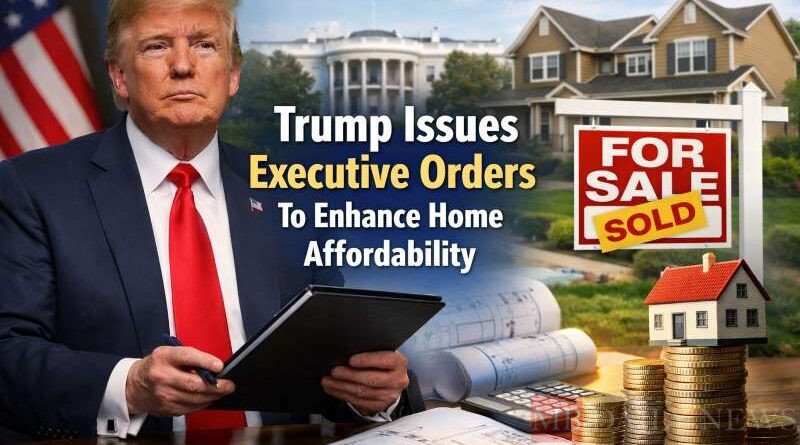
Trump Issues Executive Orders To Enhance Home Affordability
MB DAILY NEWS | Raleigh, NC
Recent executive orders signed by Trump focus on improving home affordability. These measures aim to facilitate mortgage access through community banks. The initiative seeks to address the growing concerns of voters struggling with high homeownership costs. By streamlining the mortgage process, the administration hopes to stimulate new construction. This effort reflects a broader strategy to engage with constituents dissatisfied with current housing market conditions. Observers will be keen to see how these changes impact the housing landscape.
Focus on Community Banks
One of the key aspects of the executive orders is the emphasis on community banks. These institutions often cater to local borrowers and can provide tailored mortgage solutions. By easing regulations, the administration aims to empower these banks to offer more competitive rates. This shift could lead to increased lending activity in underserved areas. Enhanced access to financing may encourage potential homeowners to enter the market. Stakeholders will monitor how this affects overall lending trends in the coming months.
Addressing Voter Concerns
The executive orders respond to growing voter frustration regarding homeownership affordability. Many individuals feel priced out of the housing market due to rising costs. By targeting these issues, the administration seeks to resonate with constituents ahead of upcoming elections. This approach may help bolster support among those who prioritize housing as a key issue. Political analysts will evaluate the effectiveness of these measures in swaying public opinion. The impact on voter sentiment could shape future policy discussions.
Impact on New Construction
Boosting new construction is another significant goal of the recent executive actions. Increased housing supply can help alleviate pressure on home prices. By simplifying the mortgage process, the administration hopes to incentivize builders to undertake new projects. This could lead to a more balanced housing market over time. Developers may respond positively to the prospect of easier financing options. The construction sector will be closely watched for signs of growth in response to these initiatives.
Long-Term Housing Market Effects
These executive orders may have lasting implications for the housing market. By improving access to mortgages, the administration aims to create a more favorable environment for homebuyers. Increased competition among lenders could lead to better rates and terms for consumers. Over time, this may contribute to a more stable housing market. Analysts will assess how these changes influence home prices and availability. The long-term effects on affordability will be a critical area of focus.
Political Ramifications
The political landscape may shift as a result of these executive actions. By addressing housing affordability, the administration positions itself as responsive to voter needs. This could enhance its appeal among key demographics concerned about homeownership. Political opponents may challenge the effectiveness of these measures. The discourse surrounding housing policy will likely intensify as elections approach. Observers will analyze how these developments influence campaign strategies.
Future Monitoring and Adjustments
As the implementation of these executive orders unfolds, ongoing monitoring will be essential. Stakeholders will look for indicators of success or areas needing adjustment. Feedback from community banks and homebuyers will play a crucial role in shaping future policies. The administration may need to adapt its approach based on real-world outcomes. Continuous evaluation will help ensure that the goals of improving home affordability are met. The evolving housing market will remain a focal point for policymakers and voters alike.