
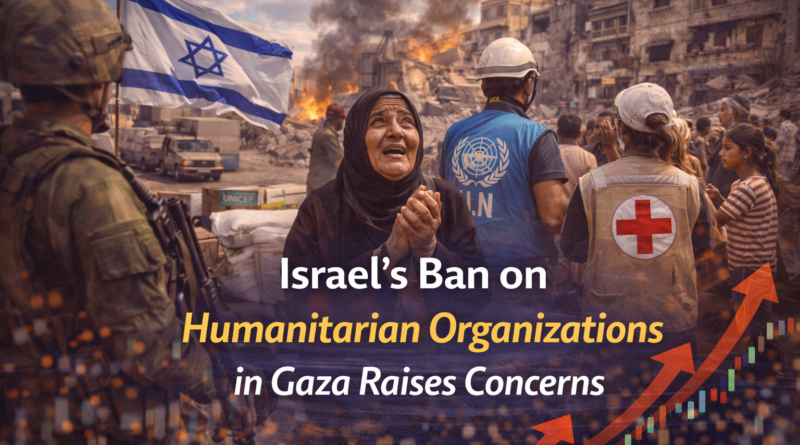
Israel’s Ban on Humanitarian Organizations in Gaza Raises Concerns
MB DAILY NEWS | Raleigh, NC:
Israel’s recent decision to prohibit humanitarian organizations in Gaza has sparked significant concern among international observers. This ban complicates the already challenging situation for civilians in the region. Aid agencies have played a crucial role in providing essential services and support. Restrictions on their operations could exacerbate the humanitarian crisis. Stakeholders are closely monitoring the implications of this decision. The potential for increased suffering among the population raises urgent questions about future aid access.
Impact on Civilian Welfare
The ban on humanitarian organizations in Gaza directly threatens the welfare of its residents. Many families rely on these agencies for food, medical care, and shelter. Without their support, the situation could deteriorate rapidly. The international community is concerned about the potential for increased malnutrition and disease. Observers emphasize the need for a balanced approach that considers security and humanitarian needs. The ongoing conflict complicates efforts to provide necessary assistance.
Reactions from Humanitarian Groups
Humanitarian organizations have expressed deep concern over Israel’s decision. They argue that aid is essential for survival in conflict zones. Many agencies have called for immediate dialogue to address the ban. They stress that humanitarian assistance should not be politicized. The ability to deliver aid is critical for maintaining basic human rights. Continued advocacy for access will be vital in the coming weeks.
International Response
The international community has reacted with alarm to the ban on humanitarian organizations in Gaza. Various governments and NGOs are urging Israel to reconsider its stance. Diplomatic efforts may intensify as stakeholders seek to address the humanitarian crisis. The United Nations has also expressed concern about the implications of restricted aid access. Observers note that international pressure could influence Israel’s policies. The situation remains fluid, and developments will be closely watched.
Long-term Consequences
Long-term consequences of the ban could be severe for Gaza’s population. A sustained lack of aid may lead to increased poverty and instability. The region’s infrastructure is already under strain, and further restrictions could hinder recovery efforts. Experts warn that the ban could fuel resentment and conflict. Addressing the underlying issues will be essential for lasting peace. The humanitarian situation will likely remain a focal point in discussions about Gaza’s future.
Potential for Escalation
Restrictions on humanitarian organizations may lead to further escalation in the region. As tensions rise, the risk of violence could increase. Civilians often bear the brunt of such conflicts, leading to tragic consequences. Observers are concerned that the ban could provoke protests or unrest. The dynamics of the situation require careful monitoring. Stakeholders must prioritize the safety and well-being of the civilian population.
Future of Humanitarian Aid
The future of humanitarian aid in Gaza hangs in the balance following this ban. Organizations are exploring alternative methods to deliver assistance. Innovative solutions may be necessary to navigate the restrictions. Collaboration with local entities could play a crucial role in sustaining aid efforts. The international community’s support will be vital in these endeavors. Continued advocacy for humanitarian access remains essential for the region’s stability.
Copyright © 2026 MB Daily News. All Rights Reserved.