
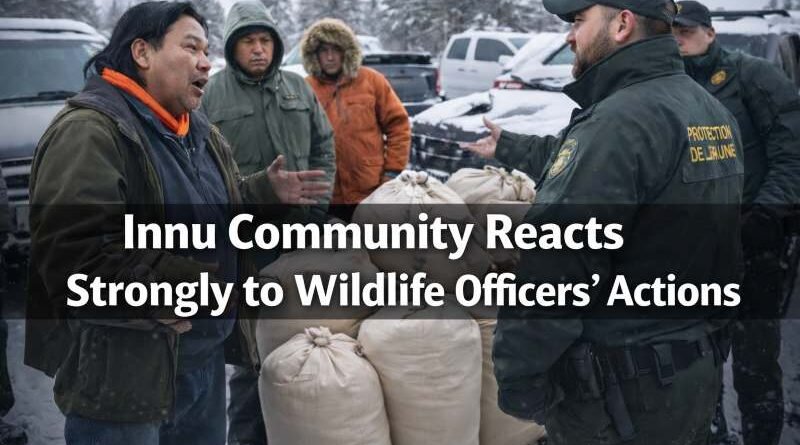
Innu Community Reacts Strongly to Wildlife Officers’ Actions
MB DAILY NEWS | Raleigh, NC
The Innu community on Quebec’s Lower North Shore faces turmoil following a recent incident involving wildlife officers. Officers surrounded a cabin in Ekuanitshit on Monday evening, leading to significant distress among residents. An elderly woman sustained injuries during this intervention, prompting outrage and concern within the community. Many residents view the officers’ actions as aggressive and unwarranted. The situation raises questions about the methods employed by wildlife authorities in managing local wildlife issues. Community leaders are now calling for a review of these tactics.
Community Outrage
Residents express deep frustration over the wildlife officers’ approach during the cabin raid. Many feel that the intervention disregarded the community’s rights and safety. The incident has sparked discussions about the relationship between local authorities and Indigenous communities. Voices within the community emphasize the need for respectful dialogue and cooperation. This event has highlighted the ongoing tensions surrounding wildlife management in the region. Community members are now seeking accountability for the actions taken by the officers.
Impact on Local Residents
The raid has left many residents feeling vulnerable and anxious about their safety. An elderly woman’s injury during the incident has particularly resonated with the community. Families worry about the implications of such aggressive tactics on their daily lives. The emotional toll of the event may linger, affecting community cohesion. Residents are now more cautious about interactions with wildlife authorities. This incident may lead to increased advocacy for better treatment of Indigenous communities.
Calls for Change
In light of the incident, community leaders are advocating for changes in wildlife management practices. They emphasize the importance of involving Indigenous voices in decision-making processes. Many believe that a collaborative approach could prevent future conflicts. The community seeks to establish clearer guidelines for wildlife officers’ conduct. Leaders are calling for training that emphasizes respect and understanding of Indigenous rights. This incident could serve as a catalyst for broader discussions on wildlife governance.
Legal and Ethical Considerations
The actions of the wildlife officers raise significant legal and ethical questions. Many community members argue that the intervention violated their rights. Legal experts may need to examine the protocols governing wildlife management in Indigenous territories. Ethical considerations regarding the treatment of vulnerable populations also come into play. The community is likely to explore legal avenues to address their grievances. This situation could lead to important precedents regarding Indigenous rights and wildlife management.
Future Implications
The fallout from this incident may have lasting effects on community relations with wildlife authorities. Trust between the Innu community and government agencies could be severely impacted. Future wildlife management strategies may need to be re-evaluated to prevent similar occurrences. The community’s response will likely shape the dialogue around Indigenous rights in Quebec. Observers will watch closely to see how authorities address these concerns moving forward. This incident may influence policy changes at higher levels of government.
Community Resilience
Despite the challenges posed by this incident, the Innu community remains resilient. Many residents are coming together to support one another in the aftermath. Community gatherings and discussions are likely to foster solidarity and collective action. This incident may strengthen their resolve to advocate for their rights. The community’s response could inspire other Indigenous groups facing similar challenges. As they navigate this situation, their unity will play a crucial role in shaping their future.