
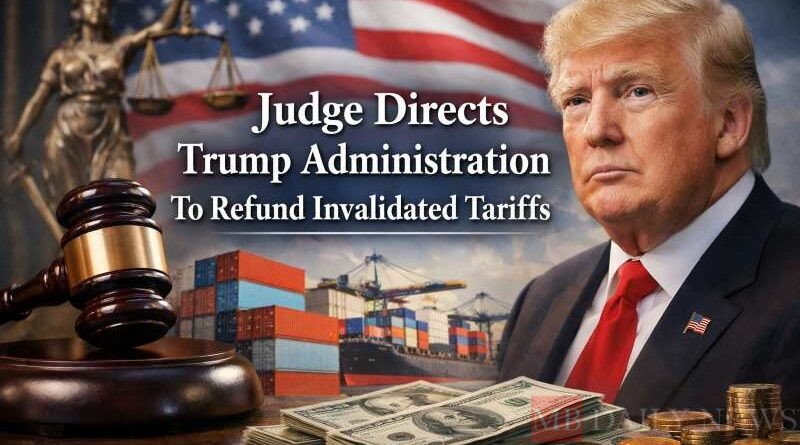
Judge Directs Trump Administration To Refund Invalidated Tariffs
MB DAILY NEWS | Raleigh, NC
Invalidated tariffs: A federal judge has mandated that the Trump administration initiate refunds for over 0 billion collected from tariffs deemed invalid by the Supreme Court. This ruling follows a significant legal decision that overturned these tariffs, prompting a wave of litigation. Companies across various sectors have filed more than 2,000 lawsuits to recover their funds. The implications of this ruling could reshape trade policies and financial strategies for many businesses. Stakeholders are now closely monitoring how the administration will respond to this directive. The outcome may influence future tariff regulations and international trade relations.
Legal Landscape Shifts
The recent court ruling marks a pivotal moment in the ongoing legal battles surrounding trade tariffs. Businesses that previously faced financial strain due to these tariffs now see a potential path to recovery. The judge’s decision underscores the judiciary’s role in checking executive power in trade matters. Companies are eager to understand the timeline and process for receiving their refunds. This development may encourage more businesses to challenge governmental trade policies in the future. Legal experts anticipate that this case could set important precedents for similar disputes.
Impact on Businesses
For many companies, the refunds represent a significant financial relief after months of uncertainty. The tariffs had imposed additional costs that affected pricing and competitiveness in the market. Businesses that relied heavily on imports faced tough choices, including raising prices or absorbing losses. The prospect of recovering these funds could enable companies to reinvest in growth and innovation. As firms prepare to navigate the refund process, they are also reassessing their supply chains. This situation highlights the broader implications of trade policies on domestic economic health.
Political Reactions
Political leaders are responding to the ruling with a mix of support and criticism. Some view the decision as a necessary correction to overreaching trade policies. Others argue that it complicates the administration’s efforts to manage international trade relations. The ruling may also influence upcoming elections, as candidates address trade issues that resonate with voters. Observers are keen to see how this ruling will affect the political landscape moving forward. Trade policy remains a hot-button issue that could sway public opinion significantly.
Future Trade Policies
This ruling raises questions about the future of tariff implementation and enforcement. The administration must now consider how to approach trade negotiations with other countries. A shift in policy could lead to more collaborative international trade agreements. Businesses are advocating for clearer guidelines to prevent similar disputes in the future. The need for a balanced approach to tariffs is becoming increasingly evident. Stakeholders are urging policymakers to prioritize stability and predictability in trade relations.
Monitoring Developments
As the situation unfolds, analysts will closely monitor the administration’s next steps regarding the refunds. The response from affected companies will also be crucial in shaping the narrative. Legal experts predict that further litigation may arise as businesses seek clarity on the refund process. The broader economic implications of this ruling will likely influence market trends and investor confidence. Stakeholders are advised to stay informed about developments in this ongoing saga. The outcome could have lasting effects on the trade landscape.
Conclusion and Implications
The judge’s order to refund invalidated tariffs marks a significant turning point in trade policy. Companies are poised to benefit from this ruling, potentially revitalizing their operations. The political ramifications could reshape future trade discussions and negotiations. As businesses prepare for the refund process, they must also consider the evolving landscape of international trade. This situation serves as a reminder of the complexities inherent in trade policy and its far-reaching consequences. Observers will continue to watch closely as the administration navigates this challenging terrain.