
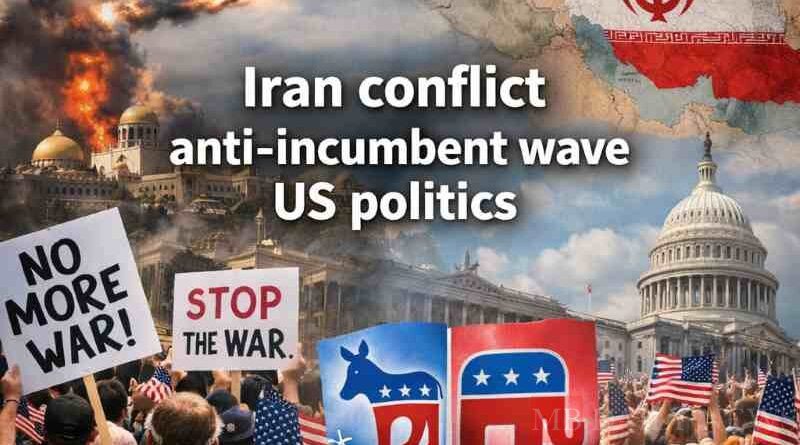
Could the Conflict With Iran Trigger an Anti-Incumbent Wave in the United States?
The military conflict involving the United States, Israel, and Iran that began in late February 2026 is already producing political, economic, and social repercussions. Some analysts warn that if the war continues into the summer, it could affect U.S. domestic politics and trigger an electoral backlash against leaders currently in power.
A Conflict Raising Doubts Among the Public
Military operations began with joint U.S. and Israeli strikes on targets in Iran, an offensive that reportedly killed Iran’s Supreme Leader, Ali Khamenei, and triggered retaliatory missile and drone attacks across the region. Since then, the conflict has escalated rapidly, including attacks on U.S. bases, disruptions to key energy routes, and rising tensions across several Middle Eastern countries. Meanwhile, early polling suggests that a significant portion of Americans do not support the military intervention. A survey cited by U.S. media indicates that around 60% of Americans disapprove of the strikes, compared with roughly 41% who support them. This level of disapproval could become politically significant if the conflict drags on.
The Political Risks of Prolonged Wars
Historically, military conflicts in the United States have produced mixed political effects. In some cases, they trigger a “rally around the flag” effect, where public support for the president rises at the beginning of a conflict.
However, when wars become prolonged or costly in human and economic terms, that support often fades. Historical examples include the Vietnam War and the Iraq War, where prolonged conflict eventually weakened political support for the administrations in power.
In the current situation, several factors could fuel public dissatisfaction:
- Potential U.S. military casualties
- Economic consequences, including rising oil prices and market volatility
- Criticism over the lack of a clear long-term strategy
If these factors worsen over time, public support could erode further.
Protests and Political Polarization
The conflict has already sparked protests in several U.S. cities, where demonstrators have criticized the military intervention and called for an end to the war. At the same time, the conflict has generated divisions even within political groups that typically support a tough stance toward Iran. Some influential voices within conservative circles have also expressed concerns about a prolonged war. Such divisions could deepen political polarization within the country.
A Potential “Anti-Incumbent” Wave?
If the conflict continues into the summer and produces mounting economic or human costs, some analysts believe it could lead to an anti-incumbent wave—a political backlash against politicians currently holding office.
Whether this happens will depend on several factors:
- the duration of the war
- the number of U.S. casualties
- the economic impact on American households
- and whether the public believes the war has clear and achievable goals.
For now, the conflict is still in its early stages, making it too soon to determine its long-term political impact. However, shifts in public opinion over the coming months could prove decisive.