
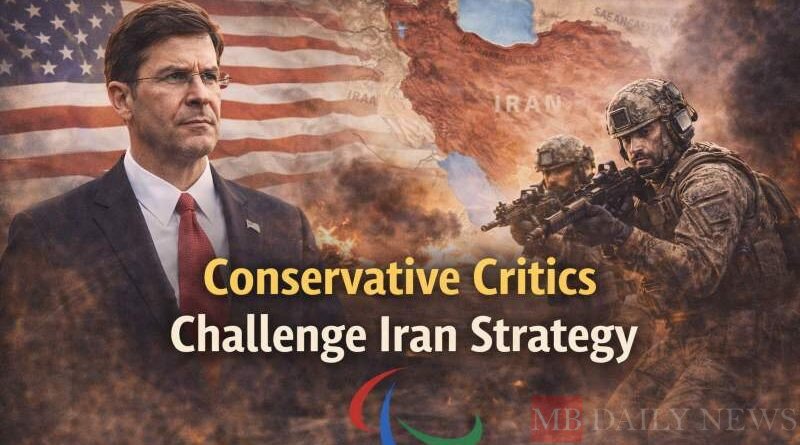
Conservative Critics Challenge Iran Strategy As Trump’s Defense Secretary Takes Action
MB DAILY NEWS | Raleigh, NC
Conservative voices are increasingly scrutinizing the current approach to Iran. Critics express concerns over the effectiveness and implications of recent military actions. This scrutiny comes at a time when the administration faces pressure to justify its strategies. The defense secretary, known for his media presence, is stepping up to address these challenges. His proactive stance aims to reassure both lawmakers and the public. Observers are keen to see how this will influence future policy decisions.
Criticism from the Right
Several conservative commentators have raised alarms regarding the administration’s tactics in Iran. They argue that the current strategy may escalate tensions rather than resolve them. This criticism reflects a broader unease within the party about military engagements abroad. Many conservatives advocate for a more cautious approach to foreign interventions. The debate highlights a divide among Republicans regarding national security priorities. Moving forward, this internal conflict could shape the party’s stance on foreign policy.
Defense Secretary’s Media Strategy
The defense secretary has gained a reputation for his ability to communicate effectively through media channels. His approach includes addressing concerns directly and promoting the administration’s narrative. By taking a visible role, he aims to bolster confidence in the government’s decisions. This strategy may help mitigate some of the backlash from conservative critics. His media presence also serves to engage with a broader audience beyond political circles. Observers will watch closely to see if this approach yields positive results.
Implications for U.S.-Iran Relations
Ongoing tensions with Iran present significant challenges for U.S. Foreign policy. Critics worry that aggressive posturing could lead to unintended consequences. The administration’s actions may provoke further hostility from Tehran, complicating diplomatic efforts. A careful balance is necessary to avoid escalating conflicts in the region. The outcome of this situation could have lasting effects on international relations. Stakeholders are closely monitoring developments to assess potential shifts in strategy.
Political Ramifications
As the debate over Iran strategy intensifies, political ramifications are likely to unfold. Lawmakers may feel compelled to take a stand on military involvement. This could lead to increased scrutiny of the administration’s foreign policy decisions. The potential for bipartisan support or opposition remains uncertain. Political dynamics will play a crucial role in shaping future actions regarding Iran. Observers will be attentive to how these discussions evolve in Congress.
Public Perception and Support
Public opinion on military actions in Iran is a critical factor for the administration. As conservative critics voice their concerns, the administration must gauge public sentiment. Support for military engagement can fluctuate based on perceived effectiveness and outcomes. The defense secretary’s efforts to communicate with the public will be essential in this context. Engaging with citizens may help build support for the administration’s approach. Future polling will provide insights into how these strategies resonate with the electorate.
Looking Ahead
The situation with Iran remains fluid, with many variables at play. The administration’s next steps will be crucial in determining the trajectory of U.S.-Iran relations. Continued criticism from conservative factions may prompt adjustments in strategy. The defense secretary’s role will be pivotal in navigating these challenges. Stakeholders will be watching for signs of policy shifts or new initiatives. The coming weeks will likely reveal how the administration responds to both internal and external pressures.