
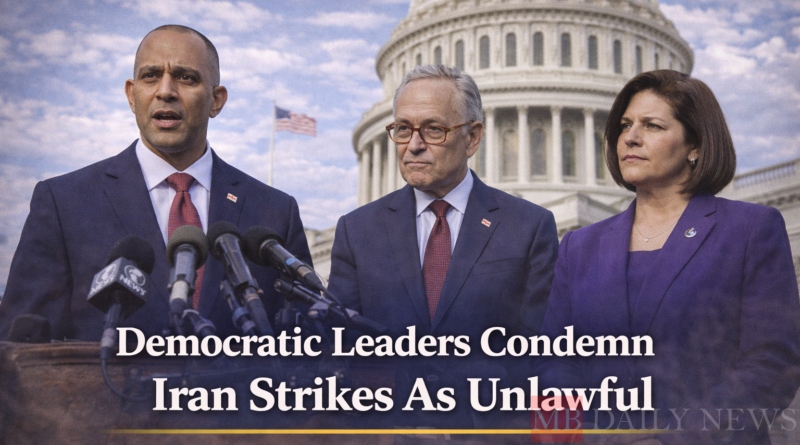
Democratic Leaders Condemn Iran Strikes As Unlawful
MB DAILY NEWS | Raleigh, NC
Iran strikes: Democratic leaders in Congress have voiced strong opposition to recent military actions against Iran, labeling them as unlawful. Their condemnation reflects a growing concern over the executive branch’s authority to engage in military actions without congressional approval. Lawmakers argue that such strikes undermine the constitutional balance of power. The pushback comes amid heightened tensions in the region and ongoing debates about U.S. Foreign policy. Many Democrats believe that unchecked military actions could lead to further escalation. They are advocating for a more restrained approach to international conflicts.
Calls for Legislative Action
In response to the situation, Democratic lawmakers are advocating for a vote aimed at limiting the president’s war powers. They argue that Congress must reclaim its constitutional role in decisions related to military engagement. This initiative seeks to ensure that any future military actions receive thorough legislative scrutiny. The proposed legislation aims to prevent unilateral military decisions that could have significant consequences. By pushing for this vote, Democrats hope to foster a more collaborative approach to foreign policy. This move could reshape the dynamics of U.S. Military involvement abroad.
Implications for U.S. Foreign Policy
The ongoing debate over military actions against Iran raises critical questions about U.S. Foreign policy direction. Lawmakers are concerned that unilateral strikes could alienate allies and escalate conflicts. A more collaborative approach may enhance diplomatic efforts and reduce tensions in volatile regions. The implications of these military actions extend beyond immediate security concerns. They could also affect long-term relationships with other nations. Observers will be watching closely to see how this situation unfolds and influences future policy decisions.
Public Sentiment and Political Pressure
Public opinion plays a significant role in shaping the response to military actions against Iran. Many citizens express concerns about the potential for war and the loss of life. This sentiment pressures lawmakers to take a stand against unilateral military actions. As public awareness grows, politicians may feel compelled to align their positions with constituents’ views. The political landscape could shift as voters demand accountability and transparency in foreign policy decisions. This dynamic may influence upcoming elections and legislative priorities.
Potential Consequences for the Administration
The administration faces potential backlash from both sides of the political spectrum regarding its military strategy. Critics argue that the lack of congressional approval undermines democratic principles. Supporters of the administration may contend that swift action is necessary for national security. This divide could complicate the administration’s ability to navigate future military engagements. As tensions with Iran persist, the administration must balance immediate security needs with long-term strategic goals. The outcome of this situation may have lasting effects on the president’s legacy.
Future Legislative Developments
As discussions continue, the possibility of new legislation regarding war powers remains on the table. Lawmakers are likely to introduce measures aimed at clarifying the president’s authority in military matters. These developments could lead to significant changes in how the U.S. Engages with foreign adversaries. The legislative process will be closely monitored by both supporters and opponents of military action. The outcome may redefine the scope of executive power in matters of war. Stakeholders will need to prepare for potential shifts in policy and strategy.
Conclusion and Next Steps
The condemnation of Iran strikes by Democratic leaders signifies a pivotal moment in U.S. Politics. As lawmakers push for greater oversight of military actions, the implications for foreign policy are profound. The ongoing debate reflects broader concerns about executive power and accountability. Observers will be keen to see how this situation evolves and what legislative actions emerge. The outcome will likely influence future military engagements and the balance of power in Washington. Stakeholders must remain vigilant as these discussions unfold.