
Luke Schauerte: Canada has the energy — now it must deliver
The world feels it when the Strait of Hormuz tightens. I saw that firsthand in 2003 while serving in the Royal Canadian Navy aboard HMCS Regina during Operation Apollo. Even then, it was clear how quickly instability in the Middle East can
ripple through global energy markets
. Shipping routes become fragile. Supply tightens. Reliability, once taken for granted, disappears overnight.
That pattern hasn’t changed.
Recent strikes on Qatar have cut
liquefied natural gas
(LNG) supply by roughly one-fifth, removing about 12.8 million tonnes from the market. A corridor that
carries about 20 per cent of the world’s energy
is suddenly constrained.
Demand, however, doesn’t pause. It keeps rising. Under current policies, the International Energy Agency projects natural gas demand will grow another 28 per cent by 2050, driven largely by Asia’s shift away from higher-emitting fuels.
While supply is disrupted, others are moving, building infrastructure, securing contracts and locking in long-term relationships. Those decisions are being made now.
Now, more than ever, Canada must step forward to establish itself as the
global energy producer
that produces energy reliably and responsibly to meet energy needs around the world.
At
Woodfibre LNG
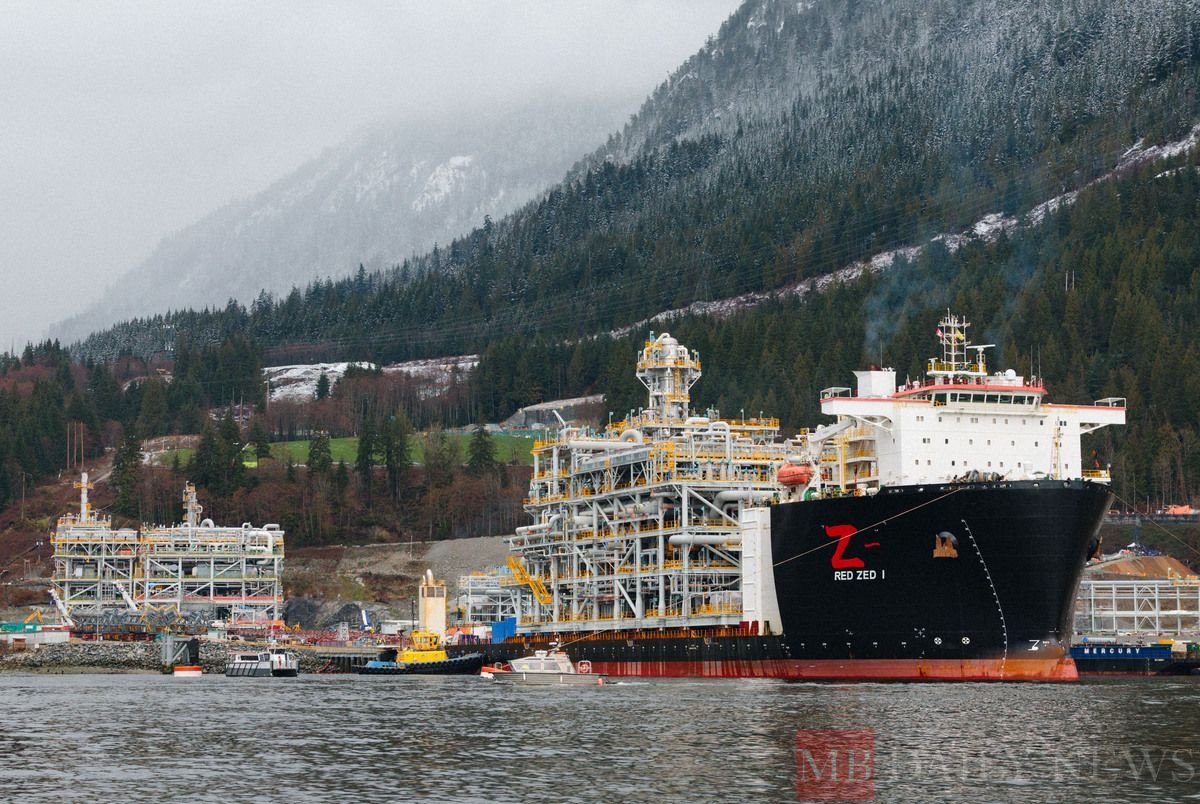
in British Columbia, the execution of that vision is underway. The project is being built using electric-drive technology powered by hydroelectricity, placing it among the lowest-emissions LNG facilities globally.
It is also being developed in partnership with and under the environmental oversight of Sḵwx̱wú7mesh Úxwumixw (Squamish Nation), reflecting a model where
Indigenous partnership
is integral to project delivery.
This is not a future ambition. It is a project being delivered today, within Canada’s regulatory framework and in partnership with Sḵwx̱wú7mesh Úxwumixw. LNG Canada has also demonstrated what the sector can achieve, delivering cargoes to markets that need reliable energy now more than ever.
Few countries can match Canada’s combination of resource scale, technical expertise, environmental standards and geopolitical stability. In a world where reliability is at a premium, that is a compelling value proposition.
But global energy markets do not reward potential. They reward delivery, which makes this moment for Canada both rare and time-limited.
Canada is not standing still. Projects are under construction, capital is being deployed and governments have signalled support for responsible resource development. The risk is not that Canada gets this wrong; it’s that we move too slowly while others move ahead.
If Canada can build projects such as this, the question is simple: how do we do it faster and at scale?
First, alignment. Governments, regulators, Indigenous partners and industry must be working toward the same objective: getting projects built. Delays driven by misalignment and uncertainty are no longer acceptable in a time-bound market.
Second, build credibility from day one. At Woodfibre LNG, that means electrification to reduce emissions, Indigenous partnership and regulation and redevelopment of a brownfield site. This is all embedded in how the project is designed and delivered. These are not add-ons; they are what make projects both credible and buildable.
Third, Canada must ensure that the workforce, infrastructure and supporting systems required for major projects are in place early, not addressed reactively. Front-end planning, in conjunction with government and regulators, helps construction to move ahead efficiently with the right elements coming into place when they’re needed, avoiding costly delays.
Canada has the capability to build major energy infrastructure responsibly and at scale. That is no longer in question. What remains uncertain is whether we can do so at the pace and cost required to compete.
In today’s global energy market, credibility is earned through delivery. The countries that succeed will not be those with the most resources, but those that can bring them to market reliably, responsibly and on time.
Canada has the energy. The question is whether we will deliver.
The answer will define our economy — and our place in the world — for decades to come.
Luke Schauerte is chief executive of Woodfibre LNG.