
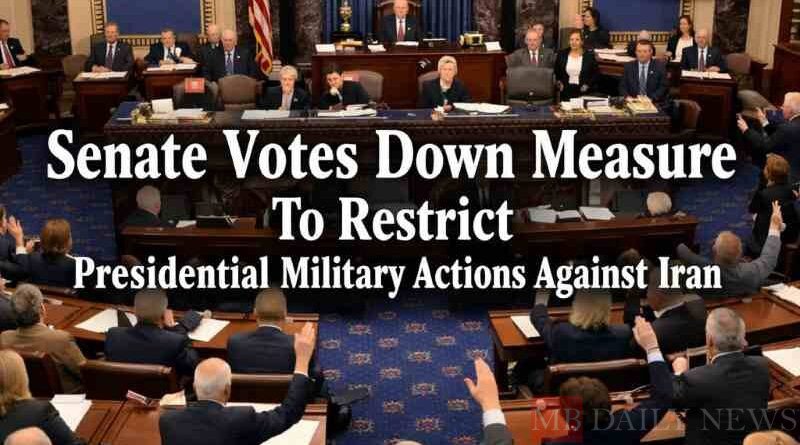
Senate Votes Down Measure To Restrict Presidential Military Actions Against Iran
MB DAILY NEWS | Raleigh, NC
Presidential military actions: The Senate recently voted against a proposal aimed at restricting the president’s authority to initiate military actions against Iran. This decision reflects deep partisan divisions within the chamber. Lawmakers debated the implications of unchecked military power, emphasizing the need for congressional oversight. Critics of the resolution argued that it would undermine national security. Supporters contended that it was essential to prevent unilateral military decisions. The outcome signals ongoing tensions regarding the balance of power between the executive and legislative branches.
Party Lines and Military Authority
The rejection of this resolution occurred primarily along party lines, showcasing the stark differences in political ideology. Republicans largely supported the president’s existing military authority, while Democrats pushed for greater checks on that power. This divide illustrates broader concerns about the implications of military engagement without legislative consent. Many lawmakers believe that Congress should play a crucial role in decisions that could lead to armed conflict. The debate reflects a growing unease about the executive branch’s expanding military reach. Observers will watch how this decision influences future military strategies and congressional actions.
Implications for Future Military Engagements
The Senate’s decision raises questions about future military engagements and the role of Congress in such matters. As tensions with Iran persist, the lack of restrictions may embolden the administration to act unilaterally. Lawmakers who supported the resolution fear that this could lead to escalated conflicts without proper oversight. The potential for military action without congressional approval remains a contentious issue. Analysts suggest that this outcome may prompt renewed discussions about the War Powers Resolution. Future military strategies will likely be influenced by this ongoing debate over authority and accountability.
Public Opinion and Legislative Action
Public sentiment regarding military action often influences legislative decisions. Many citizens express concern over military interventions that lack clear objectives or congressional backing. As such, lawmakers may feel pressure to align with public opinion on military matters. The recent vote could reflect a growing awareness among constituents about the importance of legislative oversight. Future elections may hinge on candidates’ stances regarding military authority and intervention. Observers will monitor how public opinion shapes future legislative efforts in this area.
Potential for Bipartisan Cooperation
Despite the recent partisan divide, there remains potential for bipartisan cooperation on military oversight. Some lawmakers recognize the importance of a unified approach to national security. Collaborative efforts could emerge around establishing clearer guidelines for military engagement. A renewed focus on bipartisan dialogue may help bridge the gap between differing viewpoints. Future discussions may lead to more comprehensive legislation addressing war powers. Stakeholders will be attentive to any signs of cooperation in this contentious arena.
Impact on Presidential Power
The Senate’s decision has significant implications for the balance of power between Congress and the presidency. By rejecting the resolution, the Senate effectively upheld the president’s broad military authority. This outcome may embolden future administrations to act without seeking legislative approval. Critics argue that such a trend could undermine democratic principles and accountability. The ongoing debate over presidential power will likely continue to evolve in the coming months. Observers will closely watch how this dynamic affects U.S. Foreign policy and military strategy.
Looking Ahead: What to Expect
As discussions about military authority continue, lawmakers will likely revisit this issue in future sessions. The potential for new proposals aimed at limiting presidential powers remains high. Stakeholders will be keen to see how this debate unfolds in light of ongoing global tensions. Future military actions may prompt renewed scrutiny of executive decisions. The Senate’s recent vote sets the stage for continued discussions about the role of Congress in military affairs. Analysts will monitor how these developments shape the political landscape moving forward.