
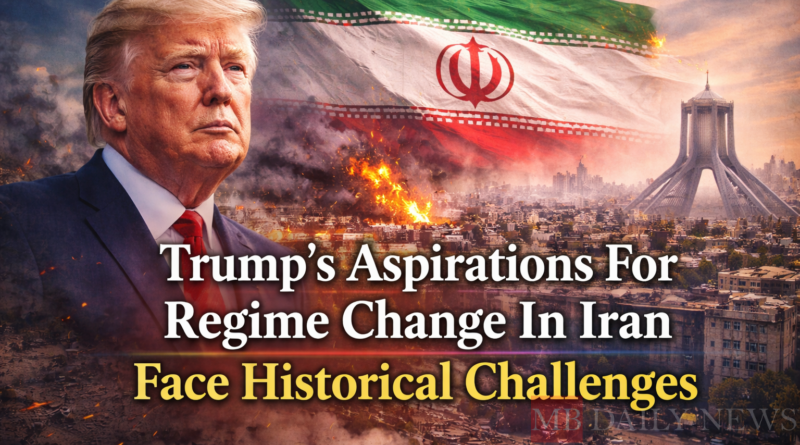
Trump’s Aspirations For Regime Change In Iran Face Historical Challenges
MB DAILY NEWS | Raleigh, NC
Regime change in Iran: Recent comments from the former president reflect a desire for significant change in Iran. His remarks suggest a belief that military action could lead to the downfall of the Iranian government. However, history indicates that such aspirations often face substantial challenges. Previous attempts to change regimes through airstrikes alone have rarely succeeded. The complexities of geopolitical dynamics often complicate these military strategies. Observers are left questioning the viability of such an approach.
Historical Context of Military Interventions
Throughout history, military interventions have often required more than just air power to achieve regime change. The U.S. Has previously engaged in operations that involved ground troops or local forces to ensure success. Airstrikes alone have not proven effective in dismantling established governments. Each intervention has highlighted the necessity of comprehensive strategies that include political and social considerations. The lessons learned from past conflicts remain relevant today. Analysts will closely monitor how these historical precedents influence current military strategies.
Challenges of Air Power Alone
Relying solely on air power to achieve political objectives presents significant limitations. Military analysts emphasize that airstrikes can disrupt but not replace governance structures. The absence of ground forces often leaves a power vacuum that can lead to instability. Without local support or a clear plan for governance, military actions may inadvertently exacerbate existing tensions. The situation in Iraq and Libya serves as cautionary tales for similar strategies. Future military decisions will likely reflect these historical lessons.
Implications for U.S. Foreign Policy
The pursuit of regime change in Iran raises questions about U.S. Foreign policy direction. Policymakers must consider the potential consequences of military action on regional stability. Engaging in another conflict could strain resources and international relations. The complexities of Iranian politics further complicate any straightforward military solution. A nuanced approach that includes diplomatic efforts may be necessary. Observers will watch for shifts in U.S. Strategy as the situation evolves.
Regional Reactions to Military Threats
Military threats often provoke strong reactions from neighboring countries and regional powers. Iran’s allies may respond with increased support or military posturing in response to perceived aggression. Such dynamics can escalate tensions and lead to broader conflicts. Regional stability hinges on the actions of multiple stakeholders, making unilateral military strategies risky. The responses from countries like Russia and China will be critical in shaping the outcome. Analysts will monitor these developments closely.
Public Opinion and Political Ramifications
Public sentiment regarding military intervention can significantly influence political decisions. Citizens often express skepticism about the effectiveness of military action based on past experiences. Political leaders must weigh public opinion against strategic objectives when considering military options. The potential for prolonged conflict may deter support for aggressive actions. Engaging the public in discussions about foreign policy could shape future military strategies. The evolving narrative around military intervention will be crucial to watch.
Future Prospects for Iran
The future of Iran remains uncertain amid ongoing tensions and military threats. Domestic factors within Iran, such as public dissent and economic challenges, could influence the regime’s stability. External pressures may exacerbate these internal issues, leading to potential changes. However, the path to regime change is fraught with complexities that require careful navigation. Observers will look for signs of change within Iran’s political landscape. The interplay of internal and external factors will be pivotal in shaping the future.