
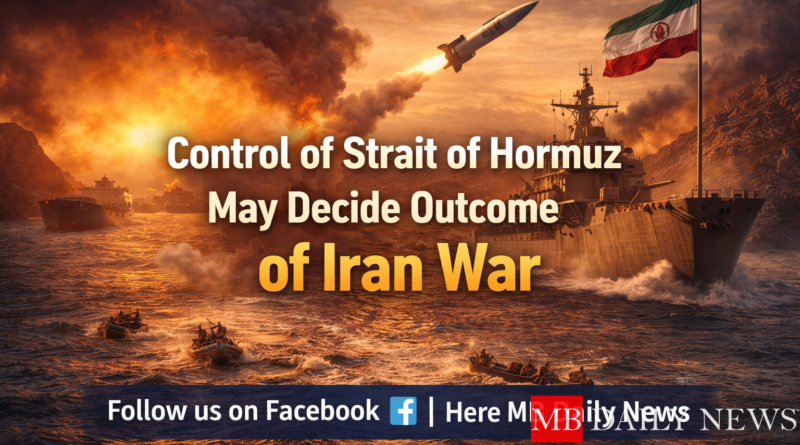
Control of Strait of Hormuz Emerges as Decisive Factor in Iran War
April 2, 2026 | MB Daily News | Los Angeles CA

The Strait of Hormuz control war battle is rapidly becoming the defining factor in determining the outcome of the Iran conflict, as Tehran seeks to turn the strategic waterway into a powerful geopolitical lever.
With global oil flows disrupted and military tensions rising, analysts say whoever controls Hormuz may ultimately control the trajectory of the war—and the global economy.
World’s Most Critical Energy Chokepoint
The Strait of Hormuz carries roughly 20% of the world’s oil and gas supply, making it one of the most important shipping routes on the planet. :contentReference[oaicite:1]{index=1}
Since the conflict escalated, traffic through the narrow waterway has dropped dramatically, with only a fraction of normal shipments getting through. :contentReference[oaicite:2]{index=2}
Iran’s Strategy: Turn Hormuz Into Leverage
Iran is attempting to assert control by regulating which ships can pass, imposing fees, and restricting access to adversaries. :contentReference[oaicite:3]{index=3}
Reports indicate vessels may be required to pay significant transit fees, effectively turning the strait into a controlled economic gateway. :contentReference[oaicite:4]{index=4}
This approach allows Tehran to apply pressure not only on military opponents but also on global markets.
Global Markets Feel Immediate Impact
Oil prices have surged dramatically as supply disruptions intensify, with some estimates showing massive losses in daily global output. :contentReference[oaicite:5]{index=5}
Airlines, shipping companies, and economies dependent on energy imports are already feeling the effects, signaling a broader global economic shock.
International Response Builds
More than 40 countries have entered talks to find ways to reopen the strait, with options ranging from diplomatic pressure to potential military intervention. :contentReference[oaicite:6]{index=6}
However, divisions remain among global powers, with some nations reluctant to escalate the conflict further.
Military Reality: Difficult to Control
Despite its importance, controlling the Strait of Hormuz is extremely challenging. The narrow shipping lanes make vessels vulnerable, while Iran’s use of mines, drones, and missiles complicates any attempt to secure the area. :contentReference[oaicite:7]{index=7}
Experts say the battle for Hormuz will likely be fought through asymmetric tactics rather than conventional naval warfare.
What Comes Next
The Strait of Hormuz control war will remain central to the conflict’s outcome. If Iran maintains influence over the waterway, it could reshape regional power dynamics and global trade flows.
If international forces succeed in reopening it, the balance of power could shift dramatically.
For now, the fight for Hormuz is not just about territory—it is about control of the world’s energy lifeline.
MB Daily News 2026 Copyright – All Rights Reserved.
Follow us on Facebook | Here MB Daily News