
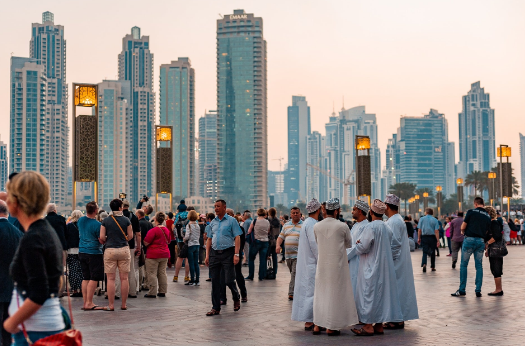
The Middle East Strengthens Its Economic Outlook Amid Diversification Efforts and Global Uncertainty
The Middle East economy is showing signs of resilience and transformation in a global environment marked by inflation, geopolitical tensions, and slowing worldwide growth. Countries across the region continue to rely on the energy sector while accelerating economic diversification strategies aimed at reducing long-term dependence on oil revenues.
Key producers such as Saudi Arabia, the United Arab Emirates, and Qatar have benefited from stable energy income, allowing governments to sustain public spending and increase investment in infrastructure and development projects.
Economic diversification gains momentum
In recent years, several Gulf countries have advanced long-term plans to strengthen sectors such as tourism, technology, logistics, finance, and renewable energy. Initiatives like Saudi Arabia’s Vision 2030 are designed to attract foreign investment, create jobs, and modernize national economies.
These reforms have improved the business environment and positioned parts of the region as emerging financial and commercial hubs.

OAS Warns Honduras Faces Highly Complex Electoral Process
The Secretary General of the Organization of American States (OAS), Albert Ramdin, warned that Honduras is experiencing
Inflation, employment, and domestic demand
Despite continued growth, the region faces challenges related to cost-of-living pressures, youth unemployment, and the stability of domestic demand. Governments have introduced targeted subsidies and prudent fiscal policies to manage inflation and protect vulnerable households.
Labor markets show uneven progress, with stronger job creation in non-oil sectors, while gaps in skills development and productivity remain.
Geopolitical risks and economic impact
Ongoing geopolitical tensions and conflicts in parts of the Middle East continue to pose risks to economic stability. However, major economic centers have mitigated these effects through strong financial reserves and diversified investment strategies.
Analysts emphasize that regional stability will be critical to maintaining investor confidence and sustaining foreign capital inflows.
Outlook for the coming months
Looking ahead, the Middle East is expected to maintain moderate economic growth, supported by expanding non-energy sectors and the continuation of reform agendas. Nevertheless, regional performance will remain closely linked to energy market dynamics and broader geopolitical developments.
In an uncertain global landscape, the Middle East aims to position itself as a more diversified, competitive, and resilient economic region, capable of adapting to the demands of the modern global economy.