
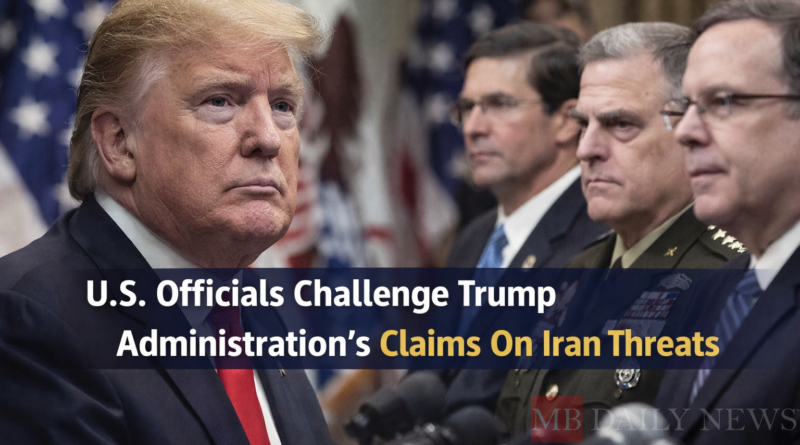
U.S. Officials Challenge Trump Administration’s Claims On Iran Threats
MB DAILY NEWS | Raleigh, NC
Concerns are rising among U.S. Officials regarding the Trump administration’s portrayal of threats from Iran. Lawmakers with access to classified intelligence suggest that the administration’s claims lack completeness and substantiation. This scrutiny raises questions about the accuracy of the information being presented to the public. The implications of these assertions could significantly impact U.S. Foreign policy and national security strategies. Stakeholders are closely monitoring how these revelations may influence future diplomatic relations with Iran. The ongoing debate underscores the importance of transparency in government communications.
Intelligence Assessments Under Review
Recent intelligence assessments indicated that while threats from Iran have persisted over the years, they were not deemed imminent. This distinction is crucial, as it shapes the understanding of the current geopolitical landscape. Officials argue that the administration’s narrative may have overstated the immediacy of the threat. Such exaggerations could lead to misinformed policy decisions and unnecessary escalations. Analysts are now evaluating how these claims align with the broader context of U.S.-Iran relations. The outcome of this analysis may influence future intelligence reporting protocols.
Political Ramifications of Miscommunication
The political fallout from these claims could be significant, affecting both domestic and international perceptions. Lawmakers are likely to demand accountability and clarity from the administration regarding its intelligence assessments. Miscommunication about threats can lead to public distrust in government institutions. This situation highlights the need for accurate and reliable information in shaping public opinion and policy. Observers are watching how this issue will play out in upcoming legislative sessions. The potential for bipartisan support on intelligence reform may emerge as a result.
Impacts on Foreign Policy Strategy
Mischaracterizations of threats can have profound effects on foreign policy strategies. If the administration’s claims are proven to be exaggerated, it could undermine U.S. Credibility on the global stage. Allies and adversaries alike may reassess their positions based on the perceived reliability of U.S. Intelligence. The administration’s approach to Iran will likely come under increased scrutiny as a result of these revelations. Policymakers must navigate these complexities carefully to maintain diplomatic relations. Future negotiations with Iran may hinge on the administration’s ability to present accurate assessments.
Public Perception and Trust Issues
Public trust in government institutions may wane if the administration’s claims are found to be misleading. Citizens expect transparency and honesty from their leaders, especially regarding national security. A failure to provide accurate information can lead to skepticism about future government communications. As this situation unfolds, public opinion may shift, influencing voter behavior in upcoming elections. The administration faces the challenge of restoring confidence among constituents. Addressing these concerns will be vital for maintaining political support.
Future Intelligence Reporting Protocols
In light of these developments, there may be calls for reform in intelligence reporting protocols. Ensuring that intelligence assessments are accurate and comprehensive is essential for effective governance. Lawmakers may push for more rigorous oversight of intelligence agencies to prevent similar issues in the future. The need for clear communication between intelligence officials and policymakers has never been more apparent. Stakeholders are likely to advocate for changes that enhance the reliability of intelligence information. The outcome of these discussions could reshape how intelligence is utilized in policy-making.
Monitoring Ongoing Developments
As the situation evolves, close monitoring of developments will be crucial. Analysts will track how the administration responds to these challenges and whether it adjusts its messaging. The implications for U.S.-Iran relations and broader foreign policy will remain a focal point. Observers will also assess how this issue influences legislative actions and public discourse. The potential for bipartisan cooperation on intelligence reform may emerge as a key outcome. Stakeholders are poised to respond to any shifts in policy or strategy that arise from this scrutiny.