
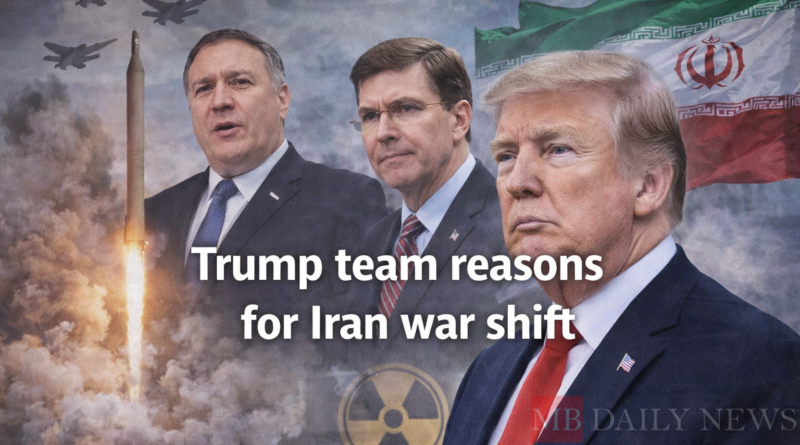
A look at how the Trump team’s reasons for the Iran war, along with objectives and timing, have shifted since the air assault began.
A Look at How the Trump Team’s Reasons for the Iran War, Along With Objectives and Timing, Have Shifted Since the Air Assault Began
Since the first air assault began, the Trump team’s public explanation for the Iran war has changed several times. At first, the rhetoric sounded broad, emotional, and politically charged. Soon after, the message became more strategic, with the White House emphasizing nuclear threats, missile risks, and regional security. That shift has raised new questions about the real goals of the campaign, how long it could last, and what success would actually look like.
How the message changed after the first strikes
In the opening phase of the conflict, President Donald Trump appeared to frame the war in sweeping terms. Early remarks suggested a larger mission, one that many observers interpreted as going beyond military deterrence and moving toward political transformation inside Iran. That first wave of messaging created the impression that the operation could reshape the region.
However, as scrutiny increased, the administration narrowed its public language. Officials began stressing a more defined set of objectives, including preventing Iran from advancing its nuclear capabilities and limiting the reach of its long-range missile program. As a result, the justification sounded less like an open-ended political project and more like a national security campaign.
Objectives remain under debate
Even with the revised messaging, uncertainty remains. Some statements have hinted at a limited military effort, while others have left room for a broader outcome. That inconsistency matters because voters, allies, and lawmakers all want clarity. If the mission is deterrence, the public expects one kind of timeline. If the mission is deeper strategic change, then the stakes are much higher.
Moreover, the administration has not always defined what would mark the end of the operation. Without a clearly stated endpoint, critics argue that the war risks expanding beyond its original justification.
The timeline has also shifted
The projected duration of the war has moved as well. Initial comments suggested the assault might last only a few weeks. Later remarks left open the possibility that the campaign could continue for longer, depending on events on the ground and whether the stated objectives are met. Consequently, what first sounded limited now appears more flexible and potentially more prolonged.
That change in tone is important politically. Americans often judge military action not only by its stated purpose, but also by whether leaders appear consistent. When the reasons, objectives, and timeline all evolve at once, public trust can weaken quickly.
Why this matters now
The Trump team’s shifting explanation of the Iran war highlights a central challenge of modern conflict messaging: presidents must justify military action in real time while balancing strategy, politics, and public opinion. For now, the biggest question is whether the administration can settle on a clear mission that voters and allies understand.
For broader world coverage and breaking updates, get the most news from MB Daily News. You can also read more international news and analysis here.
Looking to diversify your portfolio? Buy a condo in San Pedro Sula and get a great ROI.