
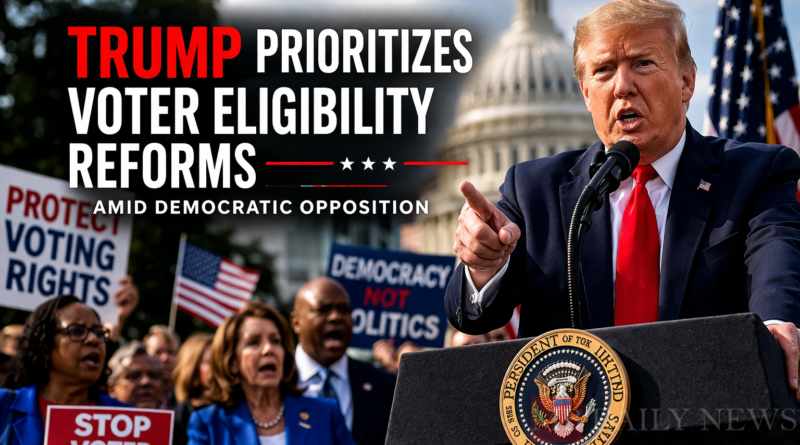
Trump Prioritizes Voter Eligibility Reforms Amid Democratic Opposition
MB DAILY NEWS | Raleigh, NC
Voter eligibility reforms: Former President Trump has identified reforms to voter eligibility as a key focus of his political agenda. His proposed legislation aims to tighten the criteria for who can vote. Supporters believe these changes will enhance election integrity. Critics, particularly from the Democratic Party, argue that such measures could discourage eligible voters from participating. The debate over these reforms highlights a significant divide in American politics. Observers are keen to see how this issue will evolve in upcoming elections.
Trump’s Legislative Push
Trump’s initiative seeks to implement stricter regulations regarding voter eligibility. He argues that these reforms are essential for maintaining the integrity of the electoral process. Advocates of the bill believe that clearer guidelines will prevent potential fraud. They assert that ensuring only eligible voters can cast ballots is a fundamental principle of democracy. As Trump rallies support for this legislation, the political landscape remains charged. The implications of these reforms could significantly impact voter turnout in future elections.
Democratic Concerns
Democrats have raised alarms about the potential consequences of Trump’s proposed changes. They contend that the SAVE America Act could create unnecessary barriers for voters. Critics argue that such restrictions disproportionately affect marginalized communities. This could lead to a decrease in voter participation, undermining democratic engagement. The party emphasizes the importance of making voting accessible to all eligible citizens. As this debate unfolds, the potential for legal challenges looms large.
Public Reaction
Public opinion on voter eligibility reforms remains divided. Some citizens support stricter regulations, believing they will enhance election security. Others express concern that these measures could disenfranchise voters. Polls indicate a growing awareness of the implications of such legislation. Advocacy groups are mobilizing to raise awareness about the potential impacts on voter access. The outcome of this debate could shape the political landscape for years to come.
Implications for Future Elections
The proposed reforms could have far-reaching effects on upcoming elections. If implemented, they may alter the dynamics of voter turnout significantly. Political analysts are closely monitoring how these changes might influence both parties’ strategies. Increased voter suppression claims could energize opposition campaigns. Conversely, proponents may leverage perceived security improvements to rally their base. The interplay between these factors will be crucial in determining electoral outcomes.
Legal Challenges Ahead
Legal experts anticipate that Trump’s voter eligibility reforms may face significant challenges in court. Opponents are likely to argue that the changes violate voting rights protections. Previous legal battles over similar issues have set precedents that could influence outcomes. The judiciary’s response to these reforms will be pivotal in shaping their implementation. Observers are watching closely for any signs of impending litigation. The legal landscape surrounding voting rights remains a critical area of focus.
Looking Forward
As the debate over voter eligibility reforms continues, stakeholders are preparing for a contentious political season. Both parties are strategizing on how to address the concerns raised by their constituents. The potential for mobilization around this issue could redefine voter engagement efforts. Advocacy groups are likely to play a significant role in shaping public discourse. The outcome of this legislative push will have lasting implications for American democracy. All eyes will be on how these developments unfold in the coming months.