
Why the Canadian dollar is bearing up as the surging greenback punches a hole through other G10 currencies
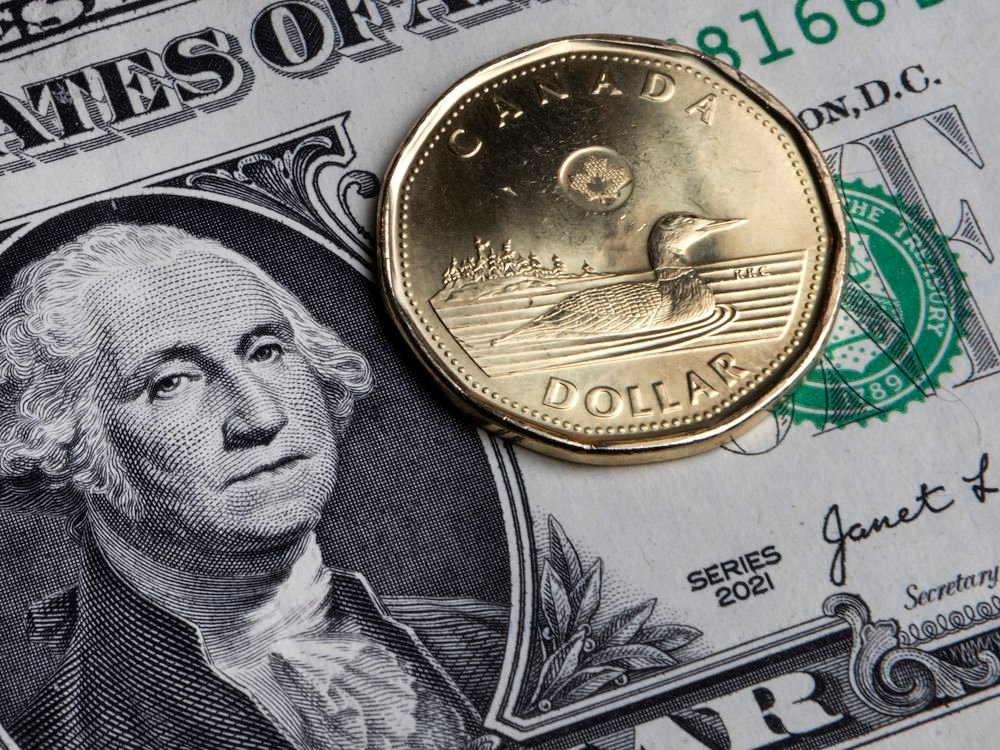
Canada’s status as a major energy exporter is currently shielding the
Canadian dollar
from a surging greenback better than other G10 currencies, say currency investors.
The loonie was down 0.53 per cent against the
U.S. dollar
from Friday’s close to Tuesday, trading at 72.9 cents U.S., according to Bloomberg data. Other
currencies
such as the Japanese yen and the Swiss franc were down 1.1 per cent and 2.1 per cent, respectively, and the Swedish krona was the worst performer, down 2.6 per cent.
“The Canadian dollar is holding up better than most of its peers despite the broader (U.S.) dollar advance, underpinned by the country’s status as a net oil exporter,” Karl Schamotta, chief market strategist at Corpay Currency Research, said in a note Tuesday morning.
He said the loonie has struggled to capitalize on its commodity currency status of late because investment in the sector has declined, “but the correlation tends to increase as crude benchmarks push through the US$75-per-barrel mark (as they’re doing now).”
Prices for West Texas Intermediate have surged a bit more than 15 per cent since Friday’s close to US$77.35 per barrel from US$67.02 in the wake of the attacks on Iran by Israel and the United States.
“As an oil-exporter currency, (the Canadian dollar) tends to be insulated, sometimes even supported, when the shock is energy-led rather than purely growth-led,” Nick Rees, h
ead of macro research at Monex Canada, said in a note. “Today, price action is likely to remain a tug-of-war between two forces: oil support versus risk-off greenback demand.”
The U.S. dollar is surging as investors flock to the safe haven currency following the market chaos unleashed by the Middle East conflict, with the U.S. dollar index posting its best two-day increase since September 2022.
“The jump in
energy prices
is prompting markets to reprice
inflation
risks and central bank expectations,” Shaun Osborne, chief currency strategist at Scotiabank Global FX strategy, said in a note Tuesday morning.
Traders have pushed back bets on a U.S. Federal Reserve rate cut to September from July, with calls for a third reduction “all but evaporating,” Schamotta said.
Rees said if the price of oil continues to climb, he would expect the Canadian dollar to outperform its peers, but that could change if the conflict expands and threatens global growth.
In that case, the Canadian dollar “could struggle despite higher oil” prices, he said.
Osborne said he expects the Canadian dollar will likely continue to slide against an advancing greenback, but that the decline could be “relatively limited” and that it can continue to gain against other currencies, at least in the short term.
The loonie is up against currencies such as the pound and the euro even though the reverse would generally be expected. From Friday to Tuesday, the pound and the euro were down 0.95 per cent and 1.6 per cent, respectively against the Canadian dollar.
“The immediate reaction to the latest developments in the Gulf region have flown in the face of the historical patterns,” Osborne said, adding that the Canadian dollar is also up against the Japanese yen and the Swiss franc.
• Email: gmvsuhanic@postmedia.com