
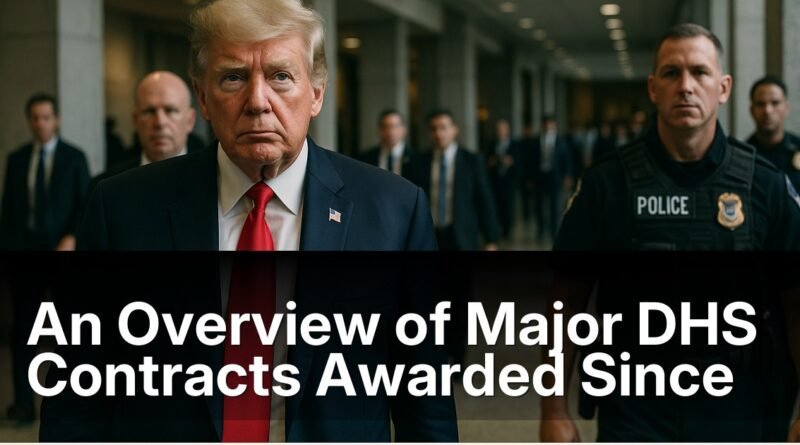
An Overview of Major DHS Contracts Awarded Since Trump’s Return
Author: MB DAILY NEWS | Raleigh, NC
DHS contracts awarded: The Department of Homeland Security (DHS) has significantly increased its contracting activities since the return of Trump to the White House. These contracts primarily support initiatives aimed at enhancing border security and deportation efforts. Notably, major contracts have been awarded to companies like Anduril and Fisher Sand. These firms play crucial roles in the construction of border walls and related infrastructure. The implications of these contracts extend beyond immediate construction, influencing immigration policy and enforcement strategies. Observers are keenly watching how these developments will shape the future of U.S. border security.
Focus on Border Security Initiatives
Border security remains a top priority for the current administration, prompting substantial investments in related projects. The DHS aims to bolster its capabilities through advanced technology and physical barriers. Contracts awarded to Anduril highlight a shift towards utilizing innovative solutions in border management. This approach reflects a broader trend of integrating technology into traditional security measures. Stakeholders are interested in how these investments will impact the effectiveness of border enforcement. The ongoing developments will likely influence public opinion and legislative discussions on immigration policy.
Key Players in Contract Awards
Anduril and Fisher Sand have emerged as significant players in the DHS contracting landscape. Their roles in constructing border walls and supporting deportation efforts underscore their importance to the administration’s agenda. These companies bring specialized expertise that aligns with the government’s objectives. The selection of these contractors raises questions about competition and transparency in the bidding process. Observers are scrutinizing how these contracts are awarded and the criteria used for selection. The outcomes of these contracts could set precedents for future government procurement practices.
Implications for Immigration Policy
The contracts awarded by DHS are closely tied to the administration’s broader immigration policy goals. Increased funding for border security initiatives signals a commitment to stricter enforcement measures. This focus may lead to heightened scrutiny of immigration processes and increased deportation activities. Advocacy groups are concerned about the potential human impact of these policies. The balance between security and humanitarian considerations will be a critical point of contention. Future developments in this area will likely provoke significant public debate and legal challenges.
Technological Innovations in Border Management
Investments in technology are reshaping how the DHS approaches border management. Companies like Anduril are at the forefront of developing advanced surveillance and monitoring systems. These innovations aim to enhance situational awareness and improve response times at the border. The integration of technology into border security raises questions about privacy and civil liberties. Stakeholders are closely monitoring how these technologies are implemented and their effectiveness. The outcomes of these initiatives will influence future funding and policy decisions.
Future of DHS Contracting Practices
The recent surge in DHS contracts may signal a shift in government contracting practices. Increased scrutiny over the selection process could lead to calls for greater transparency and accountability. Stakeholders are advocating for clearer guidelines to ensure fair competition among contractors. The implications of these practices extend beyond border security, affecting various sectors involved in government contracting. Observers are watching for potential reforms that could emerge in response to public concerns. The evolution of these practices will shape the future landscape of federal contracting.
Public Reaction and Legislative Response
Public reaction to the DHS contracts has been mixed, reflecting broader societal divisions on immigration issues. Advocacy groups have voiced concerns about the implications for vulnerable populations. Legislative responses may emerge as lawmakers seek to address public sentiment and policy impacts. The ongoing debate over border security will likely influence upcoming elections and political campaigns. Stakeholders are preparing for potential shifts in policy as public opinion evolves. Future developments in this area will be critical for understanding the political landscape surrounding immigration.
Copyright © MB Daily News. All Rights Reserved.