
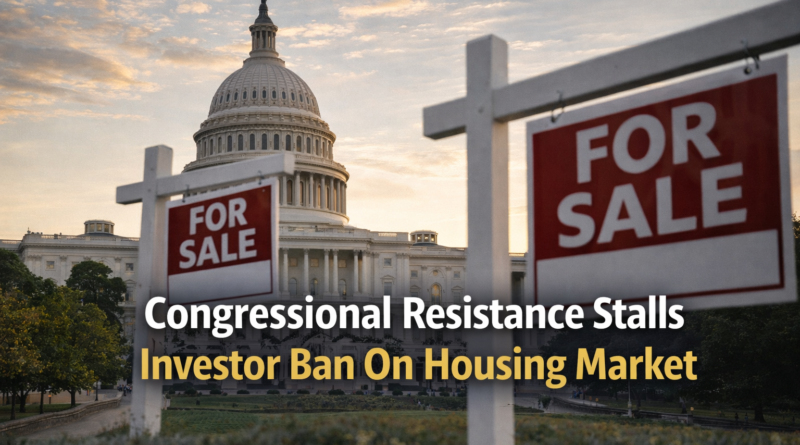
Congressional Resistance Stalls Investor Ban On Housing Market
MB DAILY NEWS | Raleigh, NC
Investor Ban on Housing Market: The proposed ban on housing market investors faces significant challenges as it encounters resistance in Congress. Lawmakers express concerns about the potential implications of such a ban on the overall real estate landscape. The debate centers around balancing housing affordability with the interests of investors. Many believe that restricting investor participation could lead to unintended consequences for the housing supply. Stakeholders are closely monitoring the developments as they could reshape the market dynamics. The outcome of this legislative effort remains uncertain, prompting speculation about future housing policies.
Legislative Landscape
The current legislative environment presents a complex backdrop for the investor ban proposal. Various factions within Congress hold differing views on the necessity and effectiveness of such a measure. Some lawmakers advocate for increased regulation to address housing affordability issues. Others warn that limiting investor activity could stifle growth and innovation in the housing sector. The ongoing discussions highlight the challenges of reaching a consensus on housing policy. Observers anticipate that negotiations will continue as stakeholders seek to influence the final outcome.
Market Reactions
Reactions from the real estate market indicate a mix of concern and cautious optimism. Investors are closely watching the legislative process, as any changes could impact their strategies. Some market analysts suggest that a ban could lead to a decrease in investment activity, affecting property values. Conversely, others argue that such restrictions might create opportunities for first-time homebuyers. The uncertainty surrounding the proposal has led to fluctuations in market sentiment. Stakeholders are preparing for various scenarios as the situation evolves.
Implications for Homebuyers
Potential changes in investor participation could significantly affect homebuyers’ experiences in the market. A ban on investors might open up more opportunities for individuals seeking to purchase homes. However, it could also lead to a tightening of available housing stock, creating new challenges. Homebuyers may face increased competition for properties if investor activity decreases. The dynamics of supply and demand will play a crucial role in shaping the market landscape. Buyers should remain informed about legislative developments that could impact their purchasing power.
Investor Perspectives
Investors are voicing their concerns regarding the proposed ban and its potential ramifications. Many argue that their participation in the housing market contributes to overall economic growth. They emphasize the importance of investment in maintaining and improving housing stock. Some investors worry that a ban could deter future investments, leading to a decline in housing quality. The ongoing debate raises questions about the role of investors in addressing housing shortages. Investors are likely to continue advocating for their interests as discussions progress.
Future of Housing Policy
The outcome of the investor ban proposal could set a precedent for future housing policies. Lawmakers are grappling with the complexities of balancing various interests within the housing market. The discussions surrounding this issue may influence broader conversations about housing affordability and access. Stakeholders are keenly aware that the decisions made now could have lasting effects on the market. As the legislative process unfolds, the implications for both investors and homebuyers will become clearer. The evolving landscape will require ongoing attention from all parties involved.
Conclusion and Next Steps
The investor ban on the housing market remains a contentious issue within Congress. As lawmakers continue to debate the proposal, the real estate community watches closely. The potential impacts on housing affordability and market dynamics are significant. Stakeholders must prepare for various outcomes as discussions progress. The future of housing policy will likely hinge on the ability to find common ground among lawmakers. Continued engagement from all parties will be essential in shaping the direction of the housing market.