
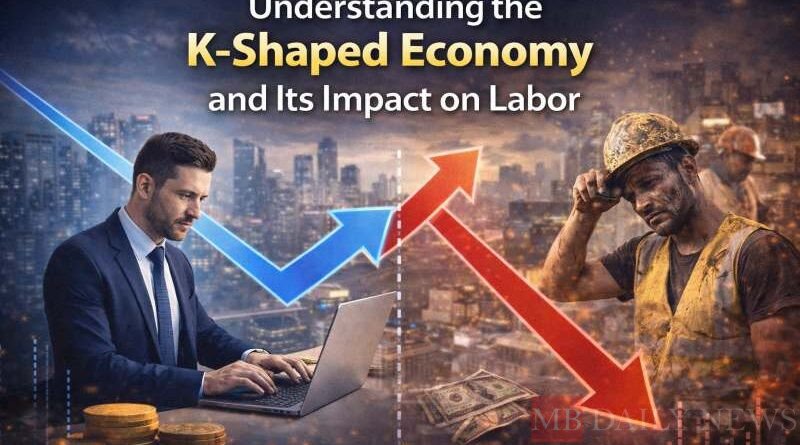
Understanding the K-Shaped Economy and Its Impact on Labor
MB DAILY NEWS | Raleigh, NC
The K-shaped economy highlights significant disparities in economic recovery following the pandemic. While overall growth appears robust, not all sectors and demographics share equally in this prosperity. Some groups have thrived, while others have faced stagnation or decline. This phenomenon raises critical questions about the future of labor and economic equity. Understanding these dynamics is essential for policymakers and workers alike. The implications of this divide will shape economic discussions for years to come.
Defining the K-Shaped Economy
The K-shaped economy describes a scenario where economic growth benefits certain groups while leaving others behind. This trend has developed over several decades, reflecting deep-rooted structural changes in the economy. As capital increasingly drives growth, labor’s role diminishes, leading to widening income inequality. The pandemic has accelerated these trends, revealing stark contrasts in recovery experiences. Observing these patterns can help stakeholders identify areas needing intervention. Addressing these disparities is crucial for fostering a more inclusive economy.
Shifts in Economic Power
Recent years have seen a significant shift in economic power from labor to capital. Workers’ share of economic output has declined, while corporate profits have surged. This trend reflects broader changes in investment strategies, moving away from labor-intensive industries. Automation and artificial intelligence have further diminished the demand for human labor. As a result, many workers find themselves in precarious positions, struggling to maintain their livelihoods. Understanding these shifts is vital for developing effective labor policies.
The Role of Automation and AI
Automation and artificial intelligence are reshaping the labor landscape, impacting job availability and security. These technologies have streamlined operations, reducing the need for a large workforce. While they enhance productivity, they also contribute to job displacement in various sectors. Workers in manufacturing and services face increasing competition from machines. As businesses adopt these technologies, the challenge for labor becomes more pronounced. Policymakers must consider strategies to support displaced workers and promote reskilling initiatives.
Impact of Labor Shortages
Labor shortages during the pandemic temporarily shifted the balance, leading to wage increases in some sectors. However, inflation quickly eroded these gains, leaving many workers with stagnant purchasing power. Despite rising wages, the cost of living has outpaced income growth for many households. This situation underscores the complexities of the current economic environment. Observing how these trends evolve will be crucial for understanding future labor market dynamics. Stakeholders must remain vigilant as these challenges unfold.
Corporate Profits and Economic Disparities
Corporate profits have rebounded to record levels, highlighting the disconnect between economic growth and labor compensation. While companies thrive, many workers struggle to make ends meet. This disparity raises concerns about the sustainability of such an economy. As profits soar, the question of equitable wealth distribution becomes increasingly urgent. Addressing these issues requires a concerted effort from businesses, policymakers, and labor organizations. The future of the economy depends on finding solutions that benefit all stakeholders.
Looking Ahead: What to Watch
As the K-shaped economy continues to evolve, monitoring its impact on labor will be essential. Stakeholders should pay attention to policy changes aimed at addressing income inequality. The effectiveness of reskilling programs and labor protections will also play a critical role in shaping the future workforce. Additionally, the ongoing integration of technology into the workplace will influence job availability and security. Understanding these factors will help navigate the complexities of the modern economy. The path forward requires collaboration and innovation to ensure a more equitable future.