
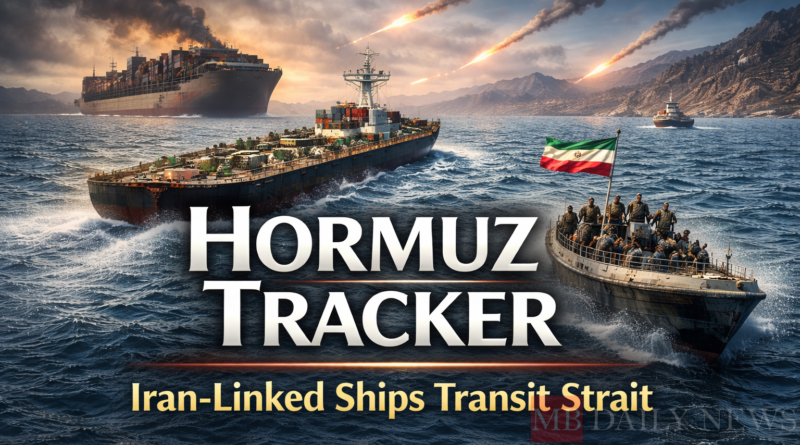
HORMUZ TRACKER: Iran-Linked Ships Transit as Others Stay Away
HORMUZ TRACKER: Iran-Linked Ships Transit as Others Stay Away
Shipping through the Strait of Hormuz remains severely disrupted as most commercial operators avoid the waterway, while vessels linked to Iran and a smaller number of regional ships continue to move through the corridor.
The latest maritime reports suggest the chokepoint is functioning far below normal levels, underscoring how quickly military escalation can reshape global trade patterns, tanker movements, and energy markets.
Shipping Through Hormuz Has Slowed Sharply
Commercial traffic is operating far below normal levels
The Strait of Hormuz is one of the world’s most important shipping lanes, connecting Gulf energy exporters to global markets. But recent conflict has pushed many international carriers, tanker owners, and insurers to pull back from the route.
Market and shipping reports indicate that vessel transits have dropped dramatically from typical levels, with much of the remaining movement tied to Iranian shipping activity or operators willing to accept exceptional risk.
Iran-Linked Ships Continue to Move
Some vessels are still crossing while others stay away
Despite the broader retreat by global shipping companies, Iran-linked ships are still transiting the strait. That pattern has reinforced the view that access has not fully disappeared, but that the route has become highly selective and dangerous for many foreign operators.
Some crews have reportedly altered identifying signals or highlighted national affiliations in an apparent effort to reduce the risk of being targeted during passage.
Insurers and Security Fears Are Reshaping Decisions
War-risk concerns are keeping major operators out
The slowdown is not only about direct military threats. Shipping companies are also facing higher insurance costs, uncertainty over war-risk coverage, and operational hazards linked to missile attacks, drone strikes, and electronic interference.
As those risks rise, more operators are deciding that the Strait of Hormuz is temporarily too dangerous for routine commercial transit, even if it remains technically open to some traffic.
Why the Strait of Hormuz Matters
A narrow waterway with global economic impact
The Strait of Hormuz handles a major share of global oil flows, making any disruption a major concern for energy buyers, refiners, shipping firms, and financial markets. Even limited interruptions can tighten supply chains and raise transportation costs.
Because the route is so strategically important, prolonged disruption could affect not only crude and gas shipments, but also broader trade flows tied to industrial materials, food systems, and manufactured goods.
What the Tracker Is Showing
A corridor still active, but no longer normal
The clearest takeaway from current tracking data is that the strait is not operating under normal commercial conditions. Iran-linked vessels are still transiting, but many others are delaying, rerouting, or avoiding the area altogether.
That imbalance highlights the growing divide between ships able to tolerate the risk and those unwilling or unable to proceed under current military and insurance conditions.
Outlook for Global Trade
Hormuz remains one of the most closely watched chokepoints
As long as regional fighting continues, the Strait of Hormuz is likely to remain under intense scrutiny from traders, shipowners, governments, and energy markets. Any further escalation could deepen the slowdown and intensify fears of wider supply disruption.
For now, the tracker points to a fragile reality: some Iran-linked ships are still moving, but much of the rest of the commercial world is staying away.
Diversify Your Investment Portfolio
Buy a condo in San Pedro Sula and enjoy strong income potential with an attractive return on investment.
Real estate in one of Honduras’ fastest-growing cities can be a smart way to build wealth, generate rental income, and secure long-term value.
Explore Condos in San Pedro Sula