
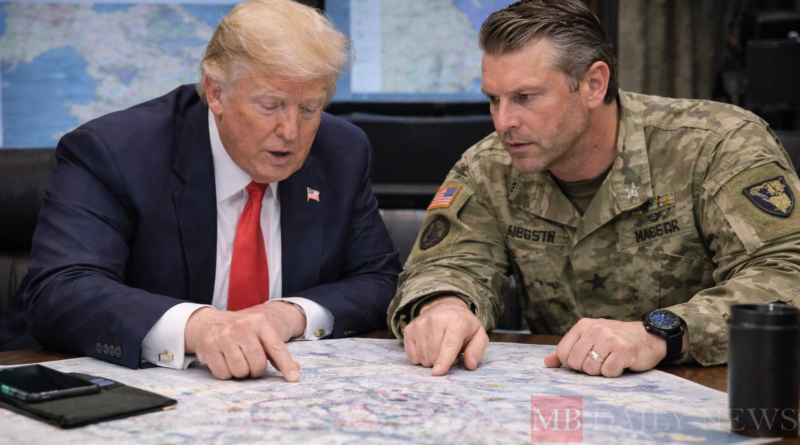
President Trump Anticipated Iran’s Actions Before Military Engagement
MB DAILY NEWS | Raleigh, NC
Iran's actions before military engagement: Prior to initiating military action, President Trump recognized the potential for Iran to obstruct the Strait of Hormuz. This waterway serves as a crucial artery for global trade and energy supplies. Despite understanding the risks, he opted to proceed with military engagement. This decision has raised questions about the administration’s strategic calculations. Observers are now analyzing the implications of this choice on international relations. The situation underscores the complexities of U.S.-Iran interactions in a volatile region.
Understanding the Strait of Hormuz
The Strait of Hormuz is a narrow passage that connects the Persian Gulf to the Arabian Sea. Approximately one-fifth of the world’s oil supply transits through this vital route. Any disruption in this area can have immediate and far-reaching economic consequences. Countries dependent on oil imports closely monitor developments in this region. The potential for conflict here poses risks not only to regional stability but also to global markets. Stakeholders are increasingly concerned about the implications of military actions in this strategic area.
Trump’s Strategic Calculations
President Trump’s decision to engage militarily despite potential Iranian responses reflects his administration’s broader strategy. He believed that Tehran would yield to pressure rather than escalate tensions. This perspective shaped the administration’s approach to foreign policy in the Middle East. Critics argue that such calculations may overlook the complexities of Iran’s motivations. The administration’s willingness to act raises questions about its understanding of regional dynamics. Observers are keen to see how this strategy unfolds in the coming months.
Implications for U.S.-Iran Relations
The military engagement has significant implications for the already tense U.S.-Iran relationship. Trust between the two nations has eroded, complicating any future diplomatic efforts. Iran’s actions may provoke a stronger U.S. Response, leading to a cycle of escalation. Analysts suggest that this could hinder potential negotiations over Iran’s nuclear program. The situation demands careful monitoring as both nations navigate their next moves. The international community is watching closely for signs of further conflict or opportunities for dialogue.
Global Reactions to Military Actions
International reactions to the U.S. Military engagement have varied widely. Allies and adversaries alike are assessing the potential fallout from this decision. Some nations express concern over the stability of global oil markets. Others may view the U.S. Actions as a necessary step to counter Iranian influence. The geopolitical landscape is shifting as countries respond to these developments. Future diplomatic efforts will likely be influenced by how the situation evolves in the region.
Monitoring Economic Consequences
The potential closure of the Strait of Hormuz could have dire economic implications worldwide. Oil prices may surge if shipping routes become compromised. Countries reliant on oil imports must prepare for possible supply disruptions. Economists are analyzing how this situation could impact global markets. Businesses are also considering contingency plans in response to heightened tensions. The economic ramifications of military actions will be a critical area to watch in the coming weeks.
Looking Ahead: What’s Next?
As the situation develops, the focus will shift to the responses from both the U.S. And Iran. Diplomatic channels may become increasingly important in de-escalating tensions. Observers will look for signs of negotiation or further military action. The international community will also play a role in shaping the narrative around these events. Stakeholders must remain vigilant as the geopolitical landscape continues to evolve. The coming weeks will be crucial in determining the future of U.S.-Iran relations and regional stability.