
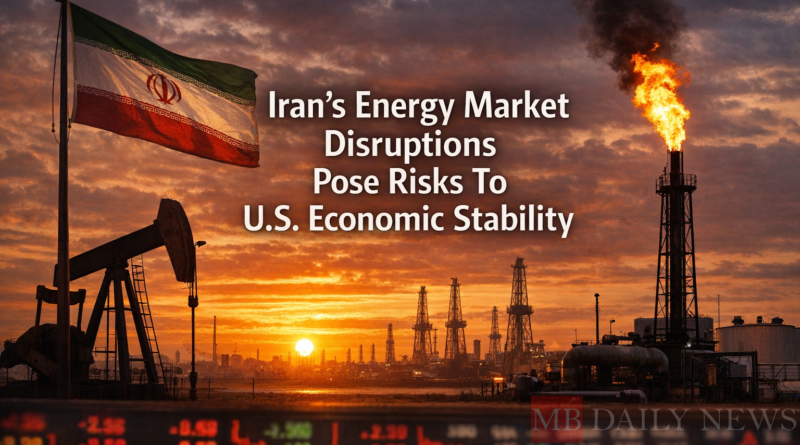
Iran’s Energy Market Disruptions Pose Risks To U.S. Economic Stability
MB DAILY NEWS | Raleigh, NC
U.S. Economic stability: Iran’s actions in the energy sector have sparked serious concerns regarding the stability of the U.S. Economy. Analysts emphasize that ongoing geopolitical tensions could lead to unpredictable oil prices and disruptions in supply chains. Such volatility may impede economic growth and adversely affect consumer spending patterns. Policymakers face the challenge of addressing the broader implications of these developments. Close monitoring of the situation is essential as it continues to evolve. Stakeholders are particularly wary of the long-term repercussions on the nation’s energy independence.
Impact on Oil Prices
Fluctuations in oil prices have a direct impact on consumer expenses and business operations across various industries. Rising oil prices can escalate transportation costs, which businesses may pass on to consumers. This situation risks undermining consumer confidence and reducing spending. Additionally, companies may experience tighter profit margins, potentially leading to layoffs or decreased investments. The cascading effects of these changes could hinder economic recovery efforts. Observers are keenly watching how these price dynamics will shape U.S. Energy policy moving forward.
Supply Chain Vulnerabilities
Disruptions in energy supply chains can trigger significant repercussions across multiple sectors. Industries such as manufacturing, transportation, and agriculture depend heavily on reliable energy sources. Any instability in these supplies can result in production delays and increased operational costs. Companies may find it challenging to maintain consistent operations, which could negatively impact overall economic performance. Policymakers must prioritize addressing these vulnerabilities to bolster resilience. Future strategies will likely emphasize diversifying energy sources and enhancing domestic production capabilities.
Geopolitical Tensions
Geopolitical tensions involving Iran play a crucial role in shaping global energy markets. Sanctions and military actions can introduce uncertainty, leading to market volatility that affects prices. Investors often respond to these developments, which can further exacerbate price fluctuations. The U.S. Must navigate these complexities while balancing its foreign relations and economic interests. Diplomatic efforts may prove vital in stabilizing the situation. Observers anticipate potential shifts in U.S. Foreign policy as a response to these ongoing challenges.
Long-term Economic Consequences
The long-term economic implications of Iran’s actions could significantly alter U.S. Energy strategies. A sustained rise in oil prices may compel the U.S. To reassess its energy dependence and explore alternative sources. This reassessment could lead to increased investments in renewable energy and domestic production initiatives. Policymakers will need to consider how to mitigate risks associated with foreign energy reliance. The evolving landscape may prompt a shift in focus toward energy independence and sustainability. Stakeholders will closely monitor these developments as they unfold.
Consumer Sentiment and Spending
Consumer sentiment plays a pivotal role in the overall health of the economy. Rising energy costs can lead to increased anxiety among consumers, affecting their spending habits. If consumers perceive economic instability, they may cut back on discretionary spending, which can slow economic growth. Businesses that rely on consumer spending may face challenges in maintaining profitability. Understanding consumer behavior in response to energy market fluctuations will be critical for economic recovery. Analysts will continue to assess how these dynamics influence market trends.
Future Energy Policies
The current situation necessitates a reevaluation of U.S. Energy policies to ensure economic stability. Policymakers must consider strategies that promote energy diversification and reduce reliance on volatile foreign sources. Investments in renewable energy technologies could provide a pathway to greater energy independence. Additionally, enhancing domestic production capabilities may help mitigate risks associated with global market fluctuations. The direction of future energy policies will be crucial in shaping the U.S. Economic landscape. Stakeholders will watch closely for any policy shifts in response to these challenges.