
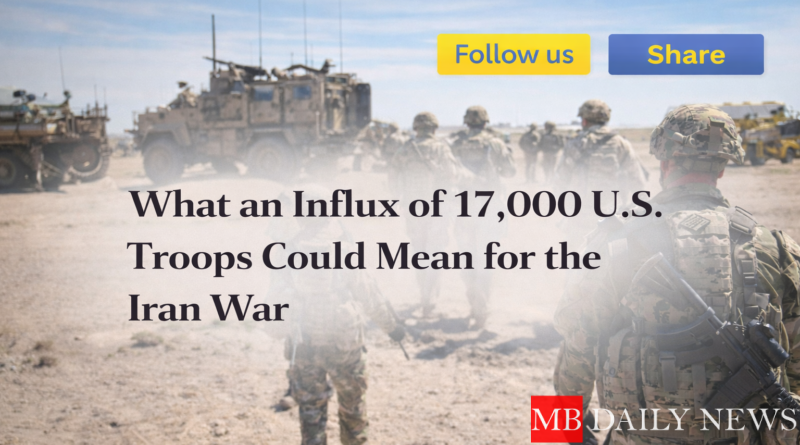
What 17,000 U.S. Troops Could Mean for the Iran War
March 27, 2026 | MB Daily News | Los Angeles CA
The potential deployment of up to 17,000 U.S. troops to the Middle East marks a significant turning point in the ongoing conflict with Iran, signaling a possible shift from limited operations toward a broader and more complex military engagement. Defense officials say the buildup reflects rising tensions and the need to prepare for multiple strategic scenarios.
While the deployment does not necessarily indicate an immediate ground invasion, analysts warn that such a large concentration of forces could dramatically alter the trajectory of the war, both militarily and politically.
A Strategic Military Escalation
Reports indicate that the troop increase would bring the total U.S. presence in the region to more than 17,000 personnel, including infantry, airborne units, and support forces. :contentReference[oaicite:1]{index=1} This level of deployment represents one of the most significant military buildups in the region in recent years.
Military planners suggest that these forces could be used for a range of missions, including securing strategic locations, protecting shipping routes, or even targeting key Iranian assets such as nuclear facilities or oil infrastructure. :contentReference[oaicite:2]{index=2}
Sponsored Content
Explore premium real estate opportunities with One West Realty
Potential Objectives and Scenarios
Experts say the influx of troops could serve multiple purposes beyond direct combat. One key objective may be to increase pressure on Iran during ongoing diplomatic negotiations, using military strength as leverage. :contentReference[oaicite:3]{index=3}
Other possible scenarios include securing critical waterways like the Strait of Hormuz, which is vital to global oil supply, or supporting allied operations in the region. :contentReference[oaicite:4]{index=4} The presence of ground forces would also allow for rapid response to emerging threats or escalations.
Risks of a Broader Conflict
Despite the strategic advantages, the deployment carries significant risks. Analysts warn that placing large numbers of troops near Iran increases the likelihood of direct confrontation, potentially leading to higher casualties and a prolonged conflict. :contentReference[oaicite:5]{index=5}
Iran possesses advanced missile systems, drones, and naval capabilities that could target U.S. forces, particularly in confined areas such as the Persian Gulf. :contentReference[oaicite:6]{index=6} Any escalation could quickly expand beyond the initial scope of operations.
Political and Global Implications
The deployment also has significant political implications both domestically and internationally. Public opinion in the United States has shown resistance to large-scale ground involvement in Middle Eastern conflicts, raising questions about long-term support for the war. :contentReference[oaicite:7]{index=7}
Globally, an expanded U.S. military presence could heighten tensions with other regional and international powers, while also impacting global energy markets due to the strategic importance of Middle Eastern oil routes.
What Happens Next
As the situation evolves, the deployment of 17,000 troops may serve as both a deterrent and a preparation for potential escalation. Officials emphasize that while diplomatic efforts continue, the military remains ready for a wide range of outcomes.
Whether the troop buildup leads to renewed negotiations or deeper conflict will depend on decisions made in the coming weeks. For now, the move underscores the high stakes and uncertainty surrounding the Iran war.
MB Daily News 2026 Copyright – All Rights Reserved.
Follows us on Facebook at https://facebook.com/mbdailynews, and don’t miss the breaking news at: https://mbdailynews.com