
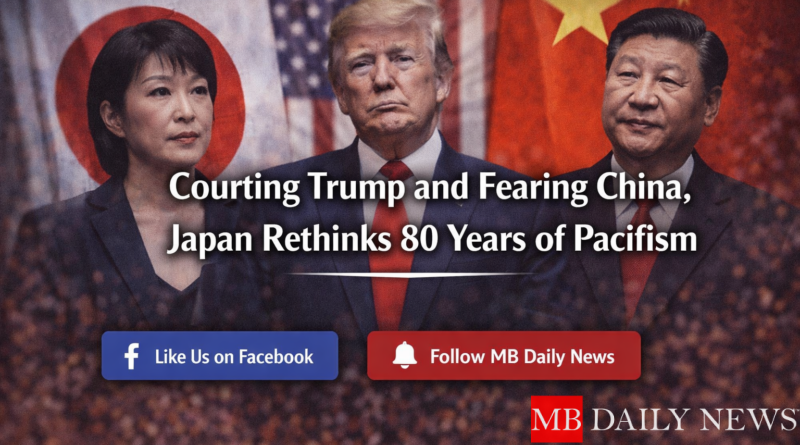
Japan Reassesses Pacifist Policy Amid Rising China Tensions and U.S. Alliance Pressures
March 27, 2026 | MB Daily News | Los Angeles CA
Japan is undergoing a significant shift in its post-World War II defense posture as political leaders and the public reconsider decades of pacifist policy. Growing concerns over China’s military expansion and evolving relations with the United States are driving renewed debate about national security.
Prime Minister Sanae Takaichi has called for increased defense spending and a stronger military presence, signaling a departure from long-standing restrictions that have defined Japan’s role on the global stage for nearly 80 years.
Balancing U.S. Relations and Regional Threats
Japan’s alliance with the United States remains a cornerstone of its security strategy. However, shifting geopolitical dynamics have led Japanese leaders to seek greater independence in defense capabilities.
At the same time, rising tensions with China—particularly over territorial disputes and military activity in the Indo-Pacific—have intensified concerns about national security.
Sponsored Content
Explore premium real estate opportunities with One West Realty
Shift in Public Opinion
Public opinion in Japan appears to be evolving alongside government policy. Polls suggest increasing support for strengthening defense capabilities, particularly as regional security risks grow more visible.
While pacifism remains an important part of Japan’s national identity, many citizens now view enhanced military readiness as necessary for protection in an uncertain global environment.
Proposed Defense Expansion
The government is considering significant increases in defense spending, including investments in advanced missile systems, cybersecurity, and regional military coordination.
Officials argue that modern threats require updated capabilities and closer cooperation with allies, especially in the Indo-Pacific region.
Historical Context and Debate
Japan’s pacifist constitution, adopted after World War II, has long limited the country’s military role. Any shift away from these principles is likely to spark political and social debate.
Critics warn that expanding military capabilities could escalate tensions in the region, while supporters argue that the changes are necessary to maintain stability and deterrence.
What Comes Next
As Japan navigates these complex decisions, the outcome could reshape its role in global security. Future policy changes may influence alliances, regional dynamics, and the broader balance of power in Asia.
For now, the country stands at a crossroads between its pacifist past and a more assertive defense strategy.
MB Daily News 2026 Copyright – All Rights Reserved.
Follows us on Facebook at https://facebook.com/mbdailynews, and don’t miss the breaking news at: https://mbdailynews.com
Related Articles
- What 17,000 U.S. Troops Could Mean for the Iran War
- Israel Rations Interceptors as Iranian Missiles Break Through
- Pedro Sánchez Leads European Opposition to Trump