

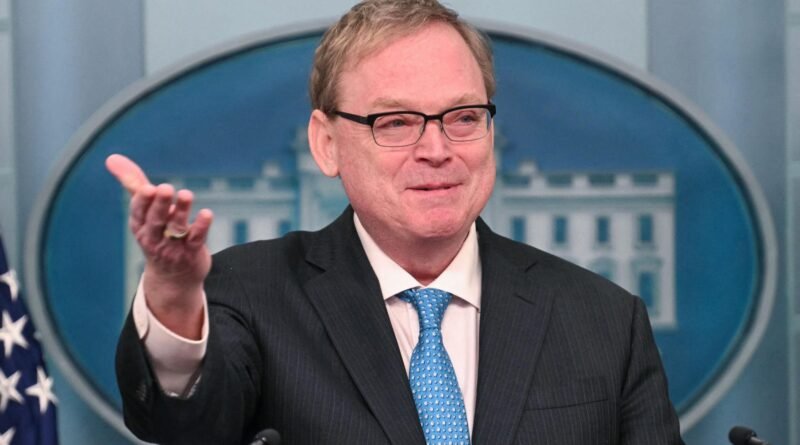
White House Rules Out Economic Policy Changes Following Republican Election Defeat
President Donald Trump’s top economic adviser says the U.S. administration will maintain its economic policies despite Democratic victories in the midterm elections. Inflation, employment, and political tensions are expected to shape the country’s economic outlook.
President Donald Trump’s administration does not plan to change its economic strategy following the Republican Party’s defeat in the November 3, 2026, midterm elections, which gave Democrats control of both chambers of Congress.
Kevin Hassett, director of the White House National Economic Council, confirmed that the administration intends to maintain its principal economic policies, arguing that they are producing positive results for economic growth and the American labor market.
During an interview with Bloomberg Television on Friday, Hassett defended the administration’s economic direction and rejected the idea that the election results necessarily represented a rejection of its economic strategy.
Trump Administration Stands Firm on Economic Strategy
The presidential economic adviser maintained that the White House sees no immediate need to change its economic direction, even after Democrats made significant electoral gains.
Hassett defended policies designed to stimulate economic supply, encourage business investment, and reduce regulatory burdens. He argued that these measures have helped strengthen productive activity across the United States.
However, the new composition of Congress could complicate the approval of future economic initiatives and increase the need for negotiations between Republicans and Democrats.
The administration is also expected to rely on presidential authority to preserve existing policies against potential legislative efforts to reverse them.
U.S. Labor Market Shows New Signs of Growth
One of Hassett’s principal arguments in defense of the administration’s economic strategy was the recent performance of the American labor market.
The October employment report showed that the U.S. economy added 165,000 jobs, while the unemployment rate declined to 4.1%.
Jobs added in October
165,000
United States
Unemployment rate
4.1%
October 2026
Hassett also highlighted the participation of approximately 120,000 workers in projects involving the construction of new manufacturing facilities. He presented this figure as evidence of the industrial investment encouraged by the administration.
Nevertheless, employment trends remain under close observation, particularly as wage growth continues to face pressure from inflation and rising living expenses.
Inflation and Gasoline Prices Continue to Pressure American Consumers
Persistent inflation remains one of the most significant challenges facing the U.S. economy.
Hassett attributed part of the recent inflationary pressure to the conflict involving Iran and its impact on gasoline prices.
The economic adviser argued that these external factors have complicated efforts to bring inflation down more quickly. However, he maintained that the administration’s economic policies are helping contain price increases.
This interpretation contrasts with concerns expressed by many American voters about the rising costs of groceries, housing, fuel, and other essential household expenses.
Affordability concerns played a prominent role in the midterm elections, during which Democrats secured important political gains.
Democratic Victory Creates New Challenges for the White House
The shift in congressional power introduces a different political environment for the second half of Trump’s presidential term.
With Democrats controlling the House of Representatives and the Senate, the administration could encounter greater obstacles when pursuing legislation related to taxation, federal spending, and other economic priorities.
However, the president retains the authority to veto legislation, limiting Congress’s ability to unilaterally reverse certain major policy changes.
The new political landscape could also lead to legislative gridlock, requiring negotiations between both parties on federal budgets, public debt, and other fiscal matters.
Financial Markets Closely Monitor Washington’s Next Moves
The election results have also contributed to movements across international financial markets.
Investors are evaluating how the new congressional balance could influence trade policy, technology regulation, taxation, and the United States’ international economic relationships.
Financial markets have experienced volatility during the week, while oil prices have responded to expectations surrounding developments in the conflict involving Iran.
Political uncertainty has also increased attention on the technology sector and potential regulatory decisions by the incoming Congress.
What Does This Economic Outlook Mean for Latin America?
The continuation of U.S. economic policies could have important implications for Latin American economies, particularly countries with strong commercial and financial relationships with the United States.
Key factors to monitor include international trade conditions, fuel prices, interest rates, and American consumer spending.
For countries such as Honduras, El Salvador, and Guatemala, developments in the U.S. labor market are particularly relevant because of their relationship with family remittances and regional economic activity.
Although the effects will depend on decisions made in Washington and developments in international markets, significant changes in U.S. economic growth could have consequences throughout the region.
U.S. Economic Outlook for the Coming Months
The Trump administration faces the challenge of sustaining economic growth while responding to consumer concerns about inflation and the cost of living.
Meanwhile, the new Congress will have opportunities to introduce legislation, increase oversight of the executive branch, and negotiate federal budget priorities.
Kevin Hassett’s statements indicate that, for now, the White House intends to maintain its existing economic strategy.
The next phase will depend on employment trends, inflation, energy markets, and the ability of both political parties to reach agreements on issues affecting the American economy.
