
Housing Demand Shifts Towards More Affordable Markets
MB DAILY NEWS | Raleigh, NC.
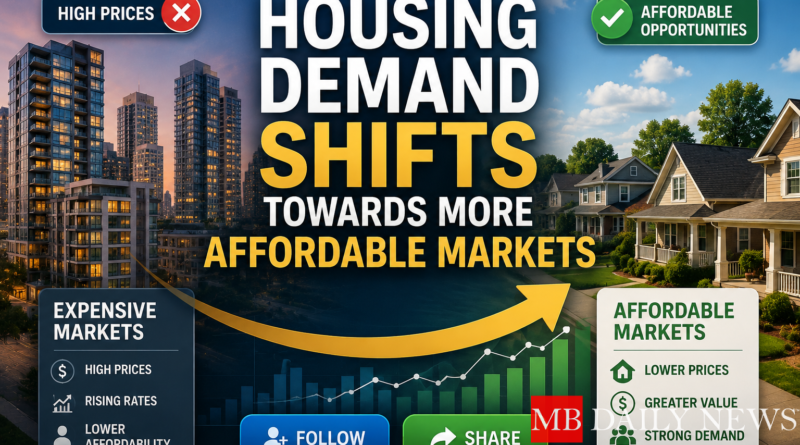
As the housing market evolves in 2026, demand remains strong. However, buyers are focusing more on areas where home prices better match their purchasing power. Higher mortgage rates have not stopped buyers completely. Instead, many are turning to markets that offer more affordable housing options.
This trend reflects a major shift in buyer behavior and market dynamics, especially in regions that saw rapid price growth during the pandemic.
In a recent investigative report for MB Daily News, I examined how this change is reshaping the housing market. The latest data shows that demand still exists, but buyers have become more selective. Many now prefer markets where affordability remains within reach for the average household.
Midwest Markets Lead Housing Demand
Several Midwest cities are becoming key housing hotspots. These markets show some of the strongest inventory absorption rates in the country.
Cleveland, for example, has only 1.2 months of inventory. Homes there sell quickly, with more than 20% of total inventory absorbed each week. The national average is closer to 12%. These numbers show that affordable markets are not only stable but also highly competitive.
Detroit and Columbus are experiencing similar inventory shortages. Median home prices remain relatively affordable, around $250,000 in Cleveland and $242,500 in Detroit. Compared to many other regions, these prices continue to attract buyers searching for better value.
“The housing market is shifting toward affordability, and buyers are responding quickly.”
Recent national coverage also supports this trend, showing that affordability has become one of the most important factors influencing buyer decisions.
Buyer Preferences Continue to Change
Mortgage rate fluctuations have also changed buyer behavior. Analysts note that mortgage spreads have improved compared to earlier this year. Without that improvement, mortgage rates would likely be much higher.
Because rates have stayed below the critical 7% level, national housing demand has remained relatively stable. Still, buyers are concentrating their searches in areas where affordability remains strong.
“In my reporting, this trend becomes even more significant when viewed alongside similar national housing pressures.”
Understanding the Affordability Gap
Housing affordability remains one of the biggest challenges in today’s market. Some regions are seeing prices stabilize or decline slightly, while others continue adjusting after the pandemic housing boom.
These differences highlight the uneven economic realities across the country. They also show why regional housing analysis matters more than ever.
“Buyers now prioritize affordability more than ever, reshaping the national housing landscape.”
National Trends and Local Impact
This shift is not limited to the Midwest. Across the country, buyers are moving toward markets that provide better value and lower housing costs.
As a result, local governments and housing stakeholders may need to adjust their policies and development strategies. A stronger focus on affordability could encourage new initiatives that improve housing access and long-term stability for middle- and lower-income families.
The Future of Housing Demand
Current trends suggest that affordable housing markets will continue attracting buyers in the coming years. Regions that provide reasonably priced housing will likely maintain steady demand.
On the other hand, markets that fail to adapt to changing economic conditions could struggle to attract and retain residents. Over time, this may reshape local economies and community demographics.
Conclusion: What Comes Next?
The growing focus on affordability reflects today’s economic reality and will likely shape the future of the housing market. As buyers continue navigating elevated mortgage rates and changing market conditions, affordability will remain a central concern.
Policymakers, developers, and local communities must respond proactively to ensure housing stays accessible, sustainable, and equitable for future generations.