
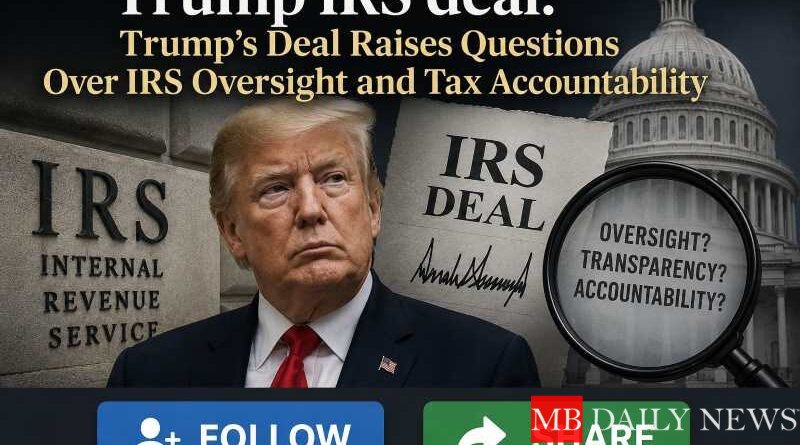
Trump IRS deal: Trump’s Deal Raises Questions Over IRS Oversight and Tax Accountability
MB DAILY NEWS | Raleigh, NC.
Trump IRS deal: Former President Donald Trump reached a controversial agreement with his administration that has sparked criticism across political circles. Critics describe the arrangement as a “slush fund” because it withdraws a billion-dollar civil lawsuit against the Internal Revenue Service (IRS) in exchange for .776 billion in taxpayer money that could benefit Trump’s allies. The deal raises serious concerns about accountability and tax enforcement in the United States.
In a recent investigative report by MB Daily News, I examined the details of the agreement and its political impact. Trump’s Justice Department released a nine-page document explaining the settlement. However, critics focused on a separate one-page addendum that appears to protect Trump and his associates from future IRS investigations.
Trump IRS deal: Details of the Agreement
The agreement centers on Trump withdrawing his civil lawsuit against the IRS. Many critics believe this move helps him avoid financial scrutiny.
The original terms already caused controversy because they involved large amounts of taxpayer money. The newly released addendum increased those concerns. It blocks the IRS from examining Trump, his family, or their businesses regarding tax returns filed before the settlement date.
This clause raises major concerns about abuse of power and weakens confidence in equal tax enforcement. Many legal experts argue that no public figure should receive special protection from IRS oversight.
“This deal effectively shields Trump from future IRS inquiries, which is unprecedented for someone in his position,” said a legal expert familiar with the case.
Recent political coverage has also highlighted similar concerns, showing how financial accountability continues to shape national debate.
Political Ramifications
The political reaction has been immediate. Democrats and legal analysts strongly criticized the agreement. They argue the deal creates a dangerous precedent by suggesting political influence can help powerful figures avoid accountability.
“In my view, this development matters not only for the current political moment, but also for the larger debate over accountability in government.”
Why This Matters
At first glance, the agreement may appear to be another political strategy. However, its consequences could extend far beyond this case.
Critics warn that the deal may allow taxpayer money to support partisan interests while reducing IRS oversight. If other political figures pursue similar protections, public trust in the tax system could decline even further.
“What recent political coverage has shown is that similar controversies rarely remain isolated for long.”
“This agreement could encourage others to seek similar protections, creating broader accountability problems in tax enforcement,” a political analyst warned.
Comparative Context
The Trump IRS deal reflects a larger national debate about politics, taxes, and government oversight. Recent disputes over tax reform and enforcement have increased public concern about political influence over federal agencies.
Many observers view this agreement as another example of growing tension between political power and financial accountability.
Wider Implications
The impact of this agreement reaches beyond politics. It also affects public trust in government institutions.
If political leaders can negotiate protection from scrutiny, confidence in the IRS and the tax system may continue to weaken. Critics argue that such deals threaten fairness, transparency, and equal treatment under the law.
Looking Ahead
As the controversy continues, lawmakers and the public will likely debate the long-term effects of the agreement. Many people expect stronger calls for oversight and accountability in response.
The outcome of this case could shape future debates about IRS authority, taxpayer protections, and the relationship between politics and federal enforcement agencies.