
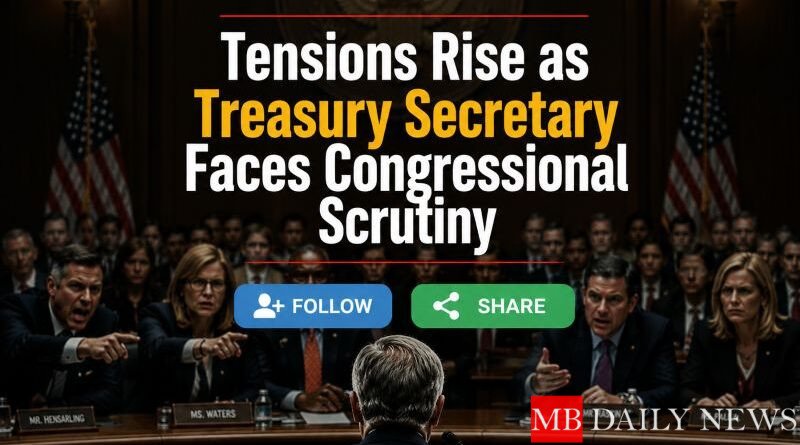
Tensions Rise as Treasury Secretary Faces Congressional Scrutiny
MB DAILY NEWS | Raleigh, NC.
Treasury Secretary congressional hearing: A recent congressional hearing erupted into a heated exchange between Treasury Secretary Scott Bessent and Representative Linda Sánchez, a Democrat from California, as they debated the implications of a Department of Justice settlement that halts tax audits of former President Donald Trump. This confrontation not only showcased the escalating tensions between the two parties but also underscored the contentious intersection of executive power and federal oversight.
In a recent investigative report by MB Daily News, I took a closer look at the implications of this clash, which reflects a broader political landscape where accusations of corruption and mismanagement are increasingly common. The hearing, held by the House Ways and Means Committee, quickly devolved into a war of words, with Sánchez accusing Bessent of presiding over the “most corrupt Treasury Department” in U.S. history.
Treasury Secretary congressional hearing: Confrontation Over Tax Audits
The tension peaked when Sánchez pressed Bessent about the DOJ’s May settlement, which effectively grants Trump and his family immunity from ongoing tax audits. “Why are you allowing President Trump and his family to have complete immunity from being audited?” she challenged, emphasizing the potential implications of such a policy. Bessent’s response, invoking the legal framework that positions the Justice Department as the representative of the IRS, did little to quell the rising tempers in the room.
The exchange took a personal turn when Bessent retorted, “I hope you get some social media clips,” hinting at the performative nature of congressional hearings in the age of digital media. This remark highlighted not just the partisan divide but also the growing trend of political theater in legislative discussions.
Political Ramifications
The clash between Bessent and Sánchez is emblematic of a larger narrative unfolding in Washington, where executive power is increasingly scrutinized.
The Democratic majority has raised concerns about transparency and accountability, particularly regarding the financial dealings of high-profile political figures. This hearing served as a platform for those concerns, illustrating the deep-seated frustrations among Democrats who view the current administration as lacking in integrity. In that sense, the story also echoes similar developments that have surfaced around the same issue in recent coverage, adding a wider frame to the immediate headline.
“In my view, this development matters not only for the immediate political moment, but for the wider conversation it may intensify.”
“The American people deserve to know that their tax system is fair and that no one is above the law,” Sánchez asserted, reflecting a sentiment shared by many in her party.
Historical Context of Executive Power
This confrontation is not an isolated incident but part of a broader historical debate about the limits of executive authority. In recent years, similar tensions have surfaced during investigations into various administrations, particularly regarding financial practices and ethical standards. The current situation raises questions about how far executive power can extend, especially when it involves personal finances and politically charged investigations.
Impact on Public Trust
The ramifications of this hearing extend beyond mere political posturing. Public trust in government institutions is at a precarious low, and events like this only serve to deepen skepticism. As accusations of corruption swirl, the effectiveness of the Treasury Department and its leadership comes under intense scrutiny. The perception of a lack of accountability can undermine confidence in the very institutions designed to uphold justice and equity.
Looking Ahead: What’s Next?
At the same time, As the dust settles from this heated exchange, the implications for both Bessent and Sánchez remain to be seen. The fallout may influence future legislative priorities and shape public discourse around executive accountability. With the 2024 election cycle approaching, both parties will likely leverage these tensions to rally their bases, further entrenching the divisions that characterize contemporary American politics.
Ultimately, the confrontation during this congressional hearing signals a critical moment in the ongoing struggle over transparency, accountability, and the role of executive power in the United States. As investigations continue and political battles unfold, the stakes will only grow higher.