
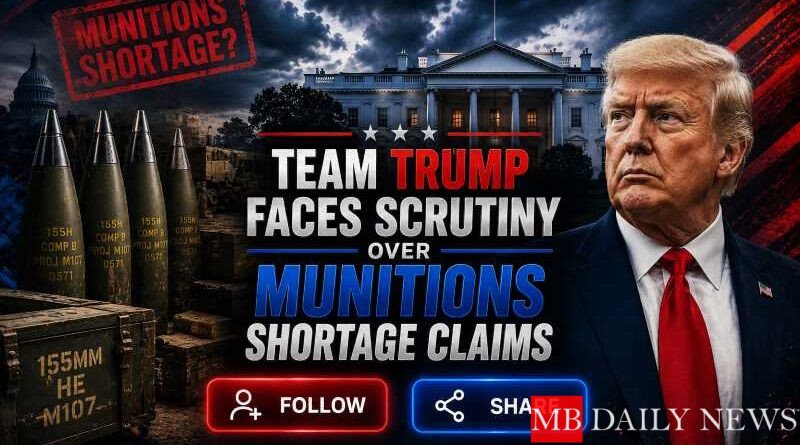
Team Trump Faces Scrutiny Over Munitions Shortage Claims
MB DAILY NEWS | Raleigh, NC.
The conflict with Iran has increased scrutiny of U.S. military munitions stockpiles. Reports indicate that inventories of key weapons have declined. These include Patriot air-defense interceptors, Tomahawk cruise missiles, and other critical systems. Consequently, questions about military readiness have intensified.
At the same time, public statements from the Trump administration have drawn attention. Several officials have offered different assessments of the nation’s weapons inventory. As a result, the conflicting messages have fueled debate about defense preparedness.
In a recent investigative report by MB Daily News, I examined how the administration is managing military resources during the ongoing conflict. Meanwhile, lawmakers and defense experts continue to express concern about the pace of replenishment.
Munitions shortage claims: Concerns Over Military Readiness
Since the conflict began, military officials have warned about shrinking stockpiles. Reports suggest that inventories of air-defense missiles and long-range precision weapons have fallen significantly. Moreover, several analysts believe rebuilding those supplies could take years.
As the conflict enters another phase, lawmakers have increased pressure on the Pentagon. They want greater transparency regarding current inventories and future production plans.
The Wall Street Journal recently highlighted the “shrinking stocks of Patriot and other air defense interceptors.” Therefore, the discussion has shifted from battlefield operations to long-term defense capacity.
A defense analyst summarized the challenge:
“The White House and the Pentagon are pressing defense contractors to speed up this process, but there’s only so much that can be done.”
Likewise, recent reporting shows that several countries face similar production constraints as global demand for advanced munitions continues to grow.
Contradictory Messages From the Administration
As concerns increased, President Donald Trump and senior administration officials addressed the issue publicly. However, several statements appeared to conflict with one another.
For example, the White House stated:
“We have far more munitions than anyone in the world, and far more than we need.”
That statement differs from reports describing reduced inventories and longer production timelines. Consequently, critics have questioned whether the administration’s public messaging fully reflects the current situation.
In my reporting, this issue extends beyond political debate because it directly affects public confidence in national defense planning.
Political Implications
The differing public statements have generated political debate in Washington. They have also raised broader questions about military preparedness and government transparency.
Lawmakers from both parties continue requesting additional information. They argue that Congress and the public deserve accurate updates about defense resources, especially during an extended conflict.
Recent political coverage also suggests that defense issues often become major campaign topics when military readiness receives increased public attention.
One congressional representative stated:
“The public deserves to know the truth about our military readiness.”
That comment reflects bipartisan interest in obtaining clearer information about military capabilities.
Broader Defense Trends
This debate fits into a larger pattern affecting defense policy. Military planners must balance current operational demands with long-term production capacity. Meanwhile, defense contractors continue working to increase manufacturing output.
At the same time, geopolitical tensions have increased demand for advanced weapons across multiple regions. Consequently, replenishing inventories has become more difficult than in previous years.
Furthermore, defense analysts continue monitoring whether current production rates can meet future strategic requirements.
National Security Implications
A prolonged shortage of critical munitions could influence future military planning. It could also affect the nation’s ability to respond quickly to multiple international crises.
In addition, inconsistent public messaging may invite greater scrutiny from Congress, defense analysts, and allied governments. Therefore, many experts argue that clear communication remains essential during periods of heightened military activity.
Looking Ahead
The conflict with Iran continues to place pressure on U.S. military resources. At the same time, policymakers must address concerns about replenishing stockpiles and maintaining operational readiness.
Ultimately, the administration’s ability to provide consistent information may influence public confidence and congressional oversight. As production efforts continue, defense planning and transparency will likely remain central issues in the national security debate.
Copyright © 2026 MB Daily News. All Rights Reserved.