
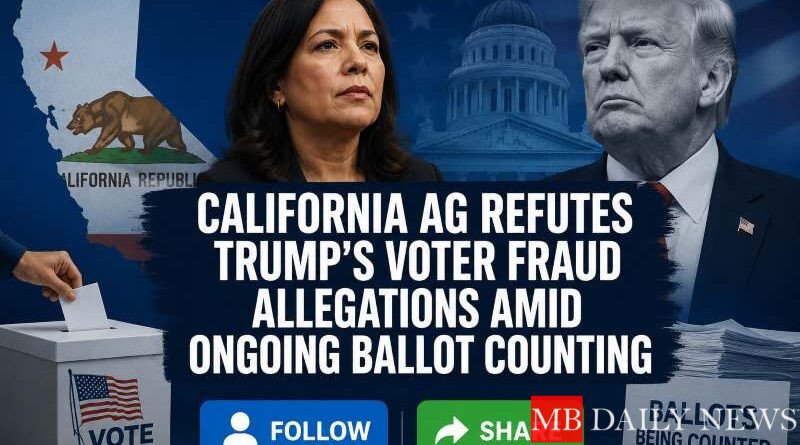
California AG Refutes Trump’s Voter Fraud Allegations Amid Ongoing Ballot Counting
MB DAILY NEWS | Raleigh, NC.
In a strong response to claims made by former President Donald Trump, California Attorney General Rob Bonta rejected allegations of widespread voter fraud in the state’s primary elections. As ballot counting continues, his comments highlight the ongoing debate over election integrity in California. The state often faces scrutiny because of its voting procedures and extended ballot-counting process.
In a recent investigative report by MB Daily News, I examined the developing situation. The report highlights the growing conflict between state officials and Trump’s claims. According to Bonta, no credible evidence supports allegations of voter fraud. As a result, he directly challenged the narrative promoted by Trump and several of his allies.
Voter Fraud Claims Dismissed
During an interview on MS NOW’s The Weekend, Bonta addressed the accusations directly. He stated, “There are no details, there is no specifics, there is no specific allegation of any individualized act of voter fraud.”
His comments came after Bill Essayli, a federal prosecutor, announced that his office is investigating possible election fraud in Los Angeles. However, Bonta stressed that election officials and independent observers have repeatedly found no evidence of widespread voter fraud.
Furthermore, he said, “Every count, recount, hand count, court case and audit has shown time and time again — not just in California, but throughout this country — that there is no widespread voter fraud.”
Therefore, Bonta argued that California’s election system remains secure. His remarks also reinforce confidence in a process that has often become the focus of political debate.
Federal Investigations and Political Tensions
Essayli serves as the first assistant U.S. attorney for the Central District of California. He was also appointed during the Trump administration. According to Essayli, his office is working with the FBI on several investigations involving alleged election fraud.
The announcement followed Trump’s claims of “BIG cheating” in California. He linked those accusations to the state’s slower ballot-counting process. Meanwhile, political divisions continue to deepen across the country. Consequently, allegations of election misconduct remain a common theme among many of Trump’s supporters.
In addition, the controversy mirrors similar disputes reported in other states. These developments place California’s situation within a broader national conversation about election integrity.
In my view, this development matters not only for the current political climate but also for the wider debate it may intensify in the months ahead.
Understanding California’s Voting Process
California law allows election officials to count ballots that are postmarked by Election Day and received within seven days afterward. Critics have argued that this policy could create opportunities for fraud. Nevertheless, election officials maintain that multiple safeguards protect the process.
Bonta emphasized that audits, recounts, and legal reviews have consistently validated the system. As a result, state officials continue to defend the integrity of California’s elections.
“Claims of voter fraud are only a figment of the imagination of Trump and others who follow that conspiracy theory.”
Wider Implications of the Dispute
The ongoing debate over voter fraud allegations reflects broader national concerns about election integrity. At the same time, several states continue to face similar accusations. Therefore, the controversy raises important questions about public trust in elections and the future of voting rights.
Bonta’s position may also influence how officials in other states respond to similar challenges. By defending election systems with evidence and audits, state leaders seek to preserve confidence in democratic institutions.
Political and Social Impact
The dispute affects more than California’s political environment. It also carries national implications. As future election cycles approach, voter fraud rhetoric could shape public opinion and influence voter turnout.
Moreover, these claims may affect future legislative efforts. Lawmakers could use the controversy to justify changes to voting laws or propose new measures aimed at strengthening election security.
Looking Ahead
California continues to count ballots while state officials reject allegations of widespread fraud. Meanwhile, the political debate shows no signs of slowing down.
The conflict between state leaders and Trump’s claims reflects a larger challenge facing American democracy: maintaining public trust in elections. Ultimately, the results of ongoing investigations and the public’s reaction to this debate may shape future election policies and influence confidence in democratic institutions for years to come.