
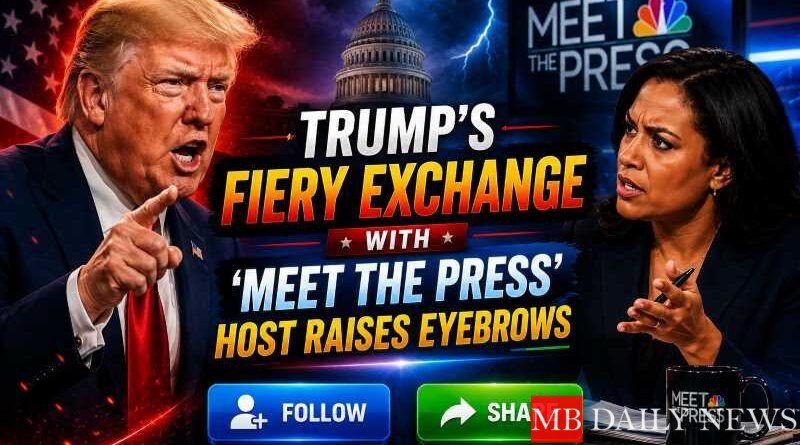
Trump’s Fiery Exchange with ‘Meet the Press’ Host Raises Eyebrows
MB DAILY NEWS | Raleigh, NC.
President Donald Trump launched a series of personal attacks against NBC’s Meet the Press host Kristen Welker during a recent interview. The exchange ended abruptly as tensions escalated on live television.
The confrontation highlighted Trump’s long-running conflict with the media. It also renewed concerns about how political figures treat female journalists during high-profile interviews.
In a recent investigative report for MB Daily News, I examined the interview and its broader implications for political communication. Trump’s comments, including calling Welker “either crooked or stupid,” reflected a familiar pattern. He often targets journalists who challenge his claims or question his narrative.
Confrontation on Live Television
The interview quickly turned confrontational. Trump accused Welker of bias but offered no evidence to support his claims.
“They’re crooked just like you’re crooked, your press is crooked,” Trump said during the exchange.
Welker remained calm and attempted to redirect the discussion.
“To be fair, I’m not crooked,” she replied.
The tension continued to build throughout the interview. Eventually, Trump ended the conversation and announced, “Let’s call it quits because I’ve had enough.”
The incident reflects a broader pattern in Trump’s relationship with the press. His confrontational style has frequently sparked criticism from media organizations and political observers.
A Pattern of Disrespect
Trump has repeatedly clashed with female journalists throughout his political career.
On several occasions, he has dismissed questions, challenged reporters personally, or used derogatory language. Bloomberg reporter Catherine Lucey once received an order from Trump to “stop talking.” He also described ABC News correspondent Rachel Scott as “the most obnoxious reporter in the whole place.”
These comments illustrate more than a combative media strategy. Critics argue they demonstrate a recurring lack of respect toward women working in journalism.
“The president’s rhetoric is not just about one interview; it’s about a pattern of behavior that undermines the integrity of journalism.”
Broader Implications
The latest confrontation highlights the challenges many journalists face while covering political leaders.
Female reporters, in particular, often encounter personal attacks that go beyond policy disagreements. Media advocates warn that normalizing these exchanges can discourage aggressive reporting and weaken public discourse.
Trump continues to claim that elections are “rigged.” At the same time, he frequently attacks major news organizations. Critics argue that this strategy can deepen public distrust in established media outlets.
Public Reaction and Media Responsibility
Reaction to the interview has been sharply divided.
Many Trump supporters praised his willingness to challenge journalists they consider biased. Others viewed the confrontation as another example of hostility toward the press.
Media experts stress that journalists play a vital role in holding public officials accountable. When political leaders attack reporters personally, public confidence in the news media can suffer.
What This Means for Political Discourse
Trump’s latest clash with the press may influence future interactions between politicians and journalists.
As political polarization increases, confrontational interviews could become more common. That trend may leave less room for substantive policy discussions and respectful debate.
The implications extend beyond one interview. Public trust in journalism remains essential to a functioning democracy, and the relationship between political leaders and the press continues to shape that trust.
“This moment may signal a turning point in how political figures engage with the media and the broader implications for public trust.”
The latest episode serves as another reminder of the tensions that define modern political communication. Accountability, transparency, and mutual respect remain critical as journalists and political leaders navigate an increasingly polarized environment.